

 Tiếng Việt
 中文 (Chinese)
 한국어
한국어 日本語
日本語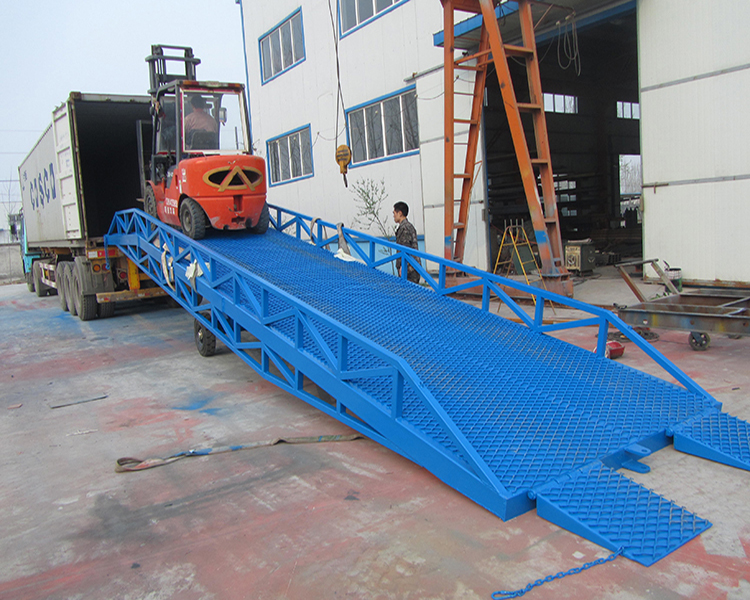
In the fast-paced world of logistics and warehouse management, efficiency and safety are top priorities. One piece of equipment that significantly enhances both is the yard ramp — a portable loading ramp that allows forklifts or pallet jacks to move between ground level and truck beds or docks with ease.
Choosing the right yard ramp isn’t as simple as picking one that fits the height of your dock. You must consider key factors such as slope angle, load capacity, material strength, and safety features. Selecting the wrong ramp can lead to equipment damage, slower operations, or even workplace accidents.
This guide will help you understand how to choose a yard ramp that meets your operational needs while maintaining maximum safety and performance.
1. Understanding Yard Ramps and Their Function
A yard ramp (also known as a mobile loading ramp or portable dock ramp) serves as a bridge for forklifts to load or unload goods when a permanent dock isn’t available.
They are commonly used in:
-
Outdoor loading zones
-
Warehouses without dock access
-
Freight terminals
-
Construction and industrial yards
Yard ramps are typically made of steel or aluminum, featuring a grated or diamond plate surface for traction. Most models include hydraulic height adjustment systems, safety chains, and wheels for mobility.
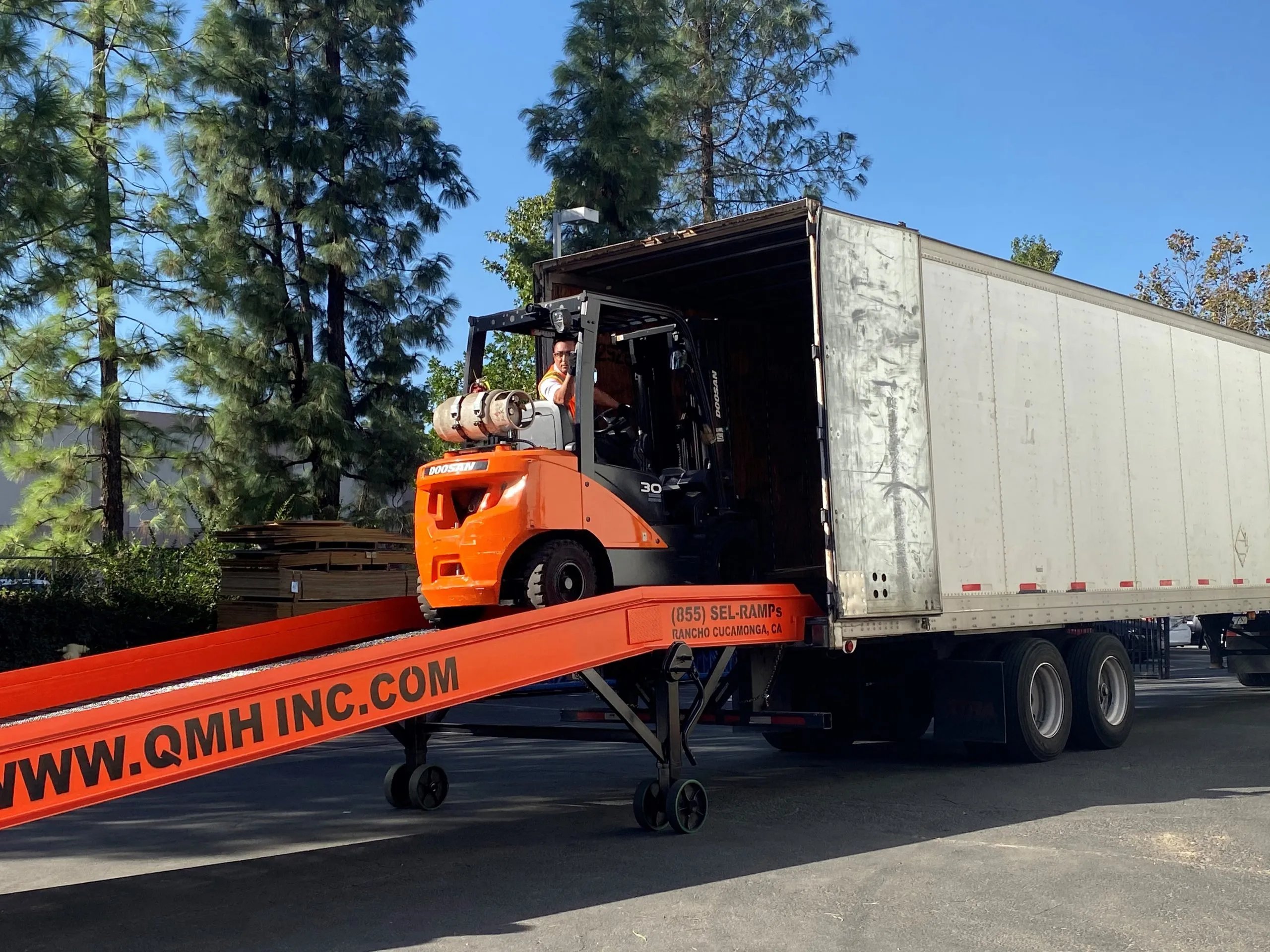
Understanding Yard Ramps and Their Function
2. Key Factors to Consider When Choosing a Yard Ramp
a. Ramp Slope and Length
The slope determines how steep the ramp will be.
To calculate slope percentage:
Slope(%)=DockHeightRampLength×100Slope (%) = frac{Dock Height}{Ramp Length} times 100
For most forklifts, the ideal slope should range from 8–14%, equivalent to about 5–8 degrees.
A lower slope (longer ramp) increases safety and makes it easier for forklifts to ascend with heavy loads.
| Dock Height (inches) | Recommended Ramp Length (feet) | Approx. Slope |
|---|---|---|
| 36” | 30 ft | 10% |
| 42” | 36 ft | 10% |
| 48” | 40 ft | 10–12% |
When in doubt, choose a longer ramp — it reduces strain on forklifts and ensures smoother loading.

Key Factors to Consider When Choosing a Yard Ramp
b. Weight Capacity
Capacity is one of the most critical safety factors.
You must account for the combined weight of:
-
The forklift (vehicle)
-
The heaviest load it carries
For example, if your forklift weighs 6,000 lbs and carries 4,000 lbs of goods, the total load equals 10,000 lbs. The ramp’s rated capacity should exceed this, ideally by 25–30% for safety margin.
Standard industrial yard ramps offer capacities from 16,000 to 30,000 lbs, while heavy-duty models can handle over 40,000 lbs.
c. Ramp Width
Make sure the ramp is at least 15–20 cm (6–8 inches) wider than your forklift’s wheelbase.
A typical width range is 84–96 inches. Narrow ramps can increase the risk of misalignment or tire slippage.
d. Surface Material
A ramp’s surface must provide strong traction even in wet or dusty conditions.
-
Steel grating: Excellent drainage, slip-resistant, long lifespan.
-
Diamond plate: Smooth but high-friction surface, ideal for indoor or light-duty use.
For outdoor use or rainy environments, open steel grating is preferred.
e. Mobility and Adjustment
For flexible use, select a ramp with solid tires and hydraulic pumps for height adjustment.
Hydraulic systems make it easy to match the ramp height to various truck beds (from 42” to 56”).
f. Safety Features
Safety should always come first. A good ramp should include:
-
Safety chains or locking clamps to secure the ramp to the dock or truck.
-
Side rails (at least 4 inches high) to prevent wheels from slipping off.
-
Bright safety markings for visibility during night shifts.
-
Level-off platform at the top (6–8 ft) for forklift stability.
3. Maintenance and Inspection Tips
Proper maintenance prolongs your ramp’s lifespan and ensures safe operation.
-
Inspect regularly for cracks, corrosion, or hydraulic leaks.
-
Check tires and axles on mobile ramps.
-
Clean debris and dirt from the ramp surface.
-
Lubricate moving parts every few months.
A well-maintained ramp can last 10+ years with daily use.
4. Why Slope and Capacity Matter for Safety
A slope that’s too steep can cause:
-
Forklifts to lose traction
-
Load shifting or rollback
-
Increased wear on brakes and engines
Likewise, overloading a ramp weakens its frame and increases collapse risk.
By choosing the right slope and capacity, you ensure smooth workflow, worker safety, and reduced maintenance costs.

Why Slope and Capacity Matter for Safety
5. Conclusion
Selecting the right yard ramp requires more than just matching height and size. You must balance slope, capacity, width, and safety design to fit your operation.
If you’re seeking a reliable and durable solution, VietPos Rack’s heavy-duty yard ramps are engineered for optimal slope design, high load capacity, and anti-slip surfaces — ensuring safety and productivity in every loading operation.
