

 Tiếng Việt
 中文 (Chinese)
 한국어
한국어 日本語
日本語
RFID (Radio Frequency Identification) is an automatic identification technology using radio waves, enabling data to be read from and written to tags attached to pallets, cartons, or warehouse shelves without requiring line-of-sight. In Vietnam, 3PL logistics centers and manufacturing plants with over 2000 SKUs are under pressure for real-time inventory control as manual error rates fluctuate between 5-8% each month. RFID provides a comprehensive solution to this problem with read speeds of 200-500 tags/second and accuracy exceeding 99.5%.
Problems Facing the Logistics & Warehouse Industry
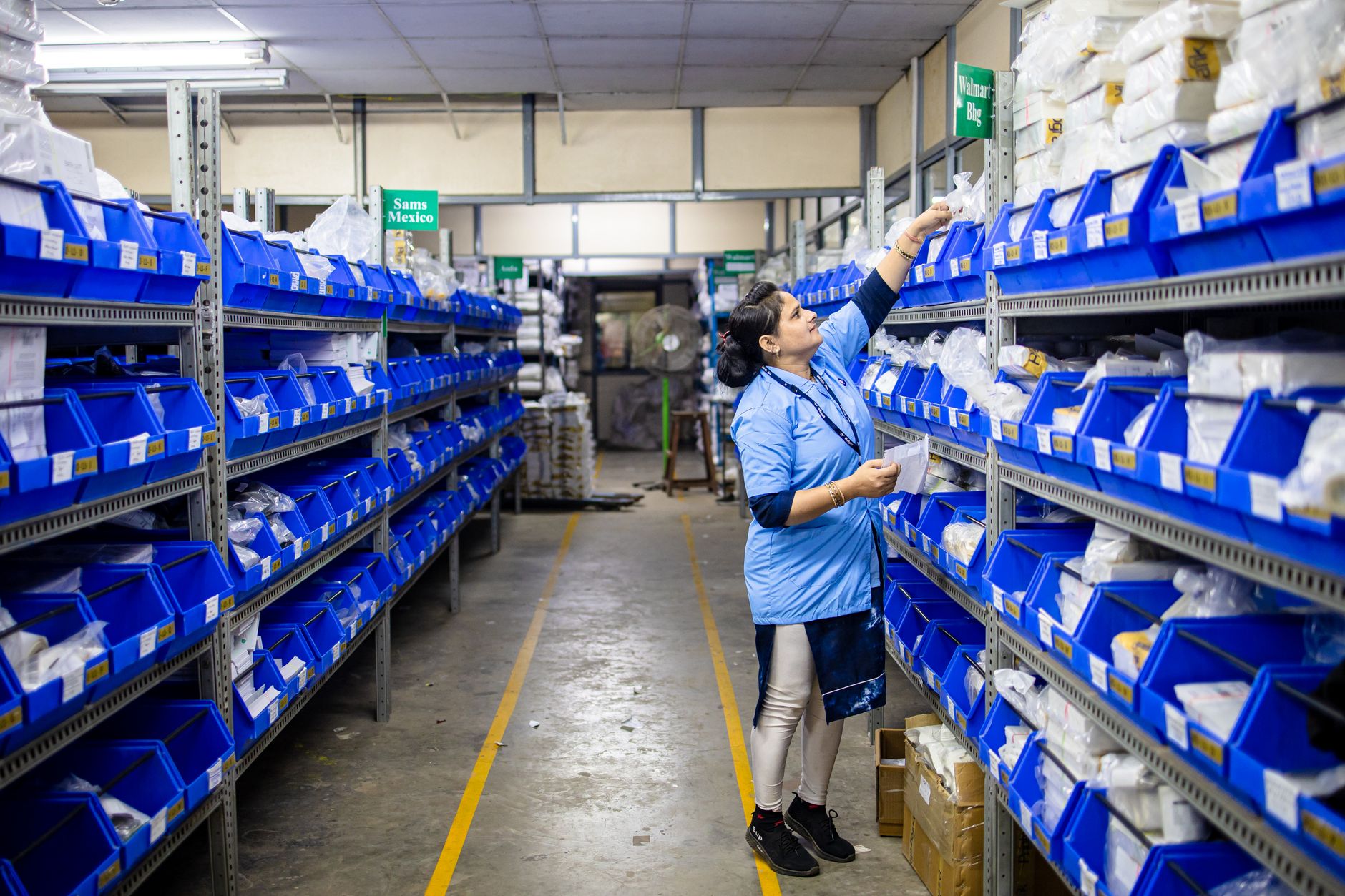
- ⚠ Manual Inventory Errors: Warehouse staff using paper or Excel records are prone to mistakes, leading to inventory discrepancies of 5-8% each month, causing stock shortages or capital tied up in overstock.
- ⚠ Extended inventory time: A 2000-pallet warehouse requires 2-3 days of downtime for full inventory, disrupting production and delaying orders.
- ⚠ Uncontrolled loss and shrinkage: Goods moving between areas (receiving, putaway, picking) are not recorded in real time, leading to 1-3% loss of inventory value.
- ⚠ Difficult batch traceability: When quality issues arise, it takes 4-8 hours to trace back the supplier batch, delaying complaint handling.
How RFID solutions work in warehouse management

- Attach RFID tags to pallets/racks: Each pallet of goods or storage location (Selective rack, Drive-in rack) is attached with a passive UHF tag containing a unique ID. The tag can withstand temperatures from -25°C to +85°C, suitable for cold storage.
- Install fixed readers at gates: RFID portals are placed at receiving/shipping docks, main walkways, and at the head of each rack aisle. Antennas automatically read tags as pallets pass through, eliminating the need for manual scanning.
- Bulk read multiple pallets simultaneously: When a forklift moves pallets through the portal, the reader captures 200-500 tags within 1-2 seconds, updating the new location in the WMS system.
- Real-time data synchronization to ERP/WMS: Data from the reader is processed by middleware and sent to the warehouse management system (WMS) or ERP (SAP, Oracle) via API, reflecting accurate inventory by the minute.
- Discrepancy alerts & automatic inventory: The system automatically compares the read quantity with expected data, alerting immediately upon detecting discrepancies. A full inventory of 2000 pallets takes only 30-45 minutes instead of 2 days.
Specific benefits of implementing RFID for 3PL warehouses & factories

RFID vs Barcode in warehouse management
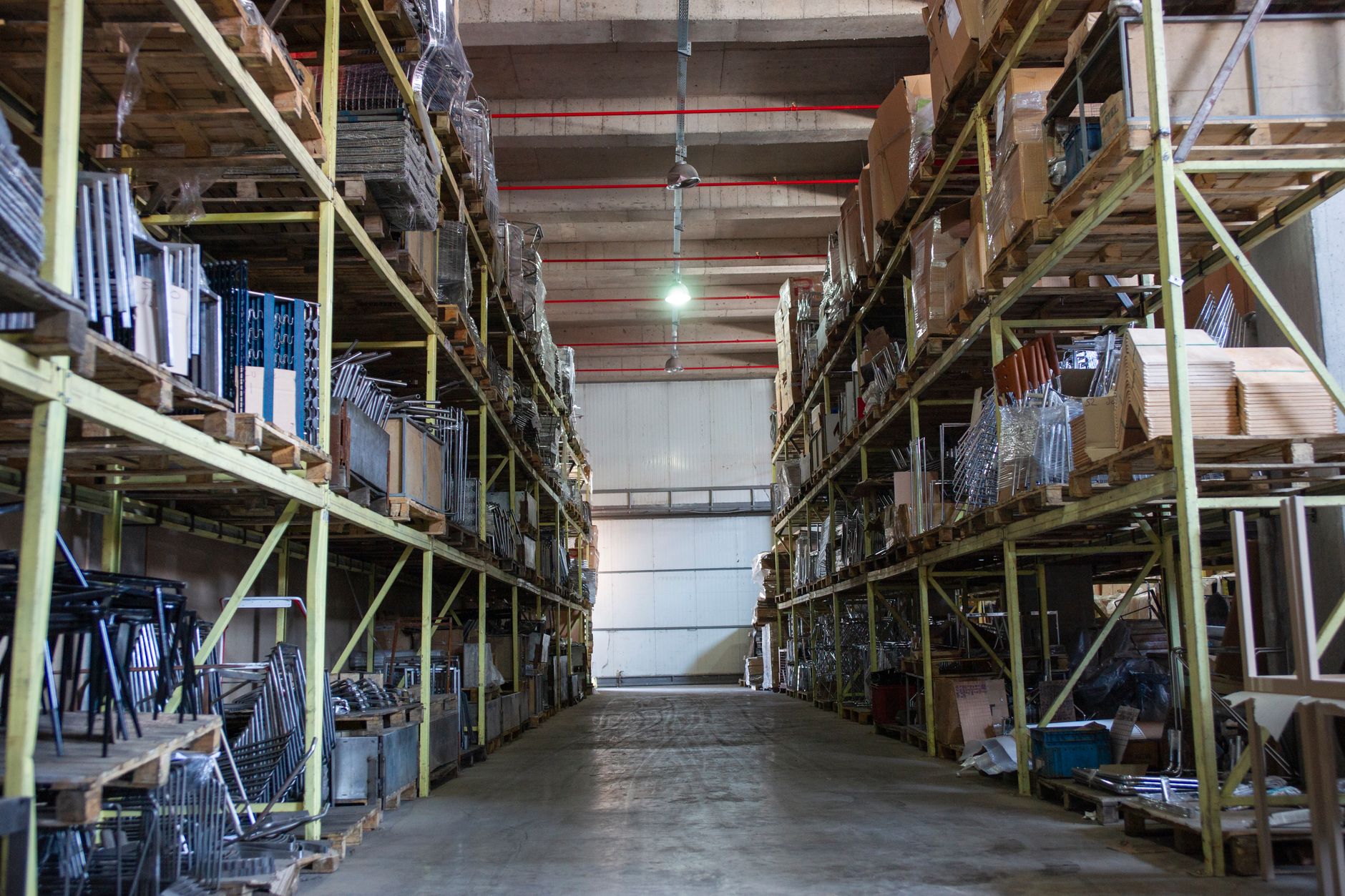
| Criteria | RFID (UHF Passive) | Barcode |
|---|---|---|
| Read speed | 200-500 tags/second (batch reading) | 1-2 codes/second (scanning individually) |
| Line of sight requirement | Not required – radio waves penetrate cardboard boxes, plastic | Requires direct line of sight – must open boxes to scan |
| Read range | 3-12m (depending on antenna) | 0-0.5m (contact or near-contact) |
| Durability | Withstands -25°C to +85°C, IP67 moisture resistant | Easily torn, fades after 3-6 months in warehouse |
| Data writing capability | Yes – read/write multiple times (EPC + user memory) | No – read-only fixed code |
| Initial deployment cost | 3-5 times higher (tag ~2,000-5,000 VND/tag, reader ~15-50 million VND) | Low (printer ~5 million VND, label paper ~200 VND) |
| ROI (warehouse >2000 SKU) | 6-12 months (due to reduced errors + increased productivity) | 1-2 months (partial improvement only) |
RFID applications on various types of industrial warehouse racks
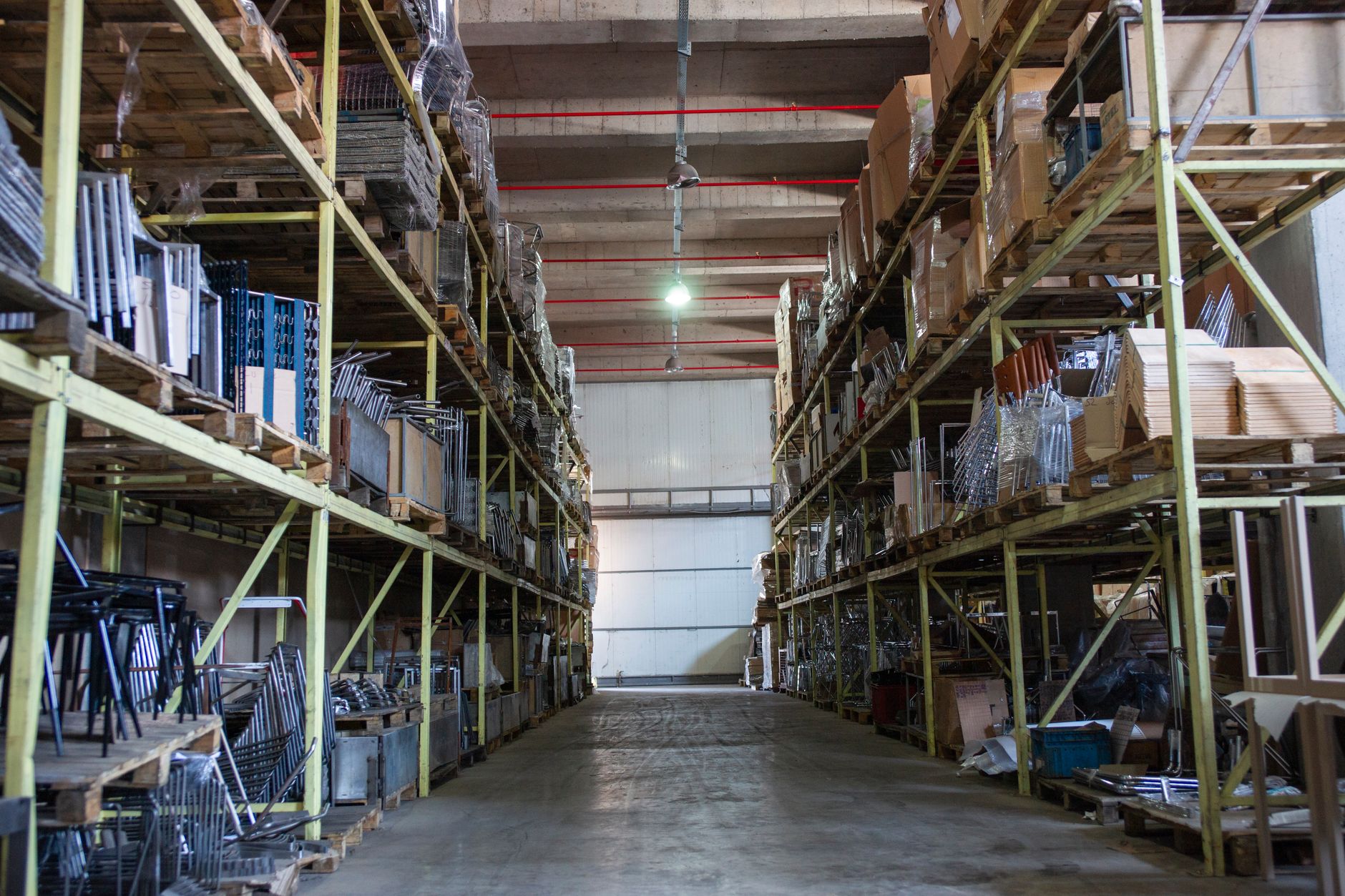
Selective Pallet Rack – popular for 3PL
Selective Pallet Rack accounts for 70% of 3PL warehouses due to 100% accessibility. Attaching RFID tags to each beam or upright allows the WMS to accurately determine pallet locations. When a forklift places a pallet on the rack, the aisle antenna reads the pallet tag and updates the location ID. Picking errors are reduced from 3% to <0.3%. Refer to Structure of Industrial Warehouse Selective Rack to understand the upright and beam structure suitable for tag attachment.
Drive-in / Drive-through Rack – high density, cold storage
Drive-in Rack stores 60-80% density, suitable for homogeneous goods (F&B, pharmaceuticals). RFID tags attached to pallets ensure accurate FIFO/LIFO control – readers at the cold storage gateway (-25°C) operate stably thanks to temperature-resistant tags. The system immediately alerts if a pallet is in the wrong batch, reducing expiration waste by 40%.
Push-back & Carton Flow Rack – gravity-fed, automatic FIFO
With Push-back (2-5 deep) and Carton Flow racks, RFID tags are attached to the bottom of pallets or on cartons. As the pallet slides towards the picking area, the antenna reads the new position, ensuring FIFO and reducing picking errors by 80%. Easily integrates with existing WMS.
Production process for RFID-integrated warehouse racks at Việt POS Rack
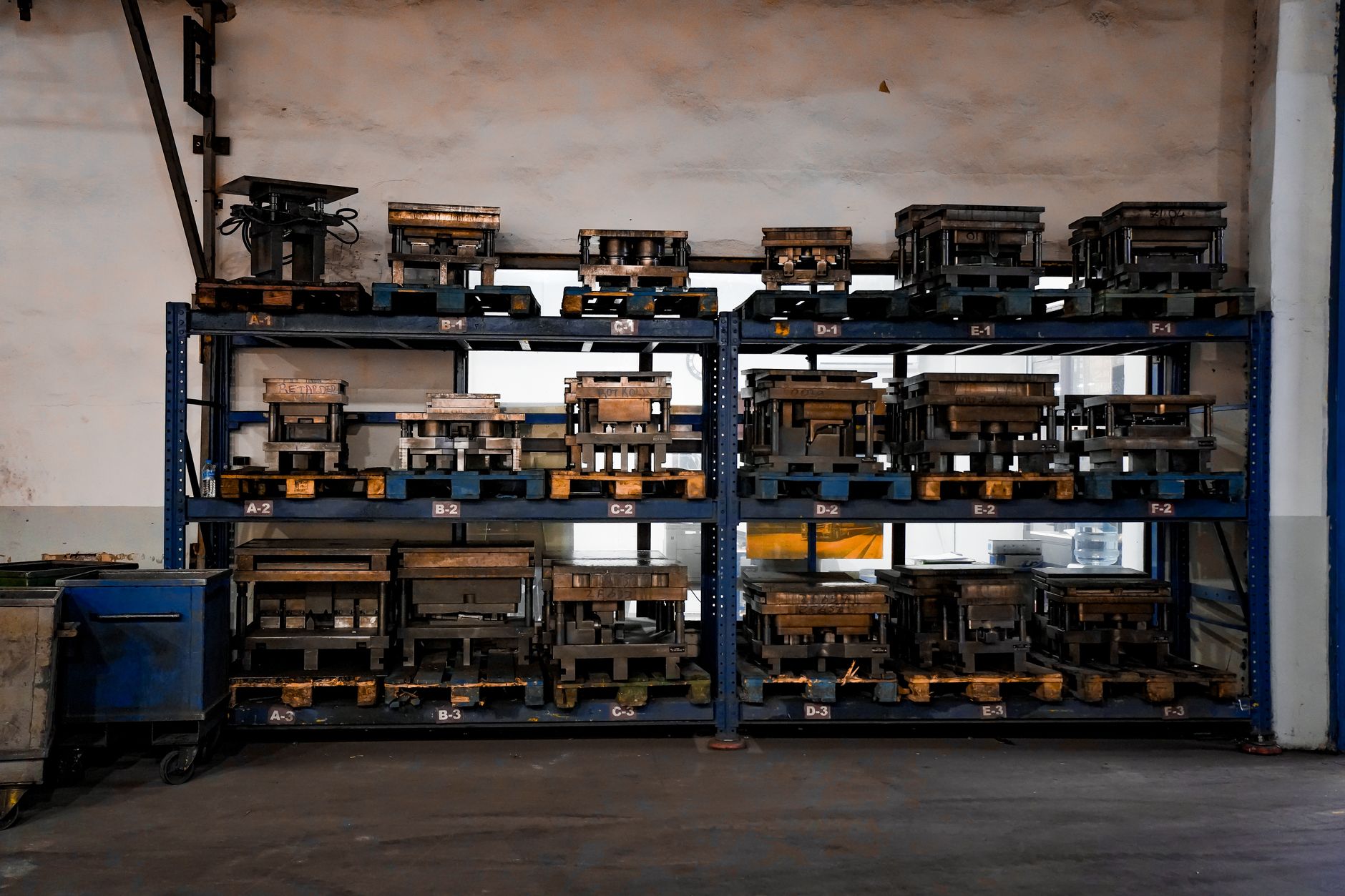
Việt POS Rack manufactures warehouse racks at its 10,000m² factory in Tan Duc Industrial Park, Long An, with a capacity of 500-800 tons of steel per month. Below is the 7-step process ensuring rack compatibility with RFID systems:
- Order processing + 3D AutoCAD design: Warehouse survey, propose RFID tag placement positions on uprights/beams, layout aisles to ensure antenna coverage. Quote within 48 hours, free design.
- CNC laser cutting of Q235/Q345 steel: Tolerance ±0.1mm, ensures precision of tag mounting holes and upright spacing.
- Bending-punching-stamping for column and beam profiles: 200-400 ton hydraulic press creates Omega 100×75 or 120×95 profiles – flat surface for unobstructed RFID tag attachment.
- Frame welding with MIG/MAG robot: Penetration weld inspection per AS4084, ensures structural integrity when mounting 2-5kg antennas on uprights.
- Surface treatment: Electrostatic powder coating 60-80μm or hot-dip galvanizing 80μm – coating does not affect RFID waves (UHF 860-960 MHz).
- QC: Load test (safety factor ≥1.5): Checks squareness, deflection ≤0.5%, sample 5-10% per batch – ensures rack load capacity of 500-5,000kg/beam.
- Packaging + delivery + onsite installation: Pallet wrap + corner protectors, technical team installs at warehouse, assists with aligning RFID tag mounting positions.
Frequently Asked Questions about RFID in Warehouse Management
What is the cost of deploying RFID for a 1000-pallet warehouse?
Cost depends on scale and equipment. For a 1000-pallet warehouse, a basic package includes: 1000 UHF passive tags (~3-5 million VND), 2-4 fixed readers + antennas (~30-80 million VND), middleware + WMS integration (~20-50 million VND). Total 55-135 million VND. ROI is typically achieved within 8-14 months due to reduced errors and increased productivity. Contact 0796 700 777 for a free consultation, quote, and 3D warehouse layout design.
Does RFID work well in cold storage at -25°C?
Yes. UHF passive tags withstand temperatures from -25°C to +85°C, operating stably in cold storage. However, high humidity and condensation can affect waves – choose tags with IP67 housing and readers with adjustable power. Việt POS Rack has deployed hot-dip galvanized Drive-in racks for F&B cold storage, perfectly compatible with RFID systems.
How to integrate RFID with legacy ERP systems (SAP, Oracle)?
RFID middleware (e.g., Impinj Speedway Connect, ThingMagic) provides REST/SOAP APIs to connect with SAP ECC, SAP S/4HANA, Oracle WMS. Tag data is mapped to standard transactions (goods receipt, goods issue, inventory count). Average integration time is 2-4 weeks with an integration partner. No need to replace the legacy ERP.
RFID passive vs active – which type should be chosen for a warehouse?
Passive (battery-free) is suitable for warehouse goods: low tag cost (2,000-5,000 VND), lifespan 10+ years, read range 3-10m. Active (battery-powered) is used for high-value assets (containers, forklifts) with a read range of 100m+ but tag cost is 100,000-500,000 VND and battery life 3-5 years. For standard pallet goods, passive is optimal.
Is it necessary to modify existing warehouse racks to install RFID?
No need to replace the rack. The tag can be attached directly to the pallet or mounted to the beam/upright using industrial adhesive or screws. For Selective Pallet Rack systems, the antenna is mounted on the upright at the aisle end or on the ceiling. Việt POS Rack provides specialized antenna mounting brackets for racks without affecting the structure.
Can RFID read through cardboard boxes or plastic pallets?
Yes. UHF waves (860-960 MHz) penetrate cardboard, plastic, fabric, and dry wood. However, metal and liquids absorb the waves – a tag with a foam pad (on-metal tag) is required when attaching directly to metal pallets or liquid containers. Maximum cardboard thickness for penetration: 5-10mm.
How long does it take to deploy RFID for a 2000m² warehouse?
On average 4-8 weeks: week 1 survey + RFID layout design, weeks 2-3 rack installation (if applicable) + tag attachment, weeks 4-5 reader + antenna + middleware installation, weeks 6-8 WMS integration + UAT testing. Việt POS Rack supports simultaneous rack and RFID system installation to shorten the timeline by 20-30%.
What is the warranty for RFID equipment and warehouse racks?
Việt POS Rack warehouse racks come with a 24-month warranty, RFID tags with a 12-month warranty (manufacturer defects), and readers/antennas with a 12-24 month warranty depending on the brand (Impinj, Zebra, Honeywell). Remote technical support is available 24/7, with onsite support within 48 hours in HCMC/Hanoi/Da Nang.
Contact Việt POS Rack now via hotline 0796 700 777 or email info@vietposrack.vn for consultation on integrated RFID and warehouse rack solutions – free 3D design, competitive pricing, and nationwide on-site installation.
