

 Tiếng Việt
 中文 (Chinese)
 한국어
한국어 日本語
日本語In modern logistics and warehouse operations, yard ramps play an essential role in bridging the gap between ground level and loading docks, containers, or truck beds. They allow forklifts and pallet jacks to move smoothly, enabling efficient loading and unloading without requiring permanent dock infrastructure.
However, one crucial factor determines whether a yard ramp is safe and efficient — the slope angle. Incorrect slope design can cause safety hazards, increase equipment wear, and slow down productivity. Understanding yard ramp slope requirements and applying best practices ensures not only compliance with safety standards but also long-term reliability.
1. Understanding Yard Ramp Slope Requirements
The slope of a yard ramp refers to the incline between its base (ground level) and the dock height it connects to. The slope percentage is calculated as:
Slope (%)=RiseRun×100text{Slope (%)} = frac{text{Rise}}{text{Run}} times 100
For instance, if your dock height is 48 inches and the ramp length is 30 feet (360 inches):
48/360=0.1333=13.3%48 / 360 = 0.1333 = 13.3%
This equals a slope angle of about 7.5 degrees — considered safe for most forklifts.
OSHA (Occupational Safety and Health Administration) and ANSI guidelines suggest that the slope of portable ramps should generally not exceed 14% for motorized forklifts and 10% for manual pallet jacks. Exceeding this limit increases risks of rollback, brake strain, or tipping accidents.
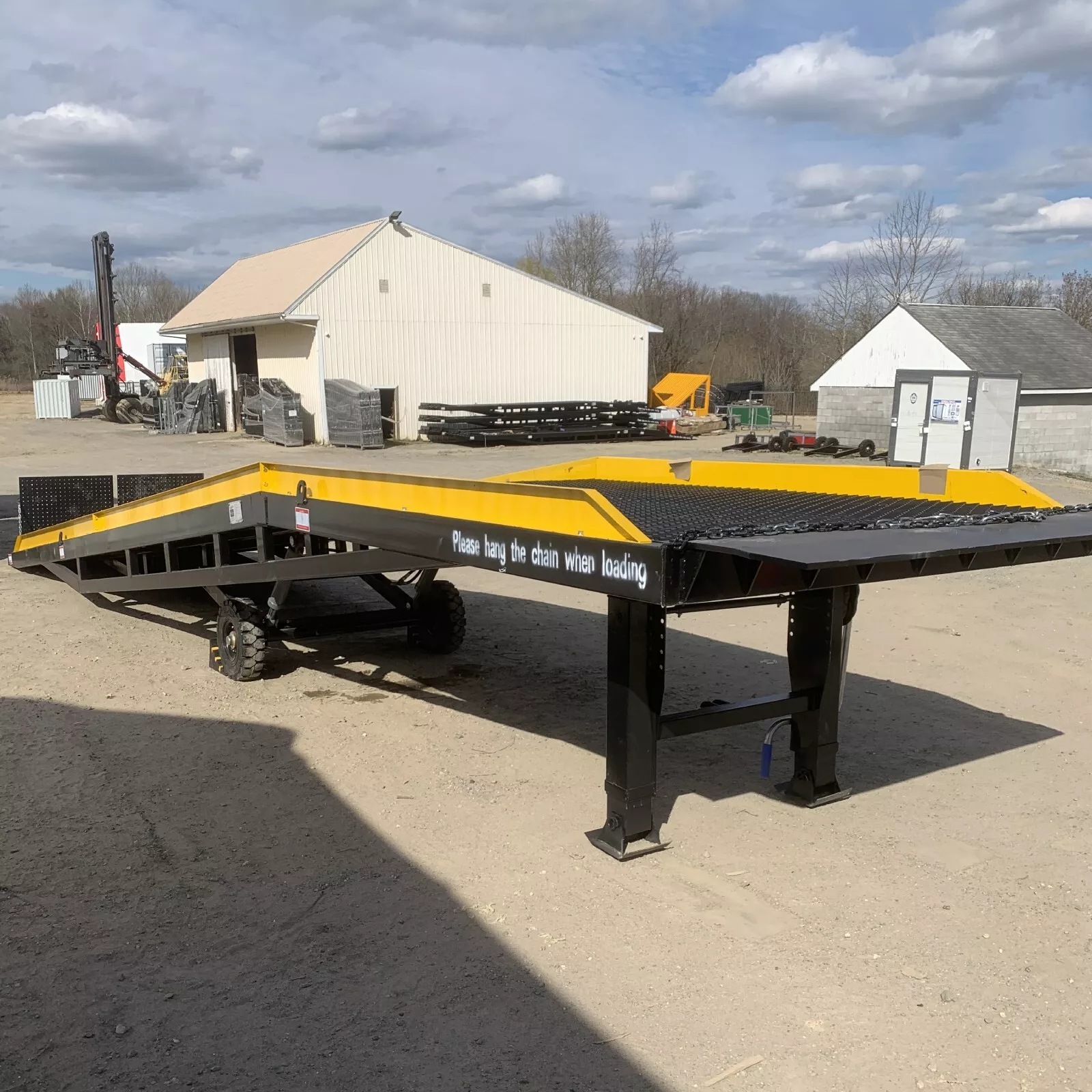
Understanding Yard Ramp Slope Requirements
2. Recommended Slope Ratios for Different Applications
| Ramp Application | Maximum Recommended Slope | Suggested Ramp Length |
|---|---|---|
| Forklift Loading (Dock height 48 in)** | 12–14% | 30–36 ft |
| Pallet Jack Loading | 8–10% | 36–40 ft |
| Manual Cart or Trolley | 6–8% | 40–48 ft |
| Wheelchair / Pedestrian Access | 5% or less | 48–60 ft |
These figures are general guidelines. For heavy-duty use or continuous forklift operations, longer ramps (lower slopes) improve safety and reduce mechanical stress on vehicles.
3. How to Calculate the Ideal Ramp Length
A simple formula to determine ramp length is:
Ramp Length (in feet)=Dock Height (in inches)Slope %×100/12text{Ramp Length (in feet)} = frac{text{Dock Height (in inches)}}{text{Slope %}} times 100 / 12
Example:
If your dock is 48 inches high and you aim for a 10% slope:
(48/10)×(100/12)=40feet(48 / 10) times (100 / 12) = 40 feet
Hence, a 40-foot yard ramp would be ideal for manual loading or where extra safety margin is required.
4. Best Practices for Safe Loading with Yard Ramps
a. Choose the Right Ramp Surface
Opt for high-traction steel grating or anti-slip diamond plate surfaces to prevent wheel slippage during wet or dusty conditions.
b. Ensure Proper Weight Capacity
The ramp’s load rating should exceed the combined weight of the forklift and the heaviest expected load. For example, if a forklift weighs 6,000 lbs and carries 4,000 lbs, select a ramp rated for at least 10,000 lbs dynamic load.
c. Use Level-Off Sections
A short level-off platform (typically 6–8 feet) at the top of the ramp allows forklifts to stabilize before entering the truck, improving safety and control.
d. Secure the Ramp Firmly
Always use safety chains, dock plates, or mounting brackets to lock the ramp in place. Prevent any movement while vehicles operate on it.
e. Perform Regular Inspections
Inspect for bent frames, worn grating, or hydraulic leaks in adjustable ramps. Scheduled maintenance prevents costly downtime and extends ramp lifespan.
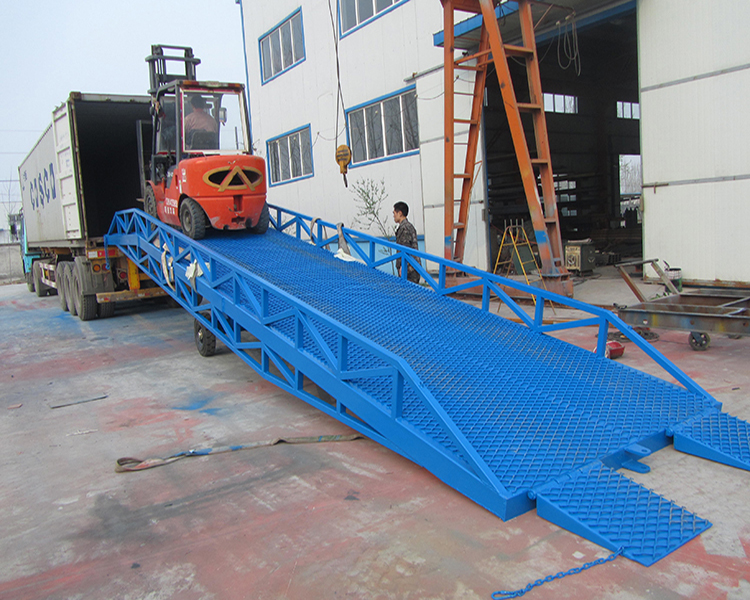
Best Practices for Safe Loading with Yard Ramps
5. Common Safety Mistakes to Avoid
-
Using too steep a ramp for the available dock height
-
Operating forklifts at high speed on inclines
-
Neglecting to secure the ramp with safety chains
-
Ignoring tire conditions or traction surfaces
-
Overloading beyond rated capacity
Addressing these issues can reduce accidents and keep workers safe.
6. Conclusion
The slope of a yard ramp is more than a design parameter — it’s a key determinant of operational safety and efficiency. Following recommended slope guidelines (8–14%), calculating correct ramp lengths, and adhering to safe loading practices can significantly reduce risks and improve workflow.
For warehouses seeking custom-designed heavy-duty yard ramps, consider models engineered by VietPos Rack, offering precise slope design, anti-slip platforms, and robust load capacity — ensuring safety and performance in every loading operation.
