

 Tiếng Việt
 中文 (Chinese)
 한국어
한국어 日本語
日本語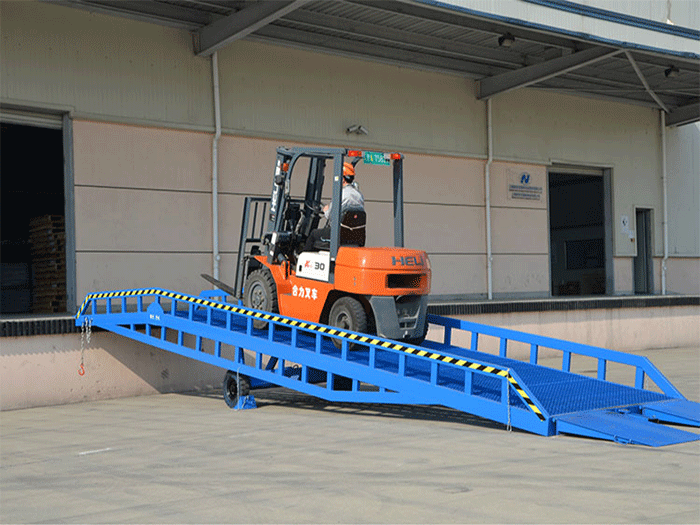
In modern logistics, yard ramps have become indispensable tools for businesses that handle frequent loading and unloading operations. These mobile or stationary ramps serve as a bridge between ground level and truck beds, allowing forklifts or pallet jacks to move safely between different heights without requiring a permanent dock.
One of the most important factors that determines how well a yard ramp functions is its slope. The slope affects how easily equipment can travel up and down, how quickly goods can be moved, and how safe the operation will be for workers. Understanding how to calculate the right yard ramp slope ensures efficiency, safety, and compliance with industry standards.
1. Why Yard Ramp Slope Matters
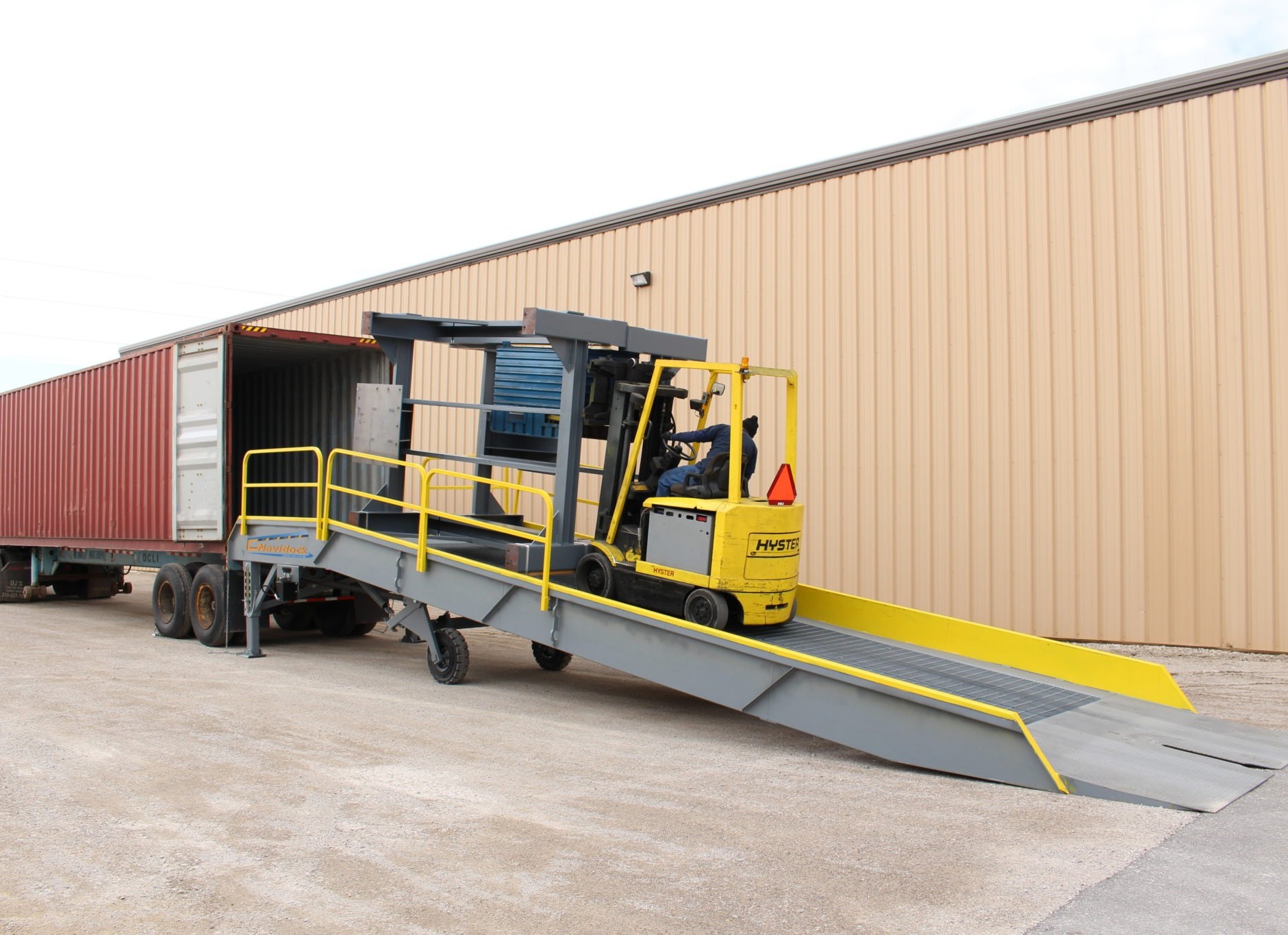
The slope of a ramp determines the angle of ascent and directly impacts forklift stability, traction, and loading speed. A ramp that is too steep can make it difficult for forklifts to climb, especially when carrying heavy loads, while a ramp that is too long may take up unnecessary space and increase setup costs.
Getting the slope right means achieving the perfect balance between safe incline, usable ramp length, and operational efficiency. OSHA and ANSI standards generally recommend that yard ramps maintain a maximum slope of 14% for forklifts and 10% for manual pallet jacks to prevent slipping or tipping accidents.
Why Yard Ramp Slope Matters
2. Understanding Slope Calculation
The formula for calculating ramp slope is straightforward:
Slope (%)=Run/ Rise×100
-
Rise = the vertical height difference between ground and dock (in inches or centimeters).
-
Run = the total length of the ramp.
For example, if a dock height is 48 inches and the ramp length is 30 feet (360 inches):
48/360=0.1333=13.3%
That equals a slope angle of approximately 7.5 degrees, which is considered safe for most forklift operations.
3. Ideal Ramp Lengths for Different Loading Applications
Below are recommended slope percentages and ramp lengths based on various use cases:
| Application | Maximum Slope | Ideal Ramp Length (for 48 in dock) |
|---|---|---|
| Forklift Loading | 12–14% | 30–36 ft |
| Pallet Jack Loading | 8–10% | 36–40 ft |
| Manual Carts or Trolleys | 6–8% | 40–48 ft |
| Wheelchair / Pedestrian Access | ≤5% | 48–60 ft |
Longer ramps reduce the slope, making it easier for operators to control equipment and maintain balance during movement.
4. Step-by-Step Example: Calculating Your Ramp Length
If your dock height is 48 inches and you need a 10% slope:
Ramp Length=48/10×100/12=40 feet
This means you should use a 40-foot yard ramp to achieve a comfortable and safe incline for forklifts or manual handling.
5. Safety and Operational Tips
-
Always secure the ramp: Use safety chains, clamps, or locking pins to prevent movement.
-
Check ramp surface: Make sure the surface is made of anti-slip grating or diamond plate steel for maximum traction.
-
Verify load capacity: The ramp must support the combined weight of both the forklift and its maximum load.
-
Regular inspections: Check hydraulic systems, welds, and frames regularly for signs of wear or corrosion.
-
Train operators: Ensure workers understand slope safety and proper loading techniques to prevent accidents.
6. Common Mistakes in Slope Design
-
Steep slopes (over 14%) that strain forklift engines and brakes.
-
Underestimating load capacity, leading to ramp deformation.
-
Ignoring surface maintenance, causing slippery conditions.
-
Not providing a level-off platform at the top of the ramp for safe forklift transition.
By avoiding these issues, you can extend the lifespan of your yard ramp and maintain a safer work environment.

Common Mistakes in Slope Design
7. The Role of Proper Slope in Efficient Loading Operations
An optimized yard ramp slope improves loading speed, reduces operator fatigue, and minimizes wear on forklift brakes and tires. A gentle incline also helps prevent pallet shifting or product damage during transport.
For logistics centers that handle high volumes daily, calculating the correct slope is not just a safety measure — it’s a strategic investment in productivity.
8. Conclusion
Determining the right yard ramp slope is crucial to achieving both safety and efficiency in loading operations. Following recommended slope percentages (8–14%), performing accurate calculations, and adhering to maintenance routines will ensure smooth and reliable workflows.
At VietPos Rack, we provide custom-engineered yard ramps with optimized slope design, anti-slip platforms, and heavy-duty load capacities — built to meet the highest standards of industrial safety and performance.
