

 Tiếng Việt
 中文 (Chinese)
 한국어
한국어 日本語
日本語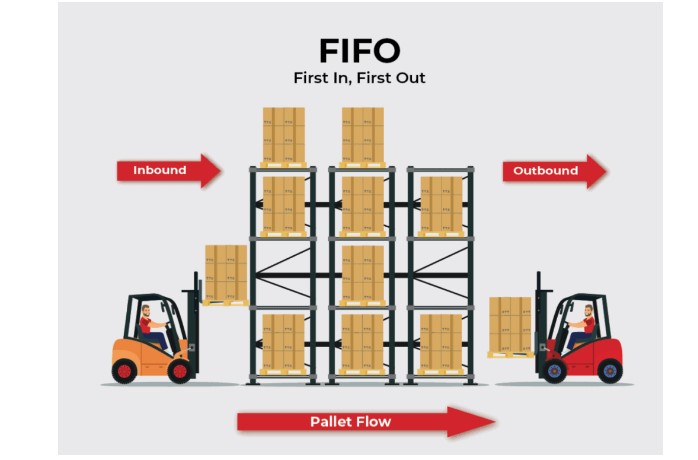
The FIFO method is an inventory management technique that organizes product dispatch based on the order of receipt — meaning items that enter the warehouse first are shipped out first. This approach provides clear visibility of goods flow, enhances inventory turnover, reduces obsolete products, and optimizes logistics management.
What FIFO Is and Its Significance
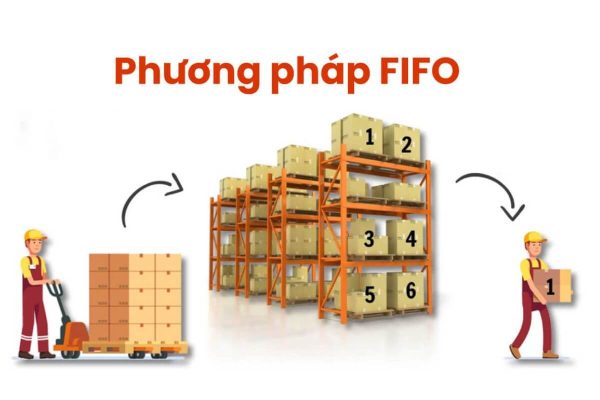
FIFO, which stands for “First In, First Out,” is one of the most widely used inventory management methods, designed to organize and control product storage. The basic principle of FIFO is that items received first in the warehouse are sold or used first. This method helps ensure a steady flow of goods, limits long-term inventory, and reduces the risk of spoilage, expiration, or obsolescence.
In accounting, FIFO is also applied to inventory valuation and calculating the cost of goods sold (COGS). Under this method, it is assumed that earlier batches are sold first, while newer batches are retained for subsequent transactions. When calculating COGS, the purchase cost of the earliest batch is allocated to the cost of sold products.
FIFO is particularly suitable for industries with perishable goods, fixed shelf life, or strict hygiene standards. For example, grocery stores use FIFO to sell items approaching expiration first, while cosmetic brands apply FIFO to ensure that earlier shipments are used before newer ones, preventing long-term inventory and minimizing the risk of product damage.
How FIFO Operates in a Warehouse
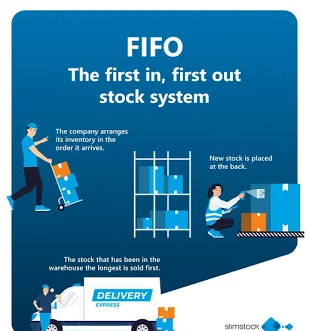
The FIFO principle focuses on ensuring that inventory is moved regularly and updated continuously. In a typical FIFO process, when a new batch of goods arrives, it is placed behind the existing stock so that older products at the front are ready to be dispatched first. This cycle ensures that no products remain in storage past their shelf life, allows effective management of perishable items, and reduces obsolete inventory. Implementing FIFO in a warehouse generally involves the following steps:
Step 1: Receiving and Recording Inventory
When a new shipment is received, it is placed behind existing batches, while older batches are moved to the front for immediate dispatch. For example, if the warehouse receives 100 units of Product X from the first batch and then 150 units from a second batch, the first 100 units are positioned in the most accessible location to be shipped first, with the 150 new units placed behind.
Step 2: Organizing Inventory
Each batch should be arranged according to receipt date, cost, and quantity. This makes it easy for staff to identify the oldest batch when fulfilling orders, reducing errors and speeding up processing. Tools such as labels, barcodes, and warehouse management software help track inventory and ensure accurate FIFO implementation.
Step 3: Fulfilling Orders
When processing orders, employees must always select products from the oldest batch first. For instance, if a customer orders 50 units of Product X, the FIFO system ensures that the first 50 units are taken from the earliest received batch, followed by the next batches as needed.
Step 4: Replenishing Inventory
When new stock arrives, it is placed behind existing inventory, maintaining the “first in, first out” principle. For example, if an additional 150 units of Product X from a third batch are received, they are stored behind the second batch, ensuring older stock is always sold first.
By correctly implementing FIFO, businesses can optimize product turnover, minimize waste, and improve warehouse management efficiency while maintaining an accurate, transparent, and systematic inventory control proces

Advantages and Disadvantages of the FIFO Inventory Management Method
When implementing any inventory management system, it is essential to understand the strengths and limitations of each method. The FIFO (First In, First Out) method is no exception, and its effectiveness depends largely on the nature of operations, industry, and the composition of a company’s inventory.
Advantages of FIFO
One of the most notable benefits of FIFO is minimizing waste and obsolete inventory. The basic principle of FIFO is that items received first in the warehouse are sold or used first, helping businesses avoid keeping old products in stock for too long, which could lead to spoilage or expiration. This is particularly important for industries dealing with perishable goods, such as food, pharmaceuticals, or cosmetics. Reducing waste not only saves costs but also protects brand reputation and ensures product quality for customers.
FIFO also helps optimize warehouse management processes. By applying FIFO, steps from receiving, organizing, and storing goods to fulfilling orders become easier and more streamlined. Knowing which batch will be dispatched first allows businesses to plan inventory replenishment efficiently, reduce errors, and increase operational effectiveness. A FIFO-based inventory flow enables staff to quickly identify and select the correct batch, ensuring smooth warehouse operations.
Another benefit of FIFO is maximizing profits, especially in contexts where purchase costs or the cost of goods increase over time. Because older batches with lower costs are sold first, the cost of goods sold (COGS) is lower, resulting in higher net profits and improved cash flow. Newer, higher-cost inventory remains in stock, allowing businesses to preserve product value and maximize profits from subsequent sales.
Disadvantages of FIFO
Alongside its advantages, FIFO has certain limitations. This method requires active management and discipline to ensure older stock is sold first. If a business does not implement an effective inventory management system or maintain strict controls, executing FIFO can be challenging, leading to higher operating costs and lower warehouse efficiency. Errors such as inaccurate batch tracking, improper placement, or overlooking older products can result in prolonged inventory storage and reduced profits.
Additionally, FIFO is not ideal for all industries, particularly those with fluctuating prices or volatile markets. In such environments, the cost of later shipments can vary significantly, meaning that profits from sold batches may not accurately reflect actual costs. FIFO is better suited for industries with stable or steadily increasing prices, where older batches retain value and cost prediction is more reliable.
Conclusion
In summary, FIFO offers important benefits such as reducing waste, optimizing processes, and increasing profits. However, it also requires businesses to maintain strict management practices and align the method with the specific characteristics of their industry to achieve maximum effectiveness.
Storage Systems Suitable for FIFO
-
Flow Racks (Dynamic Racks):
An ideal solution for FIFO, these racks feature inclined shelves with rollers or rails that allow goods to move from the receiving point to the dispatch point by gravity, reducing handling time and preventing congestion. -
Pallet Shuttle:
A semi-automated system using motorized shuttles to transport pallets within the racks, optimizing loading and unloading times while maintaining the correct first-in, first-out order. -
Automated Warehouses:
The highest-efficiency solution, applying advanced technology to manage and move goods according to FIFO without direct human intervention, reducing errors and improving logistics efficiency.
At Viet Pos Rack, we provide durable and flexible industrial racking solutions suitable for various types of goods. Our modular designs maximize space utilization, particularly vertical space, and allow for easy customization and installation.
Tips for Implementing FIFO Inventory Management in Your Warehouse
To ensure an effective FIFO system, it is crucial to implement it correctly across all warehouse operations. Some basic strategies for successful FIFO implementation include organizing goods systematically, maximizing warehouse space, and using professional warehouse management software to maintain a smooth flow of inventory.
Tip 1: Organize and Label Inventory
FIFO only works if the oldest items are dispatched first. Clear labeling of all products is essential. Labels help warehouse staff quickly identify which batches should be prioritized and support better warehouse organization.
Using barcode scanning also allows accurate product tracking, inventory management, and alerts when stock is running low or nearing expiration. This is particularly useful for items with short shelf lives, such as food, pharmaceuticals, and cosmetics.
Tip 2: Optimize Warehouse Space
FIFO requires scientific organization of goods. Maximize warehouse space by clearly separating areas for new and old inventory. Depending on rack layout, new stock should be placed behind or above older stock to ensure older items are moved first. Proper rack arrangement makes it easier for staff to access and process goods, improving turnover efficiency and reducing errors.
Tip 3: Conduct Regular Inventory Checks
FIFO is effective only when inventory levels are balanced—not too high or too low. Regular stock checks ensure the warehouse has enough goods to fulfill orders while preventing overstock or prolonged storage. Inventory audits can be conducted via warehouse management software or physical checks to detect errors in product flow. In industries like food or perishable goods, audits help identify near-expiry items, enabling more effective FIFO application.
Tip 4: Use Professional Warehouse Management Software
To implement FIFO effectively, businesses need an intuitive, scalable inventory management system. The software should offer features like data analysis, inventory flow reports, order fulfillment management, barcode creation, and stock alerts throughout the warehouse. Such tools help maintain a steady product flow, minimize errors, and enhance overall management efficiency.
Tip 5: Train Staff
Finally, staff training is critical. Warehouse personnel need to understand the process from receiving to dispatch, why older items must be prioritized, and how to maintain FIFO flow. A well-trained team ensures that the FIFO system operates smoothly, optimizing warehouse operations and reducing waste risk.
Frequently Asked Questions
FIFO is a widely used inventory management method due to its simplicity, ease of understanding, and ability to minimize waste, especially for perishable goods. It also helps businesses more accurately reflect the cost of goods sold and actual cash flow, particularly in environments with stable prices.
In accounting, FIFO directly affects the calculation of the cost of goods sold (COGS) and the inventory value on financial statements. When market prices are rising, FIFO records lower COGS, resulting in higher profits.
The main difference between these two methods lies in how the cost of inventory issued is calculated:
FIFO:
-
Calculates the cost of goods sold based on the cost of the earliest received batches, reflecting inventory values closer to current market prices.
Moving Average:
-
Calculates the cost of goods sold based on the average cost of all items in stock, making it less sensitive to price fluctuations.
Choosing the Appropriate Method:
The choice depends on the characteristics of the business, the type of goods, and inventory management objectives. FIFO is often preferred in industries with seasonal products or goods at risk of spoilage, while the moving average method is commonly used in industries with stable prices.
