

 Tiếng Việt
 中文 (Chinese)
 한국어
한국어 日本語
日本語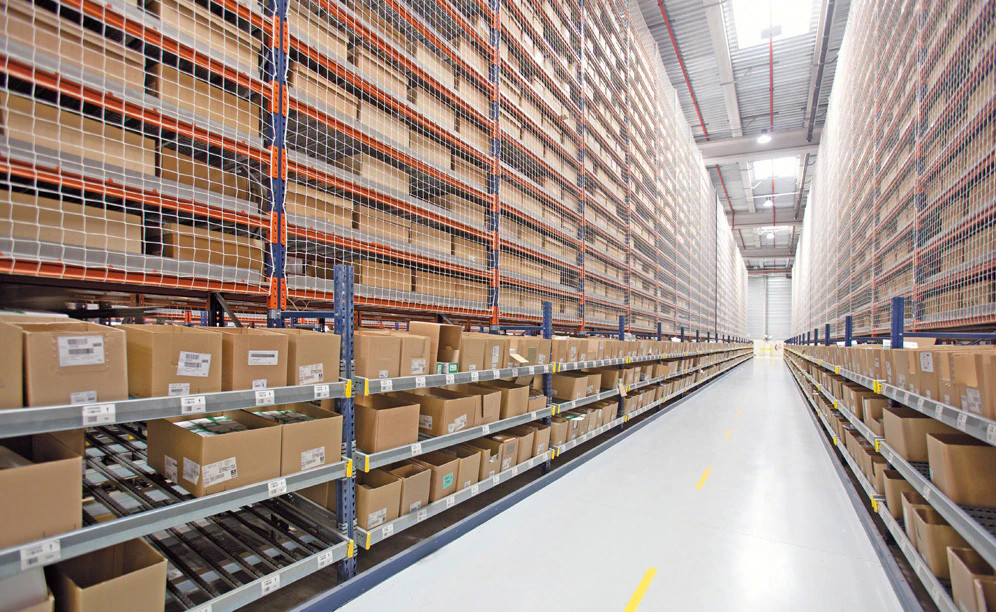
Industrial warehouse racks are essential equipment in the production and storage process of industrial enterprises. With large capacity, flexibility, and high durability, industrial warehouse racks are becoming the top choice for many businesses. Contact Hotline: 0796 700 777 for specific advice and quotes.
1. Selective Pallet Racks
Selective pallet racks are a simple yet effective storage solution for businesses in the manufacturing, transportation, and warehousing industries. With high-quality steel construction and flexibility in storing various types of goods, selective pallet racks help save warehouse space, optimize goods management processes, and minimize goods handling time.
The flexibility and easy accessibility of selective pallet racks make warehouse management more convenient and reduce the risk of goods damage during storage. Selective pallet racks also allow goods to be stored on multiple levels, helping to optimize warehouse space and save costs for businesses.
With features that optimize space and efficiently manage goods, selective pallet racks are becoming the top choice for many businesses in optimizing production and goods management processes. In addition, selective pallet racks also have flexible features, allowing changes in structure and size to suit the goods storage requirements of each business.

2. Drive-in Racking
Drive-in racking is a storage solution specifically designed for businesses that need to store large quantities of goods and require high flexibility in inventory management. With a design that allows forklifts to drive into the rack to retrieve goods, drive-in racking helps optimize storage space and minimize goods handling time.
Drive-in racking is commonly used in manufacturing and logistics industries where there is a need to store large quantities of goods with guaranteed quality. The flexible nature of drive-in racking allows for multi-level storage and can be customized to meet the specific requirements of each business.
However, drive-in racking also has some limitations, such as less efficient inventory management compared to selective pallet racking, and goods retrieval can take more time than other storage solutions. Therefore, drive-in racking is typically used for large quantities of goods that do not require frequent retrieval.

3. Very Narrow Aisle Selective Racking
Very Narrow Aisle Selective Racking is a storage solution designed to optimize storage space and enhance flexibility in goods management. With a design that allows forklifts to operate in very narrow aisles, Very Narrow Aisle Selective Racking is an industrial warehouse racking system that enables multi-level storage and maximizes storage area utilization.
Very Narrow Aisle Selective Racking is commonly used in warehouses and manufacturing plants where there is a need to store large quantities of goods and storage space is limited. The flexibility of Very Narrow Aisle Selective Racking allows businesses to organize goods efficiently and optimize the storage process.
However, Very Narrow Aisle Selective Racking also has some limitations, such as requiring a significant investment for the construction of very narrow aisle systems and demanding high technical skills in forklift operation. Therefore, Very Narrow Aisle Selective Racking is typically used for high-value goods that require high safety during storage.

4. Double Deep Racking
Double Deep racking is a type of pallet racking designed to optimize storage space and enhance goods storage capacity. With a design that allows goods to be stored on two levels deeper than conventional pallet racking, Double Deep racking enables the storage of large quantities of goods in a smaller storage area.
Double Deep racking is commonly used in warehouses and manufacturing plants where there is a need to store large quantities of goods and storage space is limited. The flexibility of Double Deep racking allows businesses to organize goods efficiently and optimize the storage process.
However, Double Deep racking also has some limitations, such as requiring forklifts with longer forks to retrieve and place goods in deeper positions. Additionally, storing goods on two levels can also make it difficult to manage and locate goods.

5. Push Back Racking
Push Back Racking is a type of pallet racking commonly used in the industry to optimize storage space and reduce loading/unloading time. Push Back Racking allows for deeper multi-level storage of goods compared to conventional pallet racking by using nested trolleys.
When goods are loaded onto the first trolley, the trolleys behind it automatically move forward to the previous position. When goods are removed, the trolleys behind automatically move up to fill the empty space. This process helps optimize storage space and reduce loading/unloading time.
Push Back Racking is often used in warehouses and manufacturing plants where there is a need to store large quantities of goods and frequently move goods in and out of the warehouse. In particular, Push Back Racking is very suitable for businesses with complex production processes that require products to be stored and transported in production order.
However, Push Back Racking also has some limitations, such as requiring special forklifts to pick and place goods onto the trolleys, and difficulties in managing and locating goods. Therefore, businesses need to carefully consider before deciding to use Push Back Racking to ensure efficiency and safety in the storage process.

6. Gravity Flow Racks
Gravity Flow Racks are an automated storage solution that allows products to move naturally from a higher position to a lower position periodically. Gravity Flow Racks are a system of inclined tracks that can be installed on pallet racks to minimize the time and effort required to locate products in the warehouse.
Products are placed on trays on top of the inclined tracks, and they automatically move down using gravity. When a product is removed, the products behind it automatically move up to fill the empty space, optimizing storage space and reducing loading and unloading time.
Gravity Flow Racks are commonly used in warehouses and manufacturing plants where there is a need to store large quantities of goods and frequently move goods in and out of the warehouse. In particular, Gravity Flow Racks are very suitable for businesses with continuous production processes that need to ensure goods are delivered to production locations quickly and efficiently.
However, Gravity Flow Racks also have some limitations, such as requiring high initial investment costs and requiring regular management and maintenance to ensure continuous operation. Therefore, businesses need to carefully consider before deciding to use Gravity Flow Racks to ensure efficiency and safety in the process of storing goods.

7. Cantilever Racks
Cantilever racks are convenient and flexible industrial warehouse racks for businesses. This type of rack is designed to store and maintain goods vertically and has a high load-bearing capacity. Cantilever racks are commonly used in warehouses, storage facilities, manufacturing plants, and large business establishments.
Cantilever racks are typically made from high-quality materials such as steel, which increases the durability and stability of the racks. They can be customized in size and design to suit the goods storage needs of businesses.
Cantilever racks allow products to be stacked safely and save space. With a large load-bearing capacity, cantilever racks can easily store heavy and large-sized products. This helps optimize storage space and reduce transportation and warehousing costs.
However, to use cantilever racks safely and effectively, businesses need to ensure that the racks are installed correctly and comply with safety regulations for goods storage. At the same time, businesses also need to ensure regular management and maintenance of the racks to ensure continuous operation and avoid unfortunate risks.

8. Mezzanine Floor Racks
Mezzanine floor racks are a type of industrial warehouse racking used to increase storage space by utilizing the empty space between the floor and ceiling of a warehouse. With their special design, mezzanine floor racks can withstand heavy loads and are used to store large or heavy products.
Mezzanine floor racks are designed to be customizable in size and style to meet the requirements of businesses. They can be installed in various orientations to maximize the storage space of the warehouse.
With mezzanine floor racks, businesses can effectively optimize their storage space, helping to reduce the cost of renting or building additional warehouses. At the same time, mezzanine floor racks also help increase productivity and efficiency in the process of transporting and storing products.
However, to use mezzanine floor racks safely and effectively, businesses need to ensure that the racks are installed correctly and comply with safety regulations for goods storage. At the same time, businesses also need to ensure regular management and maintenance of the racks to ensure continuous operation and avoid unfortunate risks.

9. Medium-duty warehouse shelving
Medium-duty shelving is one of the widely used types of warehouse shelving in warehouses and manufacturing plants. With its special design, medium-duty shelving can hold multiple pallets on different levels, helping to optimize the storage space of the warehouse.
Medium-duty shelving comes in many different types to suit the various storage requirements of businesses. These shelves can be designed with different dimensions and some can even be customized according to the specific needs of each business.
However, to use medium-duty shelving safely and effectively, businesses need to ensure that the shelves are installed correctly and comply with safety regulations for goods storage. Businesses also need to ensure regular management and maintenance of the shelves to ensure continuous operation and avoid unfortunate risks.

10. Multi-purpose V-rack
The multi-purpose V-rack is a versatile warehouse shelving unit designed to store goods of various sizes. With its flexible design, the multi-purpose V-rack can be used to store products such as pallets, cartons, or small items.
One of the advantages of the multi-purpose V-rack is its customizability to meet the requirements of each business. With a simple and flexible design, the multi-purpose V-rack can be modified to suit the size and weight of the goods.
The multi-purpose V-rack also helps optimize storage space and increase cost savings for businesses. At the same time, the rack also allows for quick and convenient product movement.

In this article, we have learned about popular types of industrial warehouse shelving, from Selective pallet racking to versatile V-racking for goods storage. Each type of shelving has different characteristics and applications, depending on the needs and requirements of each business.
However, the common point of these shelving types is that they all help optimize storage space, increase cost savings, and facilitate product movement. At the same time, using these shelving types safely and efficiently is also very important to ensure that goods storage is organized and managed in the most scientific and convenient way.
We hope that through this article, you have gained more knowledge and understanding of warehouse shelving, and can choose the most suitable type of shelving to optimize storage capacity in your warehouse.
