

 Tiếng Việt
 中文 (Chinese)
 한국어
한국어 日本語
日本語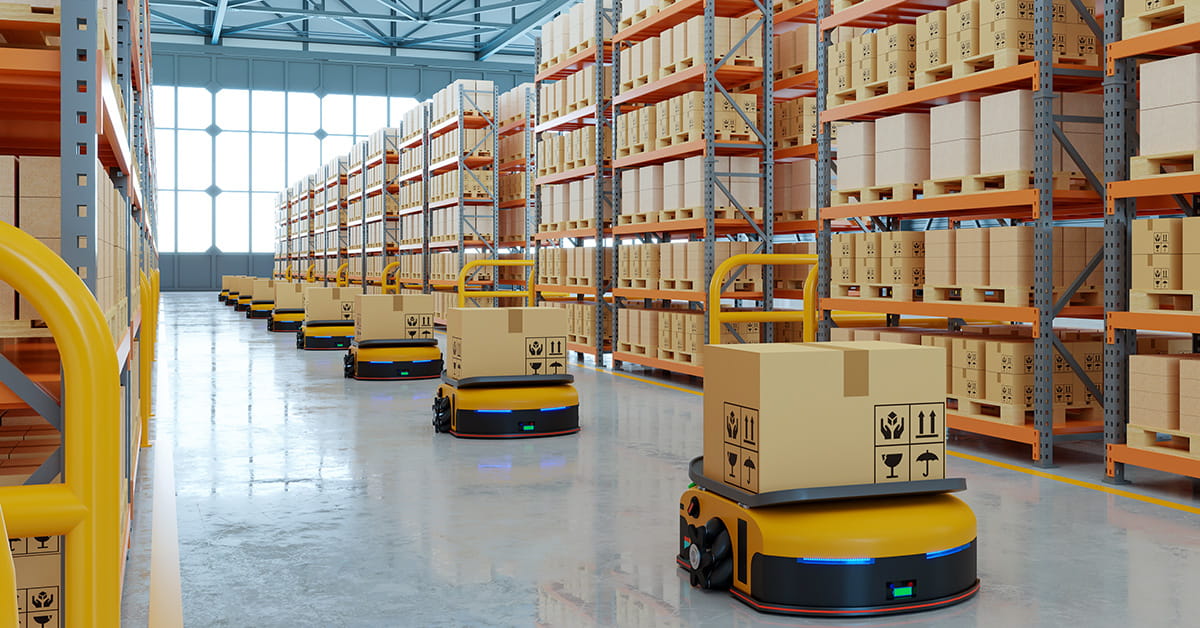
In the era of Industry 4.0 and digital transformation, businesses are increasingly investing in automation technologies to improve productivity, reduce labor costs, and enhance operational efficiency. One of the most important innovations in modern warehouse automation is Autonomous Mobile Robots (AMR).
Today, Autonomous Mobile Robots are widely used in smart warehouses, logistics centers, manufacturing plants, and e-commerce distribution hubs. Unlike traditional automated systems that rely on fixed paths or physical guides, Autonomous Mobile Robots can navigate freely within dynamic environments using advanced technologies such as artificial intelligence, sensors, and real-time mapping.
But how exactly do Autonomous Mobile Robots work, and what are their practical applications in automated warehouses? This article will provide a comprehensive overview of Autonomous Mobile Robots, their operating principles, benefits, and their growing role in warehouse automation.
What Are Autonomous Mobile Robots?
Autonomous Mobile Robots, commonly known as AMR, are intelligent robots designed to move independently within a working environment without requiring fixed infrastructure such as rails, magnetic strips, or predefined routes.
These robots use advanced technologies including:
-
Artificial Intelligence (AI)
-
Laser sensors (LiDAR)
-
Cameras and vision systems
-
Real-time mapping technology
-
Advanced navigation algorithms
With these technologies, Autonomous Mobile Robots can understand their surroundings, detect obstacles, and determine the most efficient route to complete assigned tasks.
Unlike traditional Automated Guided Vehicles (AGV), which follow fixed paths, Autonomous Mobile Robots can dynamically adjust their movement in real time. This flexibility makes them ideal for modern warehouses where layouts and workflows frequently change.
Because of their intelligence and flexibility, Autonomous Mobile Robots have become a key component in building smart warehouses and automated logistics systems.
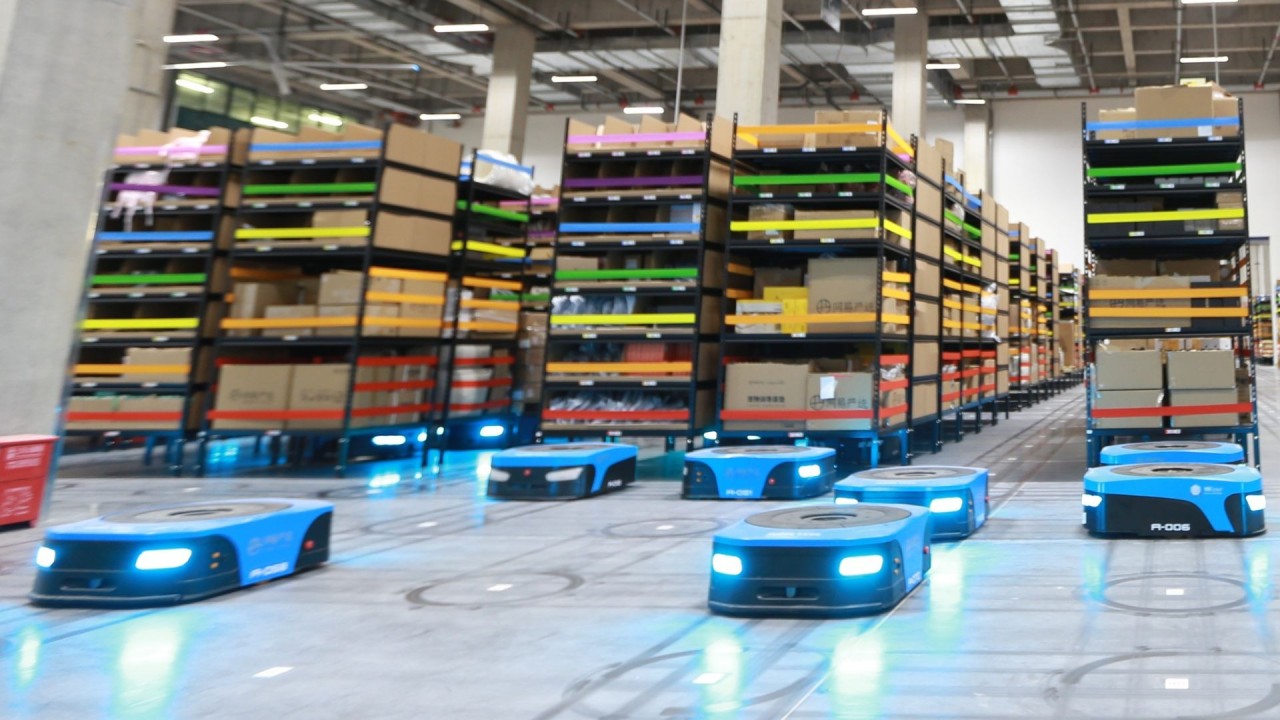
Sau khi thu thập dữ liệu từ cảm biến, Robot di động tự hành (AMR) sử dụng thuật toán điều hướng để tìm ra đường đi tối ưu nhất.
How Do Autonomous Mobile Robots Work?
To understand how Autonomous Mobile Robots function, it is important to explore the core technologies that enable them to operate autonomously in complex warehouse environments.
SLAM Technology for Mapping and Localization
One of the most important technologies used in Autonomous Mobile Robots is SLAM (Simultaneous Localization and Mapping).
SLAM allows robots to create a digital map of their surroundings while simultaneously determining their own location within that map.
Through SLAM technology, Autonomous Mobile Robots can:
-
Build a detailed map of the warehouse environment
-
Continuously update the map as the environment changes
-
Identify their precise position within the workspace
-
Navigate safely without predefined paths
This capability enables Autonomous Mobile Robots to operate efficiently even in dynamic warehouse environments where obstacles or layouts may change.
Advanced Sensor Systems
Autonomous Mobile Robots rely on multiple sensors to perceive their surroundings and ensure safe movement.
Common sensors used in AMR systems include:
-
LiDAR sensors for distance measurement
-
3D cameras for environmental recognition
-
Ultrasonic sensors for obstacle detection
-
Collision detection sensors for safety
These sensors allow Autonomous Mobile Robots to detect obstacles, identify people or equipment in their path, and adjust their navigation accordingly.
This intelligent sensing capability is essential for safe operation in warehouses where humans and robots often work side by side.
Intelligent Navigation Algorithms
After collecting environmental data through sensors, Autonomous Mobile Robots use advanced navigation algorithms to determine the best route to their destination.
These algorithms analyze various factors, including:
-
Distance between locations
-
Warehouse layout
-
Current obstacles or traffic conditions
-
Task priorities within the system
Based on this analysis, Autonomous Mobile Robots calculate the most efficient path to complete the assigned task.
If obstacles appear, the robot can automatically reroute and continue its operation without human intervention.
Integration with Warehouse Management Systems
In modern logistics operations, Autonomous Mobile Robots are often integrated with warehouse management software systems such as:
-
WMS (Warehouse Management System)
-
WCS (Warehouse Control System)
-
ERP (Enterprise Resource Planning)
These systems coordinate warehouse activities and assign tasks to robots.
For example, Autonomous Mobile Robots may receive instructions to:
-
Transport goods from receiving areas to storage locations
-
Deliver items to packing stations
-
Move pallets between production lines and warehouses
-
Assist workers during picking operations
Once the task is assigned, the robot autonomously navigates to complete the operation.
Advantages of Autonomous Mobile Robots in Warehouses
The adoption of Autonomous Mobile Robots provides numerous benefits for warehouse and logistics operations.
Increased Operational Efficiency
One of the most significant advantages of Autonomous Mobile Robots is their ability to operate continuously.
Unlike human workers, robots can function 24 hours a day, seven days a week, ensuring consistent productivity and faster material movement within warehouses.
Reduced Labor Costs
Warehouse labor shortages and rising labor costs are major challenges for many businesses.
By implementing Autonomous Mobile Robots, companies can automate repetitive transportation tasks, allowing human workers to focus on higher-value activities such as inventory management or quality control.
Improved Accuracy
Human errors during transportation and order fulfillment can lead to delays and financial losses.
Autonomous Mobile Robots follow digital instructions from warehouse management systems, ensuring high levels of accuracy and consistency.
Enhanced Workplace Safety
Safety is a major concern in busy warehouse environments.
Because Autonomous Mobile Robots are equipped with advanced sensors and obstacle detection systems, they can detect people and equipment nearby and adjust their movement accordingly.
This significantly reduces the risk of collisions and workplace accidents.
Flexible and Scalable Operations
Another key advantage of Autonomous Mobile Robots is their flexibility.
Unlike traditional automation systems that require fixed infrastructure, AMR solutions can easily adapt to warehouse layout changes.
If a company needs to increase capacity, additional Autonomous Mobile Robots can simply be added to the system without major infrastructure modifications.
Applications of Autonomous Mobile Robots in Automated Warehouses
Today, Autonomous Mobile Robots are used in a wide variety of warehouse operations.
Internal Material Transportation
One of the most common uses of Autonomous Mobile Robots is transporting goods within warehouses.
Robots can move products between:
-
Receiving areas
-
Storage locations
-
Picking stations
-
Packing and shipping zones
This automation reduces manual handling and speeds up material flow.
Order Picking Support
In e-commerce fulfillment centers, Autonomous Mobile Robots often assist workers during the picking process.
Instead of walking long distances, workers can remain at picking stations while robots transport items to them.
This approach significantly improves picking efficiency and reduces worker fatigue.
Pallet Transport in Manufacturing Facilities
Manufacturing plants often use Autonomous Mobile Robots to transport pallets, raw materials, and semi-finished goods between production lines and storage areas.
This ensures a continuous supply of materials and improves production efficiency.
Cold Storage and Harsh Environments
Autonomous Mobile Robots are also highly effective in cold storage warehouses where working conditions are challenging for human workers.
Robots can operate efficiently in these environments, maintaining productivity while minimizing human exposure to extreme temperatures.
Future Trends of Autonomous Mobile Robots in Logistics
The demand for Autonomous Mobile Robots is expected to grow significantly as companies continue to adopt automation technologies.
Future developments in AMR technology may include:
-
More advanced artificial intelligence capabilities
-
Improved human-robot collaboration
-
Integration with big data analytics
-
Enhanced connectivity with IoT systems
These advancements will make Autonomous Mobile Robots even more powerful tools for optimizing warehouse and logistics operations.
VietPos Rack – Advanced Warehouse Automation Solutions
As a trusted provider of warehouse storage and automation solutions, VietPos Rack offers advanced technologies that help businesses modernize their logistics systems.
In addition to industrial racking systems such as:
-
Selective pallet racking
-
Drive-in racking
-
Double deep racking
-
Shuttle racking systems
-
Mezzanine floors
VietPos Rack also provides Autonomous Mobile Robots solutions designed for modern warehouses and manufacturing facilities.
By integrating Autonomous Mobile Robots with professional warehouse design and storage systems, VietPos Rack helps businesses:
-
Optimize warehouse space
-
Improve operational efficiency
-
Reduce labor costs
-
Build smart and automated logistics systems
With extensive industry experience and advanced engineering capabilities, VietPos Rack is committed to delivering reliable and innovative solutions that support the future of automated warehouses.
Conclusion
Autonomous Mobile Robots are transforming the way warehouses and logistics operations function. With their ability to navigate autonomously, avoid obstacles, and integrate with warehouse management systems, AMR technology enables businesses to create highly efficient and flexible automated environments.
As automation continues to reshape the logistics industry, Autonomous Mobile Robots will play an increasingly important role in improving productivity, reducing operational costs, and building the smart warehouses of the future.
