

 Tiếng Việt
 中文 (Chinese)
 한국어
한국어 日本語
日本語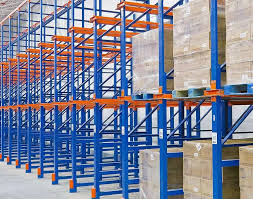
In modern warehouse management, maximizing storage capacity while maintaining operational efficiency has become a top priority for businesses. As logistics operations grow and inventory volumes increase, companies need storage systems that can optimize warehouse space and reduce operating costs. One of the most widely used high-density storage systems today is drive-in racking.
The drive-in racking system allows forklifts to drive directly into the racking structure to place and retrieve palletized goods. This design significantly reduces the need for aisles, allowing warehouses to store a much higher number of pallets within the same floor space.
However, like any storage solution, drive-in racking has both advantages and disadvantages. Understanding these factors and the criteria for selecting the right drive-in racking system is essential for businesses looking to improve warehouse efficiency.
This article will help you understand the advantages and disadvantages of drive-in racking and the most important criteria for choosing the right drive-in racking system for your warehouse.
What Is Drive-In Racking?
Drive-in racking is a high-density pallet storage system designed to maximize warehouse storage capacity. Unlike conventional pallet racks that require aisles between rows, the drive-in racking system allows forklifts to enter the rack structure to store or retrieve pallets.
In this system, pallets are placed on rails that run deep into the rack structure. Forklifts drive into these lanes and place pallets on the rails, stacking them several levels high.
Because of this design, drive-in racking operates according to the LIFO (Last In, First Out) principle. This means the last pallet stored is the first pallet retrieved.
For this reason, drive-in racking is best suited for warehouses that store large quantities of similar products with limited SKU variety.
A typical drive-in racking system includes several main components:
-
Upright frames
-
Pallet support rails
-
Top bracing
-
Back bracing
-
Forklift guide rails
-
Safety guards and protectors
With its strong structure and efficient layout, drive-in racking is widely used in logistics centers, manufacturing warehouses, cold storage facilities, and distribution centers.

Drive-in racking operates according to the LIFO (Last In, First Out) principle.
Advantages of Drive-In Racking
The drive-in racking system provides several important advantages for warehouses that require high-density storage.
Maximizing Warehouse Space
One of the biggest advantages of drive-in racking is its ability to maximize the use of warehouse space.
Traditional pallet racking systems require wide aisles between rack rows to allow forklifts to move. In contrast, drive-in racking eliminates most of these aisles because forklifts can drive directly into the rack lanes.
This allows businesses to increase storage capacity by 60% to 80% compared to standard pallet racking systems.
For companies with limited warehouse space or high inventory volume, drive-in racking is an effective solution for maximizing storage efficiency.
High-Density Pallet Storage
Drive-in racking is ideal for storing large quantities of palletized goods with similar characteristics.
This system is commonly used in warehouses that store bulk products such as:
-
Beverage and food products
-
Fast-moving consumer goods (FMCG)
-
Manufacturing raw materials
-
Frozen food products
By storing pallets in deep lanes, drive-in racking allows warehouses to organize goods in large blocks, making storage more efficient.
Lower Warehouse Expansion Costs
Another major benefit of drive-in racking is the ability to reduce warehouse expansion costs.
Because this system significantly increases storage density, businesses can store more goods within their existing warehouse space. This can eliminate the need for renting additional storage space or building new warehouse facilities.
As a result, companies can save money on:
-
Construction costs
-
Warehouse rental fees
-
Operational expenses
For many logistics and manufacturing companies, investing in drive-in racking is a cost-effective long-term strategy.
Strong Structure and High Load Capacity
The drive-in racking system is designed with heavy-duty steel components that provide excellent structural strength and load capacity.
Typical specifications include:
-
Load capacity per pallet: 500 kg to 2000 kg
-
Rack height: 6 to 12 meters
-
Storage levels: 3 to 8 levels
This makes drive-in racking suitable for warehouses storing heavy palletized goods such as industrial materials, packaged products, and bulk commodities.
Disadvantages of Drive-In Racking
Although drive-in racking offers many benefits, there are also several limitations that businesses should consider before choosing this system.
LIFO Inventory System
The most significant limitation of drive-in racking is that it operates based on the Last In, First Out (LIFO) principle.
This means that pallets stored last will be retrieved first. Products stored deeper inside the rack remain inaccessible until the front pallets are removed.
For industries that require strict inventory rotation, such as pharmaceuticals or perishable food storage, this can be a disadvantage.
Slower Picking Efficiency
In a drive-in racking system, forklifts must drive inside the rack structure to retrieve pallets. This process can slow down picking operations compared to selective pallet racking systems where each pallet is directly accessible.
Therefore, drive-in racking is more suitable for warehouses where goods are stored for longer periods rather than facilities that require frequent picking operations.
Requires Skilled Forklift Operation
Operating forklifts inside drive-in racking requires careful maneuvering because the forklift must move within narrow rack lanes.
Inexperienced operators may accidentally damage the rack structure or stored pallets. To improve safety, many warehouses install protective components such as:
-
Forklift guide rails
-
Column protectors
-
Impact barriers
Proper forklift training is also essential to ensure safe and efficient operation.
Limited Product Variety
Because drive-in racking stores pallets in deep lanes, it is not ideal for warehouses with a large number of different product types.
If a warehouse stores many different SKUs, managing inventory in a drive-in racking system can become complicated.
In such cases, other storage systems like selective pallet racks or shuttle racking may be more appropriate.

The type of products stored in the warehouse is another critical factor when selecting drive-in racking.
Criteria for Choosing Drive-In Racking
Selecting the right drive-in racking system requires careful planning and evaluation of warehouse requirements.
Below are the most important factors businesses should consider.
Warehouse Dimensions and Layout
Before installing drive-in racking, it is important to evaluate the warehouse layout, including floor space and ceiling height.
Since this system allows vertical stacking, warehouses with higher ceilings can take full advantage of drive-in racking to maximize storage capacity.
Proper layout planning also ensures efficient forklift movement and safe warehouse operations.
Type of Stored Goods
The type of products stored in the warehouse is another critical factor when selecting drive-in racking.
This system works best for:
-
Large quantities of identical products
-
Palletized goods with similar dimensions
-
Products that do not require FIFO inventory rotation
Understanding the characteristics of the stored goods helps determine whether drive-in racking is the right storage solution.
Pallet Weight and Load Capacity
Another important factor is the weight of the pallets stored in the warehouse.
When designing a drive-in racking system, engineers must calculate:
-
Load per pallet
-
Total number of pallets
-
Rack depth and height
These calculations ensure the racking system remains stable and safe under heavy loads.
Forklift Type
The forklift used in the warehouse must be compatible with the drive-in racking system.
Common forklift types used with this system include:
-
Counterbalance forklifts
-
Reach trucks
-
Specialized forklifts for cold storage warehouses
Considering forklift dimensions and turning radius is essential during the rack design process.
Choosing a Reliable Racking Manufacturer
Finally, selecting an experienced and reliable racking manufacturer is critical to ensuring the quality and safety of the drive-in racking system.
Businesses should evaluate suppliers based on:
-
Material quality
-
Manufacturing standards
-
Load testing and safety certification
-
Installation and maintenance services
Working with a professional manufacturer ensures the system is durable and optimized for the warehouse environment.
Applications of Drive-In Racking
Today, drive-in racking is widely used in various industries because of its high storage density and efficiency.
Common applications include:
Cold storage warehouses
Used to store frozen food and temperature-controlled products.
Logistics and distribution centers
Suitable for storing large volumes of palletized goods.
Manufacturing warehouses
Used for storing raw materials and finished products.
FMCG warehouses
Ideal for fast-moving consumer goods stored in large quantities.
VietPos Rack – Professional Manufacturer of Drive-In Racking
If your company is looking for a reliable drive-in racking solution, VietPos Rack is one of the leading manufacturers of industrial warehouse racking systems in Vietnam.
With years of experience in designing and manufacturing storage systems, VietPos Rack provides a wide range of warehouse racking solutions such as:
-
Drive-In Racking
-
Selective Pallet Racking
-
Double Deep Racking
-
Shuttle Racking Systems
-
Mezzanine Floors
-
Medium Duty Shelving
All products are manufactured using high-quality steel and modern powder-coating technology to ensure durability and long service life.
In addition, VietPos Rack provides consultation, warehouse layout design, manufacturing, and professional installation services, helping businesses optimize warehouse space and improve storage efficiency.
By choosing VietPos Rack, companies can build a modern warehouse system that supports long-term operational growth and efficiency.
