

 Tiếng Việt
 中文 (Chinese)
 한국어
한국어 日本語
日本語
RFID in industrial warehouse management is a solution that uses radio waves to automatically identify and record product information without manual scanning. According to the MarketsandMarkets 2025 report, the global industrial RFID market reached USD 18.6 billion, with a compound annual growth rate of 14.8% — of which logistics and warehouse management account for 34% of the market share. In Vietnam, 3PL providers and medium-to-large manufacturing plants are transitioning from manual/Excel inventory counting to realtime RFID systems, combined with industrial racking infrastructure for comprehensive optimization.
Problems Facing Traditional Warehouses

Warehouses operating with manual or barcode methods face 5 core problems: inventory discrepancies due to manual data entry, prolonged inventory counting time, difficulty controlling slow-moving stock, unexplained inventory shrinkage, and lack of real-time data for decision-making. These pain points are especially severe for 3PL providers managing multiple clients and manufacturing plants with thousands of SKUs.
- ⚠️ 5-15% inventory discrepancy: A 2025 survey by the Vietnam Logistics Research Institute shows that 68% of 3PL enterprises record discrepancies between actual inventory and system records of 5-15%/month, mainly due to manual data entry and barcode scanning errors.
- ⚠️ 3-5 days/month of inventory counting time: A 5,000m² warehouse with 10,000 pallets requires 4-5 full-time employees working 3-5 days for periodic inventory counts, causing operational disruptions and labor costs.
- ⚠️ Slow-moving stock not detected in time: Goods stored for over 90 days account for 12-18% of warehouse capacity but are not automatically flagged, wasting storage space on selective pallet rack systems and increasing opportunity costs.
- ⚠️ 0.5-2% of inventory value lost to shrinkage: For a warehouse valued at 50 billion VND, a 1% shrinkage rate equals 500 million VND/year — mostly due to lack of real-time control at the inbound-outbound stage.
- ⚠️ Lack of real-time data for coordination: Warehouse managers cannot accurately determine the location and quantity of goods ready for dispatch, leading to delayed order fulfillment and customer loss.
How does the RFID solution for warehouse management work?
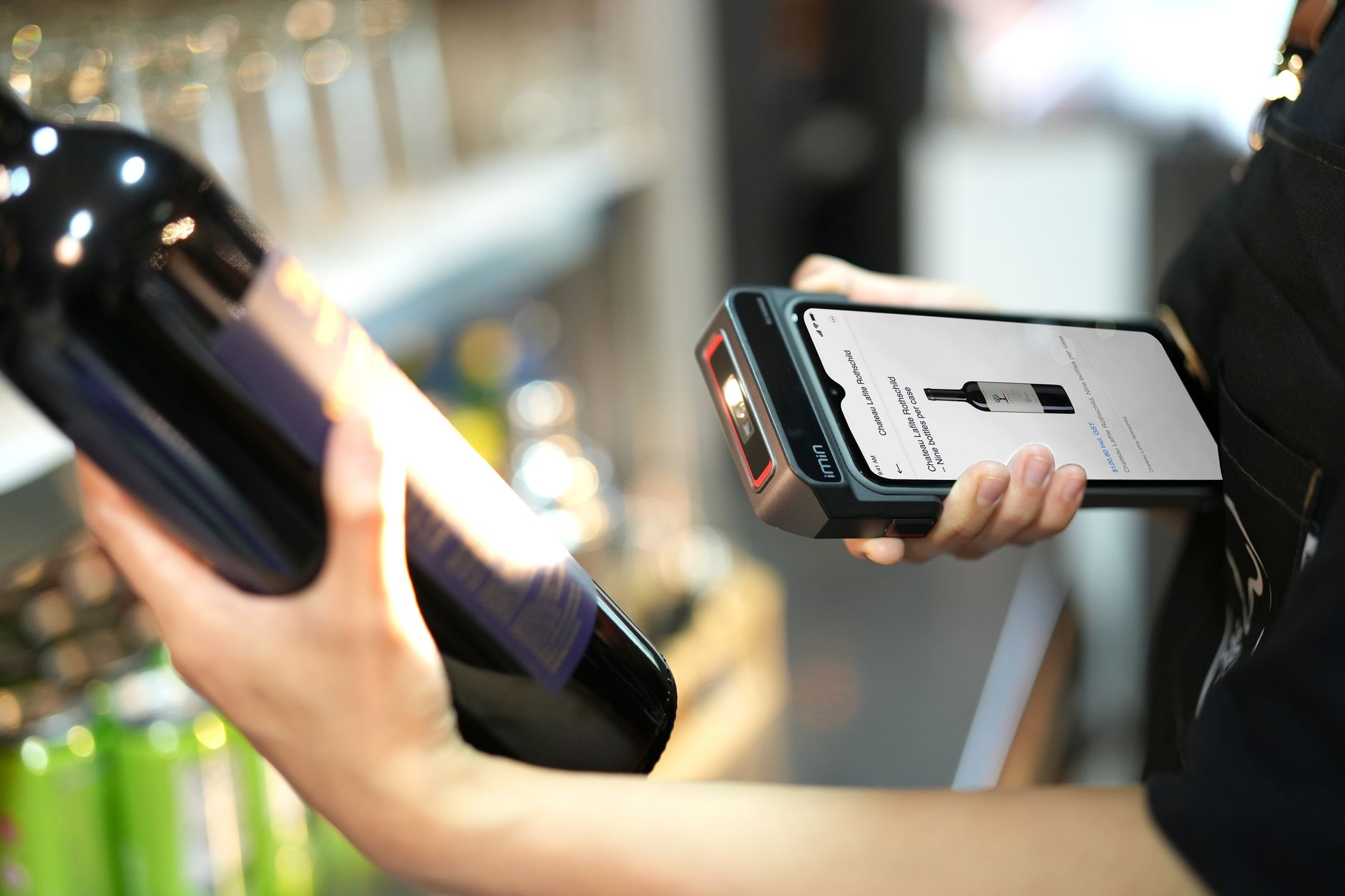
The RFID system in warehouse management operates based on three main components: RFID tags attached to pallets/goods, readers (fixed portals or handheld devices) placed at control points, and warehouse management software (WMS) that processes data. When a pallet moves through an RFID portal — typically installed at warehouse doors or at the head of aisles between selective rack rows — the information is read automatically and synced to the WMS in real time.
- Attaching RFID tags: Each pallet of goods is fitted with a passive UHF RFID tag containing a unique identifier — usually the PO number, SKU, batch number, and production date. The tag can be attached to wooden pallets, plastic pallets, or Việt POS Rack steel pallets using adhesive or rivets.
- Fixed Portal Reading: RFID portals are installed at 4 strategic locations: goods receiving door, goods shipping door, the head of each selective rack aisle, and the staging area. Readers scan tags within a 3-8m radius, reading 200-500 tags/second simultaneously.
- Antenna Positioning: The phased-array antenna system precisely determines which aisle and rack level a tag is on — supporting goods location in drive-in or push-back racks.
- Processing and Alerts: Data from readers is sent to the middleware and cross-checked against the WMS. If misplaced goods, expired items, or inventory exceeding thresholds are detected, the system automatically sends alerts via email/Zalo.
- WMS/ERP Integration: All realtime inventory data is synchronized to the warehouse management system (WMS) or ERP (SAP, Oracle, Odoo), giving managers an accurate picture of inventory at all times.
Specific benefits of RFID in industrial warehouse management

Reduce inventory counting errors by 90%
Inventory accuracy increases from 80-85% (manual) to 99.5-99.9% by eliminating manual data entry and barcode scanning.
Increase counting speed by 300%
Counting 10,000 pallets takes only 3-4 hours instead of 3-5 days. The system can count the entire warehouse without stopping operations.
Realtime goods tracking
Know exactly which aisle and rack level a pallet is on — reducing search time from 15-20 minutes down to 30-60 seconds.
Reduce dead stock by 30-50%
Automatic alerts when goods are nearing expiry or inventory exceeds thresholds, helping optimize inventory turnover.
Prevent goods shrinkage
Immediate alerts when a pallet leaves the warehouse without an outgoing order in the system — reducing shrinkage by 80-90%.
Automate inbound-outbound processes
Forklifts passing through RFID portals automatically record inbound/outbound pallets, reducing manual operations for warehouse staff by 70-80%.
RFID applications in 3PL logistics

For 3PL, RFID solves the challenge of managing multiple clients within the same warehouse space. Each client has their own tag color code, and the system automatically sorts incoming goods to the correct positions on selective racks. When shipping goods, the reader at the door cross-checks the order code — if incorrect, the barrier automatically closes and sends an alert.
Case study: The 8,000m² distribution center of 3PL Miền Đông at Sóng Thần 2 Industrial Park (Bình Dương) deployed RFID for 15,000 pallets on selective + drive-in racks. Results after 6 months: shipping productivity increased 65%, delivery errors dropped from 2.3% to 0.12%, and month-end inventory count time decreased from 5 days to 8 hours. ROI achieved in 14 months.
RFID applications in manufacturing plants

In manufacturing plants, RFID is integrated from the raw material receiving stage to managing work-in-progress and finished goods. RFID tags attached to steel pallets or plastic containers track the production route through each stage, giving managers accurate WIP (work-in-progress) visibility at any point in time.
Electronics component manufacturer E-Tech at Quế Võ Industrial Park (Bắc Ninh) installed an RFID system combined with 2-level mezzanine racks to store 8,000 SKUs of components. The system automatically alerts when materials are running low and suggests reorder points based on minimum stock levels. Results: 40% reduction in material waiting time, 25% reduction in safety stock thanks to realtime data.
RFID applications in cold storage
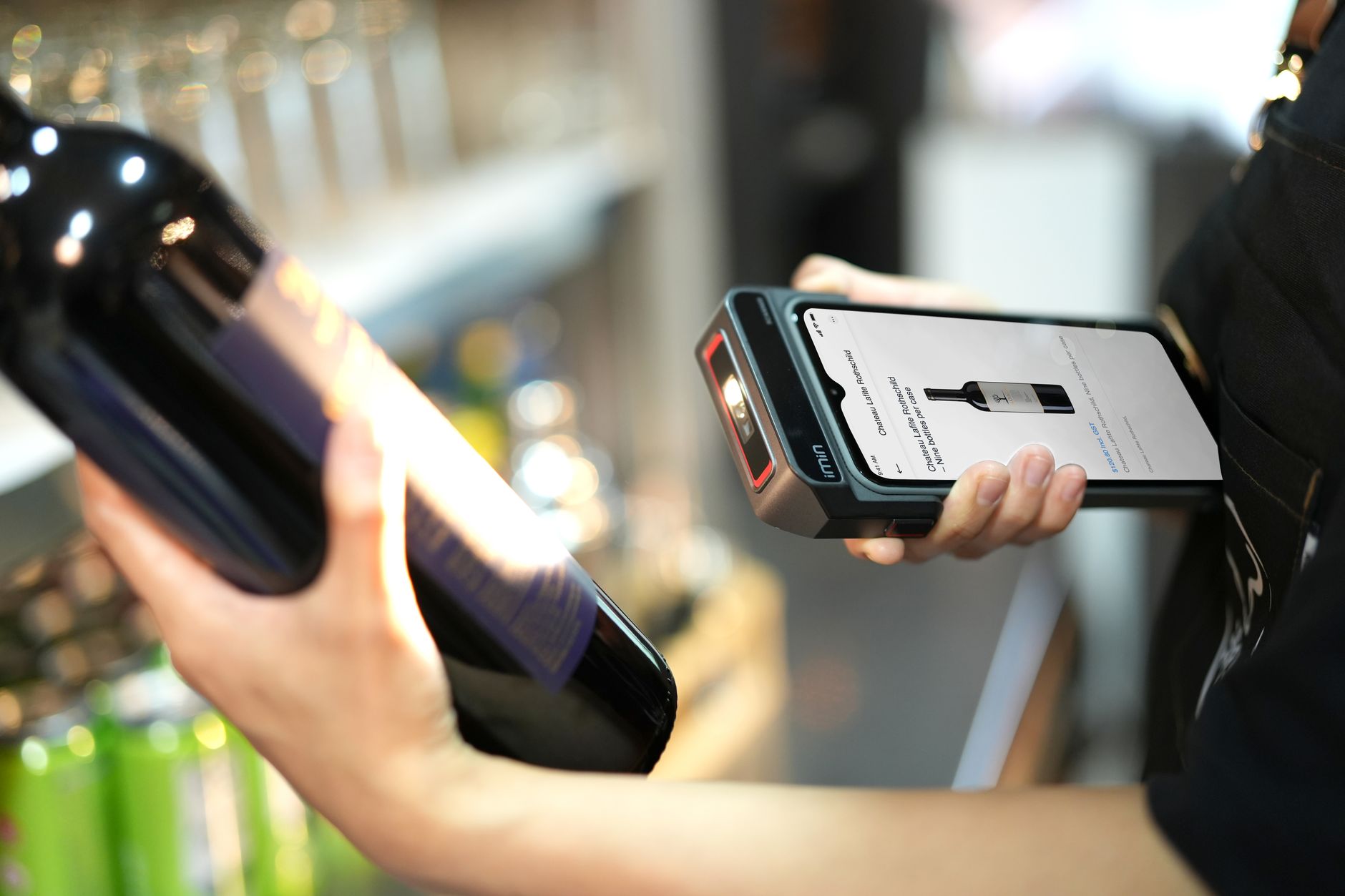
Cold storage is a harsh environment for both electronic equipment and warehouse racks. RFID tags for cold storage must withstand -25°C temperatures, high humidity, and resist freezing. Readers are designed with IP65 enclosures and anti-condensation antennas. Warehouse racks in cold storage are typically hot-dip galvanized drive-in racks with 80μm coating for corrosion resistance.
The 3,500m² cold storage facility of ABC Food Joint Stock Company at Tân Đức Industrial Park (Long An) — 2km from the Việt POS Rack factory — deployed RFID for 6,000 pallets of frozen goods. UHF passive tags operate reliably at -25°C, with readers achieving 99.8% accuracy even when pallets are stacked 4 levels high on drive-in racks. The system enables automatic FIFO control, reducing expired goods by 60%.
RFID vs. traditional barcode comparison
| Criteria | RFID (UHF Passive) | Barcode 1D/2D |
|---|---|---|
| Read speed | 200-500 tags/second, batch reading | 1-3 codes/second, individual scanning |
| Read range | 3-8m (fixed portal), 1-3m (handheld) | 0.1-0.5m (contact or close range) |
| Line-of-sight requirement | Not required — radio waves penetrate pallets, cartons | Required — barcode must be visible |
| Read/write capability | Read and write (some tags have 512-8Kb memory) | Read-only (pre-printed) |
| Durability | IP68, withstands -40°C to 85°C, lifespan 10+ years | Prone to tearing, dirt, fading — lifespan of a few months |
| Cost per tag (bulk) | 500-1,500 VND/tag (passive UHF) | 50-200 VND/label (pre-printed) |
| Reader cost | 15-50 million VND/fixed portal, 10-30 million VND/handheld | 2-10 million VND/scanner |
| Integration software | Requires middleware + compatible WMS | Basic WMS can be used |
| Deployment time | 4-8 weeks (depending on scale) | 1-2 weeks |
| Typical ROI | 12-18 months | 3-6 months |
Optimized warehouse racking infrastructure for RFID systems
RFID effectiveness depends heavily on warehouse layout and the type of racking used. Metal racks can cause RF interference if not properly designed. Viet POS Rack designs warehouse layouts with RFID integrated from the consultation stage, ensuring readers are placed correctly and antennas are not shielded by steel structures.
Selective Pallet Rack
Best suited for 3PL with diverse SKUs. Each aisle is equipped with 2-4 antennas that read tags when pallets are placed on the rack. Minimum distance between rack rows is 3.5m to ensure even RF coverage.
Drive-in / Drive-through Rack
Used for homogeneous, high-volume goods. Readers are installed at the head of each lane, reading tags as forklifts place pallets 2-6 positions deep. Hot-dip galvanized drive-in racks with 80μm coating are recommended for cold storage combined with RFID.
Mezzanine Rack 2-3 levels
Maximizes warehouse height of 8-12m. Each mezzanine level requires its own reader since RF waves struggle to penetrate steel floors. Viet POS Rack designs mezzanine floors with technical gaps for routing antenna cables.
Push-back / Pallet Flow Rack
Gravity-fed system enables natural FIFO. RFID tags on pallets are read as pallets slide down to the picking position — automatically recording the entry date and dispatch order.
Frequently asked questions about RFID in warehouse management
What is the cost of implementing RFID for a 2,000m² warehouse?
With a 2,000m² warehouse and a scale of 3,000-4,000 pallets, the investment cost for a complete RFID system (tags, readers, antennas, middleware, WMS integration) ranges from 200-500 million VND, depending on the number of fixed portals (usually 4-6 portals) and tag types. Cost of UHF passive tags: 500-1,500 VND/tag when purchasing in bulk. Total investment includes: 50-100 million for reader/antenna hardware, 100-300 million for tags, 50-100 million for middleware and integration. Average ROI payback period is 12-18 months.
Does RFID work well on metal racks?
Yes, but proper antenna design and installation positioning are required. Steel racks can cause interference or reflect RF waves, reducing read range. Solution: use specialized UHF tags for metal environments (on-metal tags) with an insulating spacer layer, install antennas at a 45° angle relative to the rack surface, and place readers at the end of each aisle. Việt POS Rack has experience deploying RFID on selective, drive-in, and mezzanine racking systems — ensuring a read rate of ≥99.5%.
Can RFID integrate with existing WMS/ERP systems?
Yes. RFID middleware supports integration with most popular WMS and ERP systems: SAP EWM, Oracle WMS, Manhattan Associates, Blue Yonder, Odoo, and domestic WMS platforms (KiotViet, Base.vn, FastWMS). Communication is via REST API, SOAP, or EDI files. Average integration time is 2-4 weeks, depending on the complexity of the current system. Việt POS Rack collaborates with software partners to ensure smooth integration.
What is the difference between passive and active RFID? Which type should be chosen for a warehouse?
Passive RFID has no battery, drawing power from the reader’s signal — low cost (500-1,500 VND/tag), read range of 3-8m, suitable for managing pallets and cartons in a warehouse. Active RFID has a battery, read range of 30-100m, cost of 50,000-200,000 VND/tag, used for high-value assets or containers. For most 3PL warehouse and factory management applications, passive UHF is the optimal cost-effective choice.
How long does it take to deploy a warehouse RFID system?
Implementation time depends on scale and complexity: a 2,000-5,000m² warehouse takes 4-6 weeks, including: layout survey (1 week), system design + reader/antenna installation (2 weeks), WMS integration (1-2 weeks), testing and training (1 week). Viet POS Rack coordinates with the customer’s technical team to minimize operational disruption — typically deployed zone by zone, without requiring warehouse closure.
Does RFID help control FIFO/LIFO on warehouse racks?
Yes. Each RFID tag stores the inbound date and batch number. When goods are dispatched, the WMS automatically suggests which pallet should be issued first (FIFO) based on the inbound date. For push-back or pallet flow racks, readers at the picking location confirm which pallet is retrieved — ensuring FIFO compliance even if warehouse staff pick incorrectly. FIFO violation reports are recorded for retraining purposes.
What are the warranty and technical support terms for the RFID system?
Viet POS Rack provides a 24-month warranty for reader and antenna hardware (subject to use in the designed environment). RFID tags carry a 12-month warranty against manufacturing defects. Remote technical support is available from 8 AM to 5 PM on business days, with responses within 2 hours. For onsite visits, technicians are available in Ho Chi Minh City, Binh Duong, and Dong Nai within 4-8 hours; other provinces within 24-48 hours. The periodic maintenance package (every 6 months) includes reader inspection, antenna calibration, and firmware updates.
RFID vs. barcode: when should you upgrade?
You should upgrade to RFID when: (1) the warehouse has >5,000 SKUs and manual inventory counts take >3 days/month; (2) the inbound-outbound error rate exceeds 1%; (3) FIFO/LIFO control is needed for products with expiration dates; (4) managing multiple customers within the same warehouse space (3PL); (5) handling high-value goods that require theft prevention. For smaller warehouses (<1,000m², <2,000 SKUs), barcode remains the more cost-effective solution — you can upgrade gradually as scale increases.
Are you facing inventory control issues?
Viet POS Rack provides integrated solutions combining industrial warehouse racks (selective, drive-in, mezzanine) with RFID systems — free layout consulting, 3D design, and full quotation within 48 hours. Contact us now for a warehouse survey and tailored solution recommendations.
📞 Hotline: 0796 700 777 | ✉️ Email: info@vietposrack.vn
Or leave your details — our technical team will contact you within 2 business hours.
