

 Tiếng Việt
 中文 (Chinese)
 한국어
한국어 日本語
日本語
Wire mesh storage lockers—modular steel cage systems for apartment buildings, strata properties, and commercial developments—represent a $120-180 million annual import market for Australia, Canada, and EU property managers. Vietnamese factories account for 22-28% of global supply, competing on FOB pricing (USD 45-85/unit vs. USD 120-160 domestic) and 30-45 day lead times. However, sourcing success depends on three critical factors: understanding CPTPP tariff elimination schedules, correctly structuring FOB incoterms to avoid hidden costs, and conducting rigorous supplier vetting to verify factory certifications and quality standards.
What Are Wire Mesh Storage Lockers and Why Import from Vietnam?
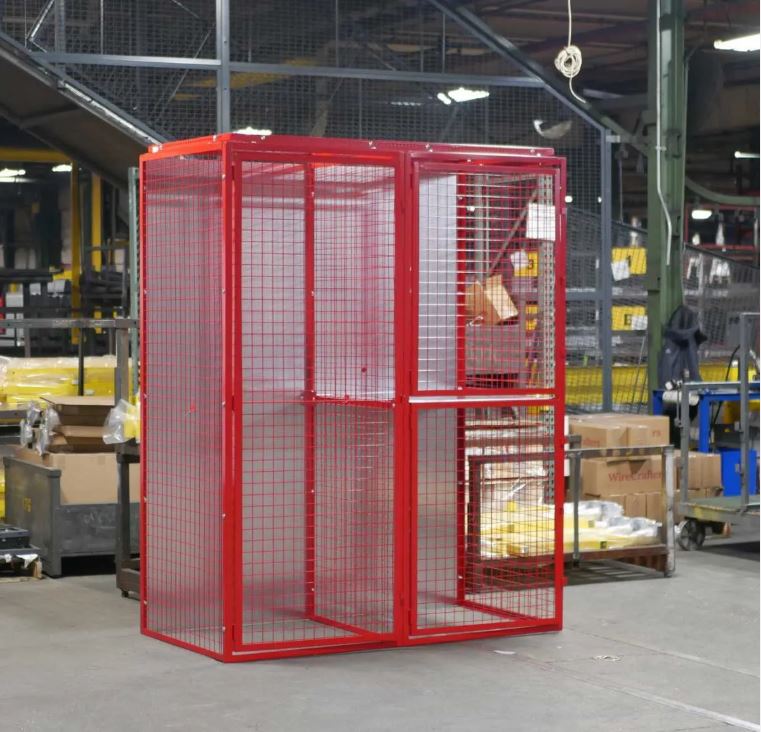
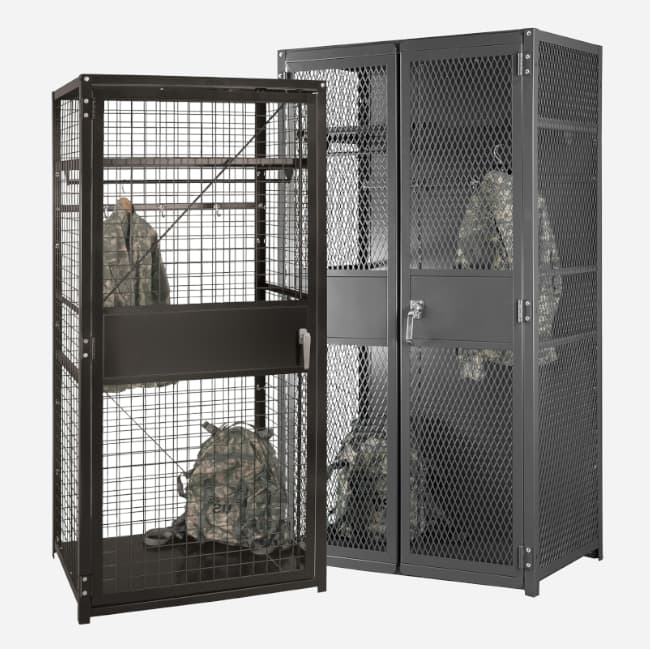
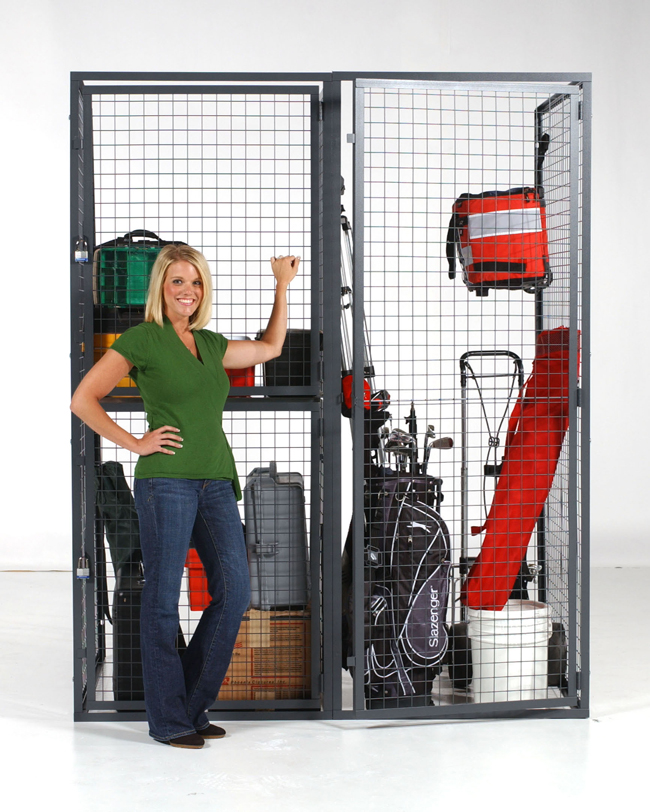
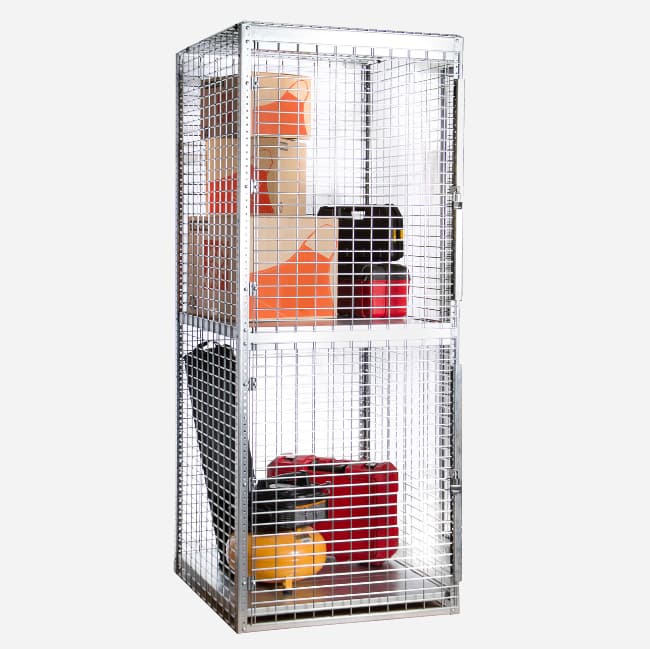
Wire mesh storage lockers are modular, bolt-together steel cage systems designed for secure tenant storage in apartment buildings, strata developments, and commercial properties. Vietnamese manufacturers produce these using cold-rolled steel frames (2.0-3.0mm thickness), welded wire mesh panels, and powder-coated finishes. Vietnam’s cost advantage stems from lower labor (USD 8-12/hour vs. USD 22-35 in Australia/Canada), efficient production scale (12-18 units/day per line), and tariff-free access to CPTPP markets (Australia, Canada, Japan, Chile). Typical import savings: 18-28% versus local suppliers when FOB pricing is optimized.
Understanding CPTPP Tariff Benefits for Storage Locker Imports
The Comprehensive and Progressive Agreement for Trans-Pacific Partnership (CPTPP) eliminates tariffs on 97-100% of tariff lines for goods originating from Vietnam. For wire mesh storage lockers classified under HS code 7326.90 (Other fabricated articles of iron or steel), CPTPP member countries—Australia, Canada, Chile, Japan, Mexico, New Zealand, Singapore, Vietnam—grant 0% import duty on Vietnamese origin goods. Tariff elimination is immediate (Day 1) for most CPTPP signatories; some countries phase duties over 3-7 years. This translates to savings of USD 8-15 per unit on typical 40ft container shipments (600-800 units).
CPTPP Tariff Elimination Timeline by Country
| Country | HS 7326.90 Duty Rate (Vietnam Origin) | Effective Date |
|---|---|---|
| Australia | 0% (immediate elimination) | 1 January 2019 |
| Canada | 0% (immediate elimination) | 1 January 2019 |
| Chile | 0% (immediate elimination) | 1 January 2019 |
| EU (EVFTA via Vietnam) | 0% (phased over 7 years, now 0%) | 1 August 2020 (completed 2027) |
| Japan | 0% (immediate elimination) | 1 January 2019 |
| Singapore | 0% (immediate elimination) | 1 January 2019 |
Rules of Origin Verification for CPTPP Eligibility
To claim 0% CPTPP tariff, imported lockers must meet Vietnam Rules of Origin (RoO) thresholds: minimum 45% regional value content (RVC) when calculated using the Build-Down method, or 55% RVC using Build-Up. For wire mesh lockers, qualifying materials include Vietnamese-origin cold-rolled steel coil (60-65% of RVC), welding wire (8-10%), fasteners (5-7%), and powder coating (3-5%). Non-originating materials (bearings, locks sourced from China/Thailand) count toward the 45-55% threshold but cannot exceed limits. Vietnamese exporters must issue a Certificate of Origin (Form CO) signed by the chamber of commerce, and your importer must present this at customs within 12 months of shipment.
FOB Incoterms vs. CIF: Structuring Your Import Contract
FOB (Free on Board) means the Vietnamese supplier bears all costs and risks until goods cross the ship’s rail at the Vietnam port (Ho Chi Minh or Hai Phong); you assume responsibility for ocean freight, insurance, and customs clearance. CIF (Cost, Insurance, Freight) means the supplier includes freight and basic insurance in the quoted price, but you still manage customs entry. For wire mesh lockers, FOB is preferred because: (1) you control freight forwarder selection and negotiate competitive rates (USD 2,200-3,500 per 40ft container vs. supplier markup of 15-25%), (2) you verify insurance coverage directly, (3) you avoid supplier markup on landed costs. Typical FOB pricing: USD 48-72/unit; CIF adds USD 4-8/unit. Always request a detailed FOB quote breakdown: unit price + packing + documentation + port handling.
FOB vs. CIF Cost Comparison (40ft Container, 700 Units)
| Cost Component | FOB (Your Control) | CIF (Supplier Included) |
|---|---|---|
| Unit FOB Price | USD 60 | USD 68 (includes freight markup) |
| Total Product Cost | USD 42,000 | USD 47,600 |
| Ocean Freight (HCM to Sydney/Vancouver) | USD 2,800 (you negotiate) | USD 3,200 (included, marked up) |
| Insurance (1.5% of CIF value) | USD 630 (you arrange) | USD 760 (included) |
| Total Landed Cost | USD 45,430 (USD 64.90/unit) | USD 51,560 (USD 73.65/unit) |
| Savings (FOB vs. CIF) | USD 6,130 per container (13.5% cost reduction) | |
HS Code Classification and Tariff Documentation
Wire mesh storage lockers fall under HS code 7326.90.00.00 (Other fabricated articles of iron or steel, not elsewhere specified). This classification is critical because incorrect coding triggers higher tariffs, customs delays, and penalties. To verify HS classification, consult your country’s harmonized tariff schedule (Australia: AustralianTradeCommission.gov.au; Canada: CBSA.gc.ca; EU: TARIC database) or request a Binding Tariff Information (BTI) ruling from customs before importing. Your Vietnamese supplier should provide a commercial invoice clearly stating HS code, unit weight (typically 18-28kg per locker), material composition (e.g., “Cold-rolled steel frame 2.5mm, welded wire mesh 2.0mm, powder-coated finish”), and country of origin (Vietnam). For CPTPP claims, the supplier’s Certificate of Origin must reference HS 7326.90 and confirm Vietnamese origin and RoO compliance.
Step-by-Step Supplier Vetting Checklist
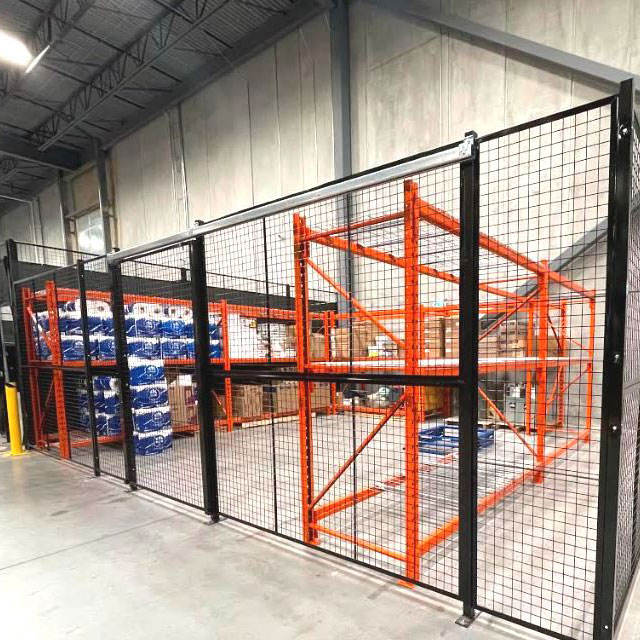
Vetting Vietnamese wire mesh locker suppliers requires a structured 5-step process to verify factory credentials, quality systems, production capacity, and compliance certifications. This process typically takes 2-4 weeks and involves document review, video factory tours, sample testing, and reference checks. Skipping vetting steps increases risk of quality failures, delayed shipments, and customs compliance issues. Major Australian and Canadian property developers report that 12-18% of first-time Vietnam suppliers fail initial audits due to incomplete certifications or undisclosed subcontracting.
Step 1: Verify Factory Registration and Business Credentials
- Request Vietnamese Business Registration Certificate (Giấy Chứng Nhận Đăng Ký Kinh Doanh) issued by the Provincial Department of Planning and Investment (DDCI). Verify via https://dangkykinhdoanh.gov.vn (official registry).
- Check factory tax ID (Mã Số Thuế) with the General Department of Taxation (https://www.gdt.gov.vn) to confirm no tax arrears or penalties.
- Confirm factory location, floor area (minimum 2,000 m² for wire mesh locker production), and number of production lines (minimum 2-3 lines for reliable capacity).
- Request 2-3 customer references (preferably from Australia, Canada, or EU) and contact them directly to verify delivery reliability and quality history.
Step 2: Audit ISO 9001:2015 and CE Marking Certification
- Request ISO 9001:2015 certificate (Quality Management System). Verify certificate validity via the issuing body’s website (typical auditors: TÜV SÜD, Lloyd’s Register, Bureau Veritas).
- For EU exports, confirm CE marking compliance under EN 15512:2009 (Safety of storage equipment) or equivalent structural standards. Request test reports from an accredited notified body (e.g., SGS, Intertek).
- Verify that the factory’s quality system includes incoming material inspection, in-process welding tests (visual + penetrant testing), dimensional checks, and load testing (minimum 1.5× rated load for 30 seconds).
- Request a copy of the factory’s Quality Manual and inspection procedures for wire mesh panels and welds.
Step 3: Assess Production Capacity and Lead Time Reliability
- Confirm daily production capacity (typical: 400-600 units/day for a mid-sized factory with 3 production lines). Calculate if the factory can meet your order volume within 30-45 days without subcontracting.
- Request a 12-month production calendar showing available capacity windows. Avoid suppliers with <2 weeks buffer capacity above your order size.
- Ask about subcontracting practices. If >20% of work is outsourced, request the names and certifications of subcontractors and verify their quality systems independently.
- Verify equipment specifications: welding machines (must include voltage regulation for consistent weld quality), powder coating line (temperature control ±5°C for uniform finish), and testing equipment (load cells calibrated annually, dimension gauges certified).
Step 4: Request and Test Sample Shipment
- Order 20-50 sample units (1-2 containers) before committing to full production. Inspect samples for dimensional accuracy (±2mm tolerance on frame width/height), weld quality (no cracks, spatter <2mm), powder coating thickness (80-120 microns measured with gauge), and structural integrity (manual push test at 500N force, no visible deflection).
- Conduct load testing on 3 random samples: place rated load (typically 500-800kg per level) for 30 seconds and verify no permanent deformation. Document results with photos.
- Ship samples to your facility and inspect after 4-6 weeks to assess corrosion resistance (salt spray test per ASTM B117 if EU/marine applications required).
- Request a Certificate of Analysis (CoA) for steel material (tensile strength 250-350 MPa, yield strength minimum 170 MPa per AS/NZS 3679 or equivalent).
Step 5: Establish Quality and Compliance Agreements
- Draft a Quality Agreement specifying: acceptable defect rate (<2%), dimensional tolerances (±3mm), surface finish requirements (powder coating uniformity, no runs/sags), and inspection protocols (3-point sampling: incoming material, in-process, final product).
- Require the supplier to provide a pre-shipment inspection (PSI) report signed by an independent third-party inspector (SGS, Bureau Veritas) before container loading. PSI cost: USD 300-500 per container.
- Insert a clause requiring the supplier to issue a Certificate of Origin (Form CO) for CPTPP claims and confirm RoO compliance (minimum 45% Vietnamese content).
- Establish a force majeure clause and lead time buffer (minimum 10 days). Negotiate penalty clauses for delays >14 days (e.g., 0.5% monthly order value reduction).
