

 Tiếng Việt
 中文 (Chinese)
 한국어
한국어 日本語
日本語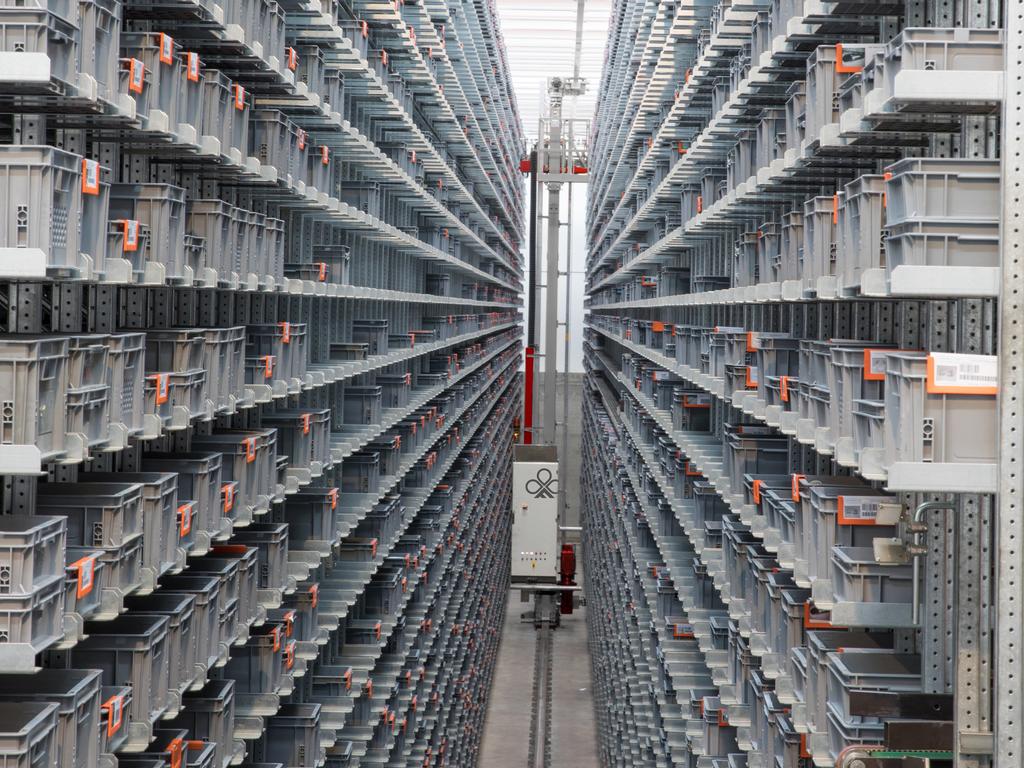
1. Overview of ASRS and its importance in helping businesses optimize warehouses with ASRS in the digital age.
In the context of the global economy rapidly transitioning to the digital age, businesses face unprecedented pressure to optimize all processes, especially warehouse management. Traditional warehouses with manual processes are gradually becoming obsolete, unable to meet the speed, accuracy, and efficiency required by the modern market. It is in this context that the Automated Storage and Retrieval System (ASRS) emerges as a groundbreaking solution, reshaping the future of logistics and supply chain. Understanding how to optimize warehouses with ASRS is not just a trend but also an urgent requirement for businesses to maintain competitive advantage and sustainable development in the digital age.
1.1. The Digital Age: Context and challenges forcing businesses to optimize warehouses
The digital age brings a series of profound changes, putting great pressure on warehouse operations. The explosion of e-commerce, the need for product personalization, and customers’ increasingly high expectations for delivery speed and accuracy have put traditional warehouses in a difficult position. Businesses are struggling with pressure on order processing speed and throughput; the requirement for absolute accuracy to avoid errors causing financial losses and affecting reputation; along with the challenge of space optimization and operating cost control in the context of rising rental prices and labor costs. In this context, finding solutions on how to optimize warehouses, transforming warehouses from a cost center into a strategic asset, is extremely urgent.
1.2. ASRS: A breakthrough solution to help businesses optimize warehouses in the digital age
ASRS is a system of machinery, equipment, and software designed to fully automate the processes of storing and retrieving goods in a warehouse. Instead of people moving to retrieve goods, ASRS brings goods to people or automatically moves between storage locations. The advent of ASRS marks a significant step forward in warehouse management, especially important in helping businesses optimize warehouses with ASRS to cope with the demanding requirements of the modern market.
1.2.1. Improve efficiency, optimize space, and reduce operating costs
ASRS operates 24/7 with superior accuracy and speed, allowing businesses to process larger volumes of goods and significantly shorten order fulfillment times. This system also maximizes warehouse height and area, increasing storage density many times over traditional methods, thereby significantly saving space and expansion costs. At the same time, reducing reliance on human labor helps cut labor and energy costs, clearly demonstrating how to comprehensively optimize warehouses in terms of performance, space, and finance.
1.2.2. Improve accuracy, safety, and reduce risks
Controlled by advanced warehouse management software (WMS), ASRS ensures that all warehousing operations are performed with near-absolute accuracy, eliminating human error and reducing losses. Furthermore, automating heavy goods movement tasks minimizes the risk of occupational accidents, creating a safer working environment for employees. These are crucial aspects when businesses consider how to optimize warehouses with ASRS to enhance service quality and protect human resources.
1.3. ASRS: A strategic investment for sustainable competitiveness in the digital age
In a volatile business world, adopting ASRS is not just a technical solution but also a strategic decision that positions businesses in a differentiated position. It helps businesses enhance their competitiveness by improving customer service, accelerating time-to-market, and reducing overall costs. The flexibility and adaptability of ASRS also allow businesses to easily expand and adjust to business needs, ensuring the ability to respond to all market fluctuations. This is the answer to the question of how to optimize warehouses to not only survive but also thrive in the digital age.
In summary, ASRS is not just a technology but a key factor that helps businesses transform warehouses from a cost center into a profit center. Understanding ASRS and knowing how to effectively optimize warehouses with ASRS is the key to achieving maximum operational efficiency and building a sustainable competitive advantage in the challenging digital age.
2. Understanding ASRS: Definition, key components, and common types, answering questions about how to optimize warehouses with ASRS.
In the digital transformation journey of the logistics and supply chain management industry, understanding core technologies is an indispensable step. One of these is ASRS – automated storage and retrieval systems, a breakthrough solution that helps businesses redefine how warehouses operate. To answer the crucial question: how to optimize warehouses with ASRS, we need to start by grasping the most basic knowledge about this system.
Definition of ASRS: What is an Automated Storage and Retrieval System?
ASRS, short for Automated Storage and Retrieval System, is an automated system designed to store, manage, and retrieve goods in a warehouse without direct human intervention. Instead of using human labor to move goods, ASRS uses robots, cranes, and other automated equipment to perform loading/unloading tasks, place goods in the correct storage locations, and retrieve them when needed. The main goal of ASRS is to maximize storage space, increase the speed and accuracy of warehouse operations, while minimizing operating costs and the risk of human error.
Essentially, ASRS transforms traditional warehouses into highly automated centers, where processes from inbound, storage, to outbound are carried out intelligently and efficiently. This is the core foundation for businesses looking for solutions on how to optimize their warehouse with ASRS, as it reshapes the entire workflow and processing capacity of the warehouse.
Key Components that Make Up an ASRS System
A complete ASRS system typically includes many components working in harmony to ensure smooth operation. Understanding each part is key to effective deployment and maintenance, thereby knowing how to comprehensively optimize a warehouse with ASRS.
1. Specialized Storage Racks
This is the foundational structure of ASRS, often high-rise racking systems, specifically designed to hold unit loads such as pallets, cartons, or trays. These racks have guide rails or fixed positions so that automated equipment can easily access and place/retrieve goods. The design of the racks is often optimized for height to make the most of vertical space.
2. Storage/Retrieval Machines (S/R Machines)
These are the main “arms” of the ASRS system. These devices move along aisles between racks, performing tasks of lifting, moving, and placing goods into storage locations or retrieving them. Depending on the type of ASRS, they can be large crane-based systems for heavy unit loads, high-speed shuttle-based robots, or autonomous mobile robots (AGVs/AMRs) in some modern variants.
3. Conveyor Systems
Conveyors, belts, and automated guided vehicles are responsible for transporting goods from the input area to the ASRS for storage, and from the ASRS to the outbound area or workstations. They ensure an uninterrupted flow of goods, serving as a crucial link connecting ASRS with other warehouse processes.
4. Input/Output Stations
These are the communication points between the ASRS system and humans or other equipment. Here, goods are fed into the system for storage or retrieved for packing and shipping. These stations are often ergonomically designed to optimize the workflow of employees when interaction is required.
5. Control Software (WCS/WMS)
It is the brain of the ASRS system. This software (often a combination of a Warehouse Control System – WCS and a Warehouse Management System – WMS) is responsible for inventory management, optimizing storage locations, coordinating the operation of S/R machines, and integrating with other enterprise systems. WMS and WCS together ensure that ASRS operates efficiently, addressing the core question of how to optimize a warehouse with ASRS by automating and intelligentizing every decision.
Popular ASRS System Types on the Market
To understand how to optimize your warehouse with ASRS, choosing the right ASRS type is crucial. Here are some popular types:
1. Unit-Load ASRS
Designed to handle large unit loads such as pallets or containers. Typically uses large cranes that move on fixed rails or can move between aisles. Suitable for high-density storage of large quantities of goods.
2. Mini-Load ASRS
Similar to Unit-Load ASRS but designed to handle smaller cartons, trays, or totes. Smaller and faster cranes, ideal for warehouses with many different SKUs (stock keeping units) and requiring high retrieval speed.
3. Horizontal/Vertical Carousels
These systems consist of a series of bins or shelves that move horizontally or vertically along a closed loop track. Operators stand at a fixed point and the system automatically brings items to them (picker-to-goods), saving travel time and significantly increasing productivity.
4. Vertical Lift Modules (VLM)
A VLM is an enclosed system consisting of two columns of storage trays and an automatic extractor/inserter in the middle. When requested, this unit retrieves the tray containing the item and delivers it to the access opening for the operator. VLMs are extremely efficient at utilizing warehouse height for small, high-value items.
5. Shuttle-based ASRS
This is one of the most modern and flexible ASRS types. Independent shuttle robots move on each level of shelving, capable of picking and placing goods into storage locations. This system offers extremely high storage density, fast retrieval speeds, and flexible scalability. This is a very effective solution for how to optimize a warehouse with ASRS for businesses with high throughput needs.
6. Cube Storage System (e.g., AutoStore)
An innovative ASRS type where bins are stacked on top of each other in a grid-like structure. Robots move on the surface of the grid to retrieve and rearrange bins, bringing the required bin to the workstation. This system optimizes space incredibly and provides unprecedented storage density.
Answering the question: How to optimize a warehouse with ASRS by understanding the system?
A deep understanding of the definition, components, and types of ASRS is the first and most important step to answer the question of how to optimize a warehouse with ASRS. This is because each type of ASRS has its own advantages, suitable for different types of warehouses, products, and operational requirements. Mastering this allows businesses to:
- **Accurately identify needs:** You know what type of ASRS you need to solve specific problems in your warehouse (e.g., increase storage density, speed up retrieval, reduce labor).
- **Design a suitable system:** Understanding the components helps you visualize how an ASRS will integrate into existing infrastructure, thereby designing a system that is optimal in terms of both performance and cost.
- **Maximize technology utilization:** By knowing the capabilities of each ASRS type, you can choose the solution that provides the highest efficiency for your product type and volume of goods, thereby truly improving warehouse efficiency sustainably.
In summary, investing time in thoroughly researching ASRS is not just about acquiring knowledge but also about laying a solid foundation for all strategic decisions regarding warehouse automation, ensuring that all efforts to optimize the warehouse with ASRS are on the right track and bring the highest benefits.
3. Optimizing storage space: How ASRS helps increase warehouse density and improve floor efficiency, specific evidence for how to optimize a warehouse with ASRS.
In the context of increasing warehouse rental or construction costs, optimizing storage space has become a top priority for every business. Automated Storage and Retrieval Systems (ASRS) are not just technology but also a strategic solution, helping businesses answer the core question: how to optimize a warehouse with ASRS to achieve superior efficiency. ASRS particularly excels at transforming “dead” spaces into valuable storage areas, thereby significantly increasing warehouse density and overall floor utilization efficiency.
Utilizing warehouse height: Turning “dead” space into value
One of the most obvious benefits of ASRS is its ability to fully utilize the height of the warehouse. In traditional warehouses, goods storage is often limited by the accessibility of forklifts and safety factors when humans operate at high altitudes. This results in much “overhead” space being wasted.ASRS, with specialized stacker cranes or autonomous robots, can reach heights that traditional forklifts cannot or cannot safely access. These systems can operate efficiently at heights of up to 30-40 meters, doubling or even tripling vertical storage capacity compared to manual methods. This means you can store a much larger quantity of goods in the same floor area, a strong testament to how to optimize a warehouse with ASRS by exploiting height.
Block Storage Design and Narrowing Aisles
Traditional storage methods require wide aisles for forklifts and personnel to move and load/unload goods. These aisles, though necessary, occupy a large portion of the floor space that could be used for storage. ASRS solves this problem thoroughly.
ASRS systems are designed to operate in extremely narrow spaces. Robots or shuttles move precisely along defined tracks or grooves, eliminating the need for operator space or turning maneuvers. This allows businesses to significantly narrow aisle widths, or even completely eliminate aisles between racks in some configurations (e.g., multi-deep storage, block storage). In this way, the freed floor space can be used to add more racks, thereby increasing the overall storage density of the warehouse. This spatial restructuring is a key factor in how to optimize a warehouse with ASRS in terms of layout.
Specific Examples: Shuttle and Mini-Load ASRS Systems
Systems such as Shuttle ASRS (using automated shuttles moving on tracks) or Mini-Load ASRS (for small containers, trays) are typical examples. They allow for multi-deep storage, where containers or trays are stacked within the same rack “lane,” minimizing empty space. Shuttles or cranes can access any location within that lane quickly and accurately, maximizing storage space in both depth and height.
Minimizing Area for Manual Operations and Buffer Zones
In a traditional warehouse, in addition to storage space and aisles, significant areas are also needed for manual operations such as goods staging areas, packing areas, sorting areas, and employee workstations. The movement of people and forklifts also requires clear space to ensure safety.ASRS automates most of these processes. Goods are delivered directly to workstations or automated outbound areas without the need for long-distance manual movement. This helps minimize or eliminate the need for large buffer areas, wide pedestrian aisles, or intermediate staging areas. As a result, more space is dedicated to primary storage, contributing to solving the problem of how to optimize a warehouse with ASRS by focusing space on its core purpose.
Enhancing overall space utilization
Combining the above factors, ASRS provides superior overall space utilization. By maximizing height, narrowing aisles, and reducing space for manual operations, ASRS can increase storage density by 50% to 400% compared to traditional warehouse methods, depending on the type of ASRS system and the initial warehouse structure. This has significant implications for businesses:
- Reduced operating costs: Less need for warehouse expansion, saving on land lease or purchase costs.
- Store more SKUs: Ability to hold more product types in the same space.
- Increased responsiveness: Can meet changing market demands without significant investment in new physical infrastructure.
Clearly, investing in ASRS is not just a technological upgrade but a strategic decision on how to optimize a warehouse with ASRS, maximize the value of every square meter of floor space, and ensure the sustainable development of the business in the future.
4. Enhancing warehouse efficiency and throughput: Analyzing how ASRS increases inbound and outbound speed, a crucial aspect of how to optimize a warehouse with ASRS.
In an increasingly competitive market and with customer demands for fast delivery, efficient inbound and outbound capabilities and high warehouse throughput have become vital for every business. This is not only a competitive advantage but also a core aspect of how to optimize a warehouse with ASRS. Automated Storage and Retrieval Systems (ASRS) are a revolutionary solution, completely transforming how goods move in and out of the warehouse, thereby significantly enhancing overall efficiency.
Superior automation: The key to increasing inbound and outbound speed with ASRS
The most obvious and immediate benefit of ASRS is the near-complete elimination of manual intervention in the inbound and outbound process. Instead of employees having to move between shelves, slowly searching for and retrieving goods, ASRS uses robots, cranes, or shuttles to perform these tasks with superior speed and accuracy. This frees people from repetitive, strenuous, and error-prone work, while accelerating order processing to unprecedented levels.For example, in a traditional warehouse, finding and retrieving a pallet can take several minutes or even tens of minutes, depending on its location and warehouse density. With ASRS, the system is programmed to know the exact location of each item. When a request is made, the crane or shuttle moves directly to that location, retrieves the pallet or container, and delivers it to the shipping area in just tens of seconds to a few minutes. The time saved is significant, especially when processing hundreds or thousands of orders daily.
Continuous operation and simultaneous processing capability
Another prominent advantage of ASRS in accelerating inbound and outbound operations is its ability to operate continuously. Unlike humans who need rest, ASRS can operate 24 hours a day, 7 days a week without interruption, except for maintenance time. This ensures that the warehouse is always ready to meet demand, even during peak hours or outside normal working hours.
In addition, many modern ASRS systems are designed to handle multiple tasks simultaneously. Cranes or shuttles can operate independently or in coordination to execute multiple inbound and outbound orders concurrently. This “parallelization” capability significantly increases processing throughput, which is especially useful for warehouses with high transaction volumes or those needing to meet strict delivery time commitments. This is a core factor in how to optimize a warehouse with ASRS when facing time pressure.
Optimizing goods movement processes and warehouse throughput
Warehouse throughput is defined as the quantity of goods (pallets, containers, product units) that a warehouse can process (receive, store, ship) within a certain period. ASRS not only speeds up individual transactions but also optimizes the entire flow of goods, thereby improving the overall warehouse throughput.
ASRS systems are deeply integrated with warehouse management software (WMS) and warehouse control software (WCS). This allows the system to intelligently plan and coordinate movements, ensuring that goods always follow the shortest and most efficient route. There are no delays due to searching, no errors due to misrouting, and no unnecessary downtime.
Minimizing waiting times and congestion
In a manual warehouse, bottlenecks often occur at inbound/outbound areas, or when multiple forklifts try to access the same aisle. ASRS solves this problem by designing specialized pathways and strictly controlling traffic flow. Automated equipment is coordinated smoothly, minimizing the possibility of collisions or waiting, ensuring that the flow of goods is always smooth and uninterrupted.Furthermore, ASRS can flexibly handle items of various sizes and weights. This allows businesses to optimize organization and storage, avoiding situations like “lack of space for large items” or “wasted space for small items,” thereby maintaining consistently high performance.
Enhanced Response Capability in All Situations
The flexibility and scalability of ASRS also contribute to increased throughput. When market demand fluctuates, ASRS can be easily adjusted to meet peak periods without the need for additional temporary labor or significant investment in supplementary infrastructure. Many systems have a modular design, allowing businesses to expand capacity or increase the number of handling devices as needed, ensuring that the warehouse always has sufficient capacity to operate optimally.
Measuring and Improving Performance: An Indispensable Part of How to Optimize a Warehouse with ASRS
One of the less-mentioned but extremely important benefits of ASRS is its ability to collect detailed data on all inbound and outbound operations. Every movement, every transaction is accurately recorded. This data provides deep insights into the actual performance of the warehouse, including average inbound/outbound speed, order processing time, error rates, etc. Analyzing these metrics helps businesses easily identify areas for improvement, thereby refining processes and setting higher performance goals.
Real-time monitoring and reporting capabilities help warehouse managers make data-driven decisions, continuously optimizing operations. This demonstrates that ASRS is not just an automation tool but also an intelligent system that helps businesses continuously find answers to the question of how to optimize a warehouse with ASRS in a comprehensive and sustainable way.
In summary, ASRS is a strategic investment that significantly enhances inbound/outbound speed and warehouse throughput. By automating, operating continuously, processing simultaneously, and optimizing processes, ASRS not only addresses current challenges but also prepares businesses for future market demands, affirming its key role in how to optimize a warehouse with ASRS.
5. Reducing Operating Costs, Improving Accuracy, and Safety: Key Benefits of ASRS, Further Clarifying How to Optimize a Warehouse with ASRS.
In the context of fierce competition and rising logistics costs, businesses are always looking for breakthrough solutions to optimize warehouse operations. Automated Storage and Retrieval Systems (ASRS) emerge as a powerful tool, not only helping to optimize space and efficiency but also bringing key benefits in reducing operating costs, improving accuracy, and enhancing labor safety. These are the pillars for how to optimize a warehouse with ASRS in a comprehensive and sustainable way.
5.1. Minimizing operating costs: The key to optimizing warehouses with ASRS
One of the most obvious benefits of implementing ASRS is its ability to significantly cut operating costs. This not only helps businesses save resources but also increases profit margins, strengthening their competitive position in the market.
5.1.1. Efficiently saving labor and energy costs
ASRS automates almost the entire process of storing and retrieving goods, from moving pallets and containers to managing inventory locations. This significantly reduces the number of personnel required for repetitive and strenuous tasks such as transportation, loading/unloading, and searching for goods. Labor costs, benefits, and direct personnel training are reduced. Furthermore, ASRS operates in a tightly controlled environment, optimizing routes and efficiently using energy for each operational cycle, which also contributes to reducing electricity costs. Many modern systems also have the ability to recover energy when unloading, making them an environmentally friendly and more cost-effective option in the long run. This is an important step in how to optimize warehouses with ASRS economically.
5.1.2. Minimizing damage and loss of goods
Manual handling of goods always carries the risk of damage due to collisions, drops, or improper loading/unloading. ASRS, with its precise and stable operating mechanism, significantly minimizes these incidents. Goods are placed and retrieved gently, according to pre-programmed procedures, thereby protecting the value of the product. This not only reduces compensation costs and returns but also minimizes unsaleable inventory, directly contributing to how to optimize warehouses with ASRS by preserving asset value and capital.
5.2. Enhancing inventory accuracy and minimizing errors
Accuracy is a key factor determining the efficiency of all warehouse operations. ASRS provides a superior level of accuracy that manual systems can hardly match.
5.2.1. Real-time inventory management and optimal space utilization
Each ASRS system is tightly integrated with a Warehouse Management System (WMS) and a Warehouse Control System (WCS). This allows businesses to track the location, quantity, and status of each item in the warehouse in real-time. All inbound, outbound, and movement transactions are recorded automatically and accurately, completely eliminating errors due to manual data entry or incorrect recording. With ASRS, finding a specific product becomes quick and easy, eliminating lost or misplaced items. The ability to manage locations accurately down to each SKU unit also helps maximize space utilization, leaving no wasted space, an important aspect of how to optimize warehouses with ASRS in terms of space and information.
5.2.2. Reducing picking and shipping errors
In traditional warehouses, picking errors are a common problem, leading to incorrect product delivery to customers, incurring return costs, and affecting brand reputation. ASRS thoroughly solves this problem by automating the picking process or accurately bringing the required item to the operator’s location. This ensures that the correct product type and quantity are prepared for each order, enhancing customer satisfaction and supply chain efficiency. This is a breakthrough in how to optimize warehouses with ASRS to achieve the highest accuracy.
5.3. Improving working environment and occupational safety
Occupational safety is not only a legal responsibility but also a crucial factor affecting employee morale and productivity. ASRS significantly contributes to creating a safer working environment.
5.3.1. Limiting accident risks caused by humans
Traditional warehouses often pose many dangers such as forklift accidents, falling heavy objects, or injuries from improper lifting. With ASRS, most material handling and storage tasks are performed by automated machinery. This significantly reduces human interaction with moving equipment or working at heights, thereby eliminating most occupational accident risks. Employees can focus on more value-added tasks in a safer environment. This is an undeniable benefit when considering how to optimize warehouses with ASRS to protect human resources.
5.3.2. Effectively protecting goods and assets
In addition to protecting employees, ASRS also helps protect the company’s goods and assets. With an automated system, the risk of internal theft or loss due to negligence is minimized. Goods are stored in a tightly controlled space, difficult to access illegally, especially for high-value items. Reducing the number of people entering and exiting the storage area also enhances overall warehouse security. As a result, businesses can be more confident about asset safety, an important aspect of how to comprehensively optimize warehouses with ASRS.
In summary, implementing ASRS is not just an investment in technology but a comprehensive strategy for how to optimize warehouses with ASRS, bringing specific and measurable benefits in terms of cost, accuracy, and safety. These improvements not only help businesses operate more efficiently but also create a solid foundation for sustainable development in the future.
6. Steps to effectively implement an ASRS system: From needs assessment to software integration, detailed guide on how to optimize warehouses with ASRS.
Implementing an Automated Storage and Retrieval System (ASRS) is not just about installing new equipment; it’s a complex project that requires thorough preparation, detailed planning, and precise execution. A clear roadmap will help businesses successfully transition from traditional warehouses to an automated model, thereby truly answering the question of how to optimize a warehouse with ASRS comprehensively and sustainably.
Needs Assessment and Detailed Planning
This is the foundational step that determines the success or failure of an ASRS project. A thorough assessment helps accurately identify the problems to be solved and the goals to be achieved.
1.1. Analyze Current Warehouse Status
Businesses need to start by collecting detailed data on current warehouse operations. This includes: SKU types and quantities, inbound/outbound frequency, daily/weekly/monthly throughput, utilized space and available space, number of employees, current processes, and existing bottlenecks, errors, or inefficient costs. Understanding current challenges is the first step to knowing how to optimize a warehouse with ASRS.
1.2. Define System Goals and Requirements
Based on the current status analysis, businesses must establish specific, measurable goals for the new ASRS system. These goals may include: increasing storage density by X%, reducing labor costs by Y%, increasing inbound/outbound speed by Z%, improving inventory accuracy to 99.9%, or enhancing workplace safety. Requirements for capacity, product size and weight, environmental conditions (if any), and desired level of automation need to be defined. These goals will guide the selection and design of the ASRS to effectively optimize the warehouse with ASRS.
1.3. Budget Estimation and ROI Analysis
This is a crucial stage for estimating the total capital expenditure (CAPEX) for the ASRS system, including equipment costs, installation, software, training, and maintenance. Simultaneously, a detailed Return on Investment (ROI) analysis must be performed, comparing initial costs with anticipated benefits such as labor cost savings, error reduction, increased productivity, and improved space utilization. A compelling ROI analysis will demonstrate the value of ASRS in optimizing the warehouse with ASRS and maximizing profits.
Technology Selection and System Design
After gaining a clear understanding of needs, businesses will move on to selecting appropriate technology solutions and detailed design.
2.1. Choose the Right ASRS Type
Based on the goals and requirements, businesses need to choose the most optimal ASRS type. Common options include Crane-based ASRS, Shuttle ASRS, Carousel ASRS, or Vertical Lift Modules (VLMs). Each type has its own advantages and disadvantages in terms of speed, storage density, scalability, and cost. For example, a warehouse with small, diverse SKUs may be suitable for a shuttle ASRS, while heavy, bulky goods may require a crane-based ASRS. Choosing the right technology is key to optimizing the warehouse with ASRS in each specific case.
2.2. Warehouse layout and structure design
The engineering team will work to design the physical layout of the ASRS system in the warehouse. This includes determining the location of storage racks, automated equipment aisles, picking/put-away stations, packing areas, and worker walkways. The design must optimize goods flow, minimize travel distances, and maximize vertical space, which is how to optimize the warehouse with ASRS in terms of space.
Physical implementation and installation
This stage transforms the design into reality, requiring close coordination and adherence to technical standards.
3.1. Site preparation and infrastructure
Before installation, the warehouse site needs to be thoroughly prepared. This includes reinforcing the foundation (if necessary), ensuring a flat and load-bearing floor, installing electrical systems, fiber optic networks, and other auxiliary infrastructure. Careful preparation will minimize risks and speed up the installation of ASRS equipment.
3.2. ASRS equipment installation
ASRS system components such as automated racks, cranes, shuttle robots, conveyors, and peripheral equipment will be transported and installed at the designed location. This process is usually carried out by experienced specialists to ensure absolute accuracy and safety. Every small detail is important for the ASRS system to operate smoothly and how to optimize the warehouse with ASRS.
Software integration and control
Software is the “brain” of the ASRS system, connecting and controlling all operations.
4.1. Integration of Warehouse Management System (WMS) and Warehouse Control System (WCS)
The WMS (Warehouse Management System) is responsible for high-level inventory management, order processing, and inbound/outbound planning. Meanwhile, the WCS (Warehouse Control System) is the intermediate control layer, connecting the WMS with physical ASRS equipment, translating commands from the WMS into specific tasks for robots, cranes, etc. Seamless integration between WMS, WCS, and ASRS is a key factor in how to optimize the warehouse with ASRS automatically and efficiently.
4.2. Software development and configuration
This phase includes developing user interfaces, configuring storage and retrieval rules (e.g., FIFO, LIFO, frequency-based storage), and setting up path optimization and scheduling algorithms for robots. The software needs to be customized to fit the business’s specific processes and types of goods.
4.3. Testing and Trial Operation
After the software and hardware have been installed and configured, the entire system will undergo rigorous testing. This includes testing individual components, integrated testing between systems, and finally, trial operation testing with real or simulated data. All errors and issues must be identified and thoroughly resolved before the system officially goes live to ensure reliable optimization of the warehouse with ASRS.
Training and Post-Deployment Operation
Even though it is an automated system, the human factor still plays a crucial role in ensuring ASRS operates effectively in the long run.
5.1. Staff Training
Operating, maintenance, and warehouse management personnel need to be thoroughly trained on how to use, monitor, and maintain the new ASRS system. Adequate training will help them maximize the system’s potential, handle emerging situations, and ensure continuous performance. This significantly contributes to how to optimize the warehouse with ASRS from an operational perspective.
5.2. Continuous Monitoring and Optimization
Even after the system goes live, continuous performance monitoring is essential. Businesses should track key metrics such as throughput, cycle time, error rates, and space utilization. Based on this data, adjustments and improvements can be made periodically to optimize operations, ensuring the ASRS system always operates at peak performance and continuously meets the needs of how to optimize the warehouse with ASRS in the future.
7. Factors to Consider When Investing in ASRS: Cost, Scalability, and Infrastructure Requirements to Sustainably Optimize Your Warehouse with ASRS.
Deciding to invest in an Automated Storage and Retrieval System (ASRS) is a crucial strategic step for any business looking to modernize and enhance warehouse operational efficiency. However, to ensure this investment truly delivers sustainable value and helps the business optimize its warehouse with ASRS most effectively, a thorough consideration of three core factors—cost, scalability, and infrastructure requirements—is absolutely essential. A comprehensive view will help you make an informed choice that aligns with your long-term vision and financial capabilities.
1. ASRS Investment Cost: The Economic Equation for Optimizing Your Warehouse with ASRS
Cost is the primary factor and often the biggest barrier when considering an ASRS investment. It includes not only the initial equipment purchase cost but also many other items that need to be carefully calculated to get an overview of the total cost of ownership (TCO).
1.1. Initial Investment Cost
- ASRS Equipment: This is the largest part of the cost, including robots, cranes, automated guided vehicles (AGVs/AMRs), specialized storage racks, and other automation equipment. The complexity, size, technology, and capabilities of the system will directly affect the price.
- Software: Includes warehouse management systems (WMS) and warehouse control systems (WCS) to integrate and coordinate ASRS operations. This cost may include licenses, customization, and deployment fees.
- Installation and Integration: ASRS installation is often complex, requiring high technical skill and time. This cost also includes integrating ASRS with the company’s existing systems, such as ERP, WMS, or other automated equipment like conveyors.
- Training: Employees need to be trained to operate, monitor, and maintain the ASRS system.
1.2. Operating and Maintenance Costs
- Electricity: ASRS is an automated system, requiring a significant amount of electricity to operate motors, sensors, and control systems.
- Routine and Preventive Maintenance: To ensure stable and sustainable system operation, routine maintenance costs, replacement of worn components, and contingency costs for unexpected incidents are essential.
- Specialized Personnel: Although ASRS reduces the need for manual labor, skilled personnel are still required to monitor, control, maintain, and troubleshoot technical issues.
To understand how to optimize a warehouse with ASRS in terms of cost, businesses need to conduct a detailed return on investment (ROI) analysis, comparing the total cost of ASRS ownership with the long-term benefits of reduced labor costs, increased processing speed, reduced errors, and optimized storage space.
2. ASRS Scalability: Ensuring Flexibility for the Future of Warehousing
A sustainable ASRS system must be scalable to adapt to business growth. Storage needs and throughput can change significantly over time, so flexibility is a key factor.
- Forecast Future Needs: Carefully assess the company’s projected growth rate, SKU count, volume of goods, and processing speed requirements over the next 5-10 years.
- Modular Design: Prioritize ASRS systems with a modular design, allowing for the addition of lanes, robots, cranes, or storage areas as needed without disrupting overall warehouse operations or requiring a complete system replacement.
- Reconfigurability: The ability to adjust system configurations to accommodate changes in product types, pallet sizes, or workflows is a significant advantage.
Choosing an ASRS with good scalability will help businesses avoid initial “oversize” situations that lead to waste, or “undersize” situations that result in costly upgrades and operational disruptions later on. This is a crucial factor in how to sustainably optimize a warehouse with ASRS over time.
3. Infrastructure Requirements for ASRS: A Solid Foundation for Sustainable Warehouse Optimization with ASRS
An ASRS cannot operate efficiently without a suitable infrastructure foundation. Thorough infrastructure assessment and preparation are indispensable steps.
- Physical Space:
- Ceiling Height: ASRS typically maximizes warehouse height. Ensure sufficient ceiling height and no obstructions.
- Floor Area: Although ASRS optimizes floor space, enough room is still needed for storage towers, operating areas, maintenance, and aisles.
- Floor Load Capacity: ASRS, especially high-rise racking systems filled with goods, can exert very heavy loads on the warehouse floor. The floor structure must be strong enough to withstand this load.
- Power and Network:
- Stable Power Supply: ASRS requires a stable and continuous power supply for operation. Check existing power capacity and the possibility of upgrades if needed.
- Network Connectivity: The ASRS control system relies on a reliable communication network (wired or wireless) for data exchange and equipment control.
- Environmental Conditions:
- Temperature and Humidity: Some ASRS types or goods require specific temperature and humidity conditions. Ensure the warehouse environment meets these standards.
- Fire Safety: Modern ASRS need to be integrated with effective fire suppression systems and have safe escape routes.
- Connectivity to Other Areas: The infrastructure needs to be designed to easily connect ASRS with receiving areas, packing, shipping, or other automated conveyor systems.
Ignoring or misjudging infrastructure requirements can lead to significant costs, project delays, or even failure in ASRS implementation. Investing in upgrading or building appropriate infrastructure is key to how to optimize a warehouse with ASRS and ensure smooth, sustainable system operation.In summary, investing in ASRS is a significant decision that requires comprehensive consideration of costs, scalability, and infrastructure requirements. By taking a strategic approach, businesses can ensure that the ASRS system not only addresses current challenges but also serves as a solid foundation for sustainable future growth, truly helping to optimize the warehouse with ASRS for maximum efficiency.
8. The role of WMS and WCS in ASRS management: Ensuring accurate inventory control and smooth operation, the core of how to optimize a warehouse with ASRS.
In the journey to find out how to optimize a warehouse with ASRS, we cannot overlook the central role of two core software systems: Warehouse Management System (WMS) and Warehouse Control System (WCS). If ASRS is the powerful body, modernizing the storage and retrieval process, then WMS and WCS are the brain and nervous system, coordinating all activities to ensure accuracy, efficiency, and smoothness. The seamless combination between them is the key to maximizing the potential of ASRS, bringing outstanding benefits to businesses in inventory management and warehouse operations.
2. WMS: Strategic architect for optimal warehouse and how to optimize warehouse with ASRS
The WMS acts as a high-level strategic architect, responsible for overall management decisions in the warehouse. In the context of ASRS, WMS is not merely inventory management software but also a coordination center, shaping how to optimize the warehouse with ASRS on a broad scale.
2.1. Accurate and comprehensive inventory management with ASRS
One of the primary tasks of WMS is to ensure absolute accurate inventory control. It tracks every item from inbound, through the storage process in ASRS, to outbound.
- Real-time tracking: WMS provides an overview of the quantity, location, and status of each SKU (Stock Keeping Unit) in the ASRS warehouse. Every movement of goods is recorded and updated instantly, giving businesses a true picture of the current inventory.
- Optimizing storage locations: Based on complex algorithms, WMS allocates optimal storage locations in ASRS for each item. This can be based on inbound/outbound frequency, size, weight, or special requirements (e.g., temperature-controlled goods, fragile goods). This not only facilitates easy retrieval but also minimizes the travel time of ASRS equipment, contributing to how to optimize the warehouse with ASRS in terms of space efficiency.
- Batch/lot and expiry date management: For industries with strict traceability or expiry date requirements (such as food, pharmaceuticals), WMS ensures goods are circulated according to FIFO (First-In, First-Out) or FEFO (First-Expired, First-Out) principles, minimizing waste and risks.
2.2. Planning and optimizing inbound and outbound processes
WMS receives and processes orders, then converts them into specific tasks for the ASRS system via WCS.
- Smart order processing: WMS aggregates orders, groups them to optimize the ASRS picking route, reducing the number of crane or robot movements. This is especially important when handling a large volume of orders daily.
- Coordinating goods flow: From identifying picking locations in the ASRS to arranging the order in which items need to be moved to the packing area, WMS ensures a continuous and efficient flow. This is a key factor in how to optimize the warehouse with ASRS in terms of speed and throughput, especially in large-scale warehouses.
3. WCS: The operational brain of the ASRS system for smooth operation
If WMS is the strategist, then WCS is the operational commander, responsible for translating high-level WMS directives into specific actions and executing them directly on ASRS devices. WCS is the essential bridge between management software and automation hardware, playing a vital role in ensuring the smooth and accurate operation of ASRS.
3.1. Controlling and optimizing ASRS equipment operation
WCS receives commands from WMS and translates them into detailed instructions for each ASRS component, ensuring every movement is precise and efficient.
- Controlling cranes and robots: WCS controls the movement of stacker cranes, AGVs/AMRs, conveyors, and other automated equipment in the ASRS to store or retrieve goods to the correct location, in the correct order. This level of accuracy almost eliminates human error.
- Optimizing routes: With sophisticated algorithms, WCS calculates the optimal route for each device, minimizing travel time, avoiding conflicts, and maximizing throughput. This directly impacts how to optimize the warehouse with ASRS in achieving high goods processing speed and minimizing equipment wear and tear.
- Real-time performance monitoring: WCS continuously monitors the status of all ASRS devices, immediately detecting errors or bottlenecks and issuing necessary alerts or adjustments. This allows for predictive maintenance and minimizes unplanned downtime.
3.2. Ensuring smooth and safe operation
WCS not only controls but also ensures the entire ASRS system operates harmoniously and safely, which is a key factor in maintaining high productivity.
- Rapid incident response: In case of incidents or obstacles, WCS can command a temporary halt or adjust the equipment’s path to prevent accidents and minimize downtime. This rapid response capability protects both goods and equipment.
- Load and resource balancing: WCS distributes tasks to ASRS equipment in a balanced manner, preventing overload on one piece of equipment while others are idle. As a result, WCS maintains stable performance for the entire system, optimizing the use of available resources.
4. Synergy: WMS + WCS + ASRS = How to optimize a warehouse with comprehensive ASRS
The close coordination between WMS and WCS is a key factor in maximizing the potential of ASRS. WMS provides the “strategic plan” of what to store where and when to retrieve it, while WCS executes that “action plan” with the highest precision and speed.
The operational model typically works as follows: WMS receives order requests, determines the optimal location for goods in the ASRS based on defined rules. Then, WMS sends a request to WCS, and WCS will command the ASRS equipment to move to the designated location, performing retrieval or placement of goods. This entire process is continuously recorded and updated back to WMS, ensuring inventory data is always accurate and synchronized in real-time. This integration not only enhances operational efficiency but is also at the core of how to optimize a warehouse with ASRS, transforming the warehouse into an intelligent, automated, and highly adaptable logistics hub that can respond to all market fluctuations.
5. Conclusion: An indispensable foundation for successful ASRS warehouse optimization
Clearly, WMS and WCS systems are not just supporting tools but are indispensable foundations when implementing ASRS. They are decisive factors in achieving accurate inventory control, ensuring smooth operations, and optimizing all aspects of an automated warehouse. To truly optimize a warehouse with ASRS, businesses need to invest in a robust integrated WMS and WCS solution that can seamlessly communicate with ASRS hardware, thereby ushering in a new era of efficiency and productivity in supply chain management.
9. Conclusion: ASRS – A strategic investment for modern warehouses and recommendations for successful ASRS warehouse optimization.
In the context of globalization and the e-commerce boom, warehouses are no longer merely storage facilities but have become strategic centers that determine a business’s competitiveness. Automated Storage and Retrieval Systems (ASRS) have emerged as a breakthrough solution, completely transforming warehouse operations. ASRS is not just a technology; it is a vital strategic investment that helps businesses overcome challenges, seize opportunities, and shape the future.
ASRS: A solid foundation for the future of digital warehouses
ASRS represents a strong transformation from traditional warehouses to modern, smart, and efficient warehouses. Implementing ASRS not only solves immediate problems such as lack of space, rising labor costs, or inventory management errors, but also creates a solid foundation for sustainable development. It allows businesses to easily scale up, adapt to market changes, and leverage data to make smarter business decisions. This is the core factor in how to optimize warehouses with ASRS comprehensively and long-term.
With the ability to optimize storage space by up to 85%, increase goods processing throughput many times over, and significantly reduce operating costs and errors, ASRS not only brings financial benefits but also enhances labor safety and improves customer service quality. In the 4.0 era, where speed and accuracy are key, ASRS is the crucial factor that helps businesses build a sustainable competitive advantage, ensuring that how to optimize warehouses with ASRS is not just a goal but a continuous journey.
Key recommendations for successful warehouse optimization with ASRS
Investing in ASRS is a major decision that requires careful preparation and a sound implementation strategy. To achieve maximum success and ensure the system fully realizes its potential, businesses need to note the following recommendations:
1. Comprehensive assessment and strategic planning
Before making any decisions, conduct a detailed analysis of current needs, future growth forecasts, and existing warehouse operating procedures. Don’t just automate inefficient processes. Instead, consider how ASRS can reshape the entire workflow for maximum efficiency. How to optimize warehouses with ASRS needs to start with a clear plan, consistent with the long-term vision of the business.
2. Effective WMS and WCS system integration
ASRS cannot operate independently. Its success largely depends on seamless integration with Warehouse Management Systems (WMS) and Warehouse Control Systems (WCS). Ensure that these systems can communicate effectively to optimize goods positioning, task planning, and accurate inventory tracking. This is an indispensable step in how to optimize warehouses with ASRS, turning data into valuable information and concrete actions.
3. Staff training and change management
New technology always comes with changes in employee roles and skills. Invest in specialized training for operating and maintenance teams. At the same time, build a strong change management strategy to help employees adapt to the new work environment, minimize resistance, and create a culture that embraces technology.
4. Establish maintenance and technical support procedures
An ASRS is a complex system with many mechanical and electronic components. Establishing a regular preventive maintenance plan is extremely important to ensure continuous operation and extend the system’s lifespan. At the same time, ensure that fast and professional technical support services are available from the supplier to handle any problems that may arise.
5. Scalability and design flexibility
Market and business needs are constantly changing. When designing an ASRS system, consider future scalability. Choose modular solutions that can be easily added, removed, or adjusted as operational scale increases or requirements change. This helps businesses be flexible in how to optimize their warehouse with ASRS without having to reinvest from scratch.
6. Set goals and continuously measure performance
Establish clear key performance indicators (KPIs) to track ASRS operational efficiency, such as throughput, inventory accuracy, order fulfillment time, and operating costs. Regularly evaluate and analyze data to identify areas for improvement and make necessary adjustments. Continuous measurement is key to optimizing your warehouse with ASRS, ensuring the highest level of performance.
In summary, ASRS is not just a tool for storing goods; it is a new operating philosophy, a commitment to the future. When properly implemented and managed, ASRS will be a powerful driver to take your warehouse to a new level of performance, accuracy, and competitiveness. It is a smart investment, opening the door to sustainable development in the digital age, clearly demonstrating how optimizing your warehouse with ASRS is a sound strategic decision.
