

 Tiếng Việt
 中文 (Chinese)
 한국어
한국어 日本語
日本語
In warehouses, distribution centers, and manufacturing facilities, steel cage trolleys play an essential role in the internal transport and temporary storage of goods. Thanks to their robust construction, high load capacity, and smooth maneuverability, they have become a staple in modern logistics operations.
However, like any industrial equipment, these trolleys require proper use and maintenance to ensure long-term durability and efficiency. In this article, VietPos Rack shares practical tips to help you extend the lifespan of your steel cage trolley up to twice as long, while maintaining its safety and performance.
1. Understand the Structure and Working Principle of a Steel Cage Trolley
Before operating, it’s important to understand the structure of the trolley to use it correctly and minimize wear and tear.
Main components include:
-
Heavy-duty steel frame: Made from galvanized or powder-coated steel, offering corrosion resistance and excellent load capacity.
-
Wire mesh panels: Allow easy visibility, airflow, and secure containment of goods.
-
Caster wheels: Typically made of PU (polyurethane) or rubber, capable of 360° rotation for smooth and flexible movement.
-
Foldable or lockable doors: Enable quick loading/unloading and efficient space-saving storage.
Working principle: The trolley is designed for short-distance transport of goods within a warehouse or production floor — helping reduce manual effort, increase efficiency, and improve safety during handling.
2. Operate Your Steel Cage Trolley Properly to Prevent Damage
One of the main reasons steel trolleys wear out quickly is improper use or overloading. Here are some practical guidelines to prevent premature damage:
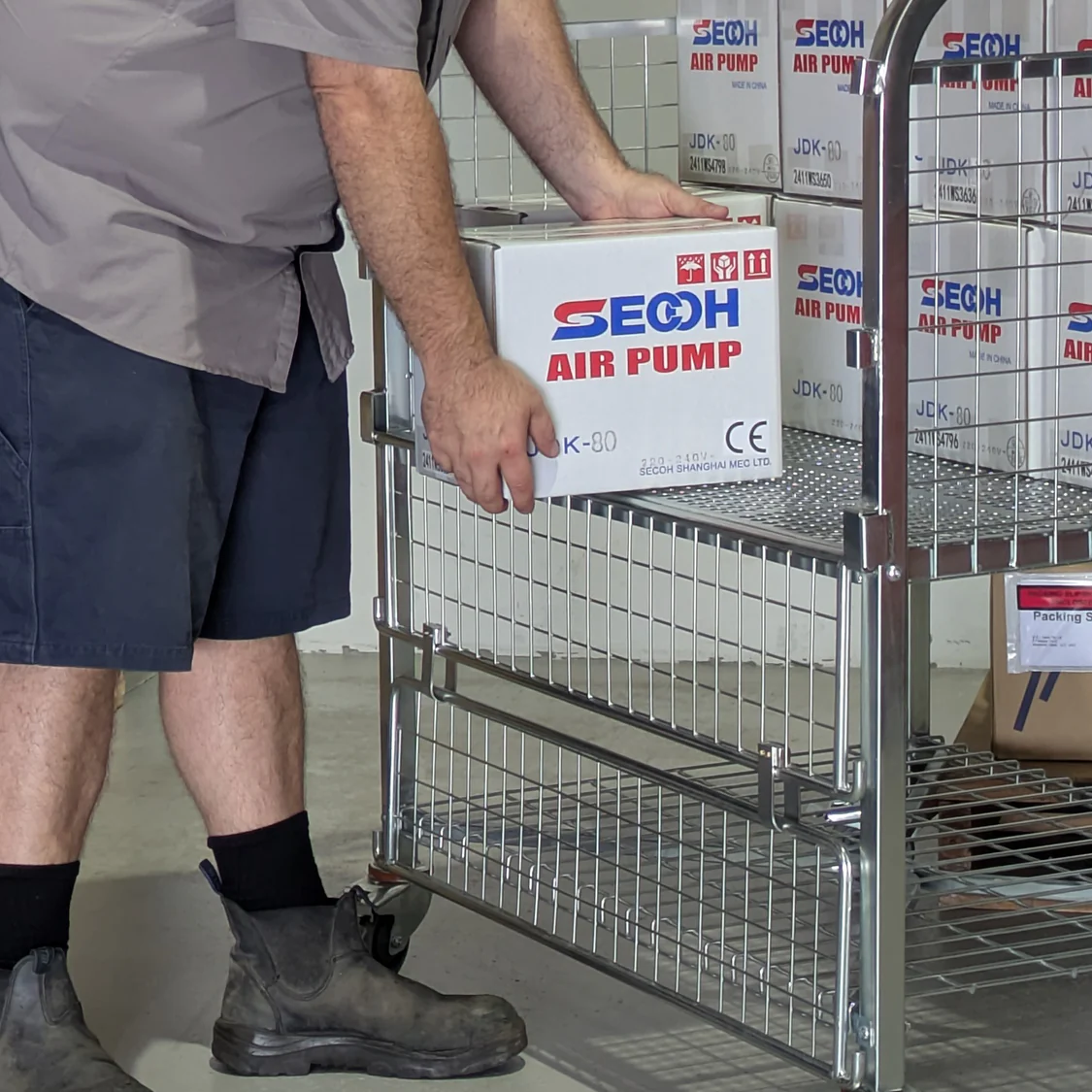
Operate Your Steel Cage Trolley Properly to Prevent Damage
Avoid Overloading
-
Each trolley has a maximum load capacity (usually 250–500 kg).
-
Exceeding this limit can cause deformation of the frame, broken welds, or wheel failure — compromising safety.
Distribute Weight Evenly
-
Always balance the load evenly across the base.
-
Avoid stacking items too high or placing all heavy goods on one side, as this may cause the trolley to tip over.
Handle with Care
-
Push the trolley at moderate speed, especially in busy or narrow areas.
-
Prevent collisions with walls, shelves, or other equipment — impacts can misalign or bend the structure.
Use on Proper Surfaces
-
Operate the trolley only on flat, clean, and dry floors.
-
Avoid sharp debris, bumps, or slopes. If you must move on an incline, ensure manual control to prevent rolling accidents.
3. Proper Maintenance to Double the Lifespan of Your Steel Cage Trolley
Consistent cleaning and maintenance not only improve appearance but also prevent long-term mechanical damage. Follow these maintenance steps recommended by VietPos Rack’s technical experts:
Step 1: Weekly Cleaning
-
Wipe down the frame and wheels with a damp cloth to remove dust and grease.
-
Avoid harsh chemicals that may damage the zinc coating or paint.
-
For wheels, use a small brush to remove debris or strings wrapped around the axles.
Step 2: Inspect Welds and Joints
-
Regularly check weld points, hinges, and bolts.
-
If loosened or cracked, tighten or repair immediately to prevent collapse under heavy loads.
Step 3: Lubricate Moving Parts
-
Every 1–2 months, apply industrial-grade lubricating oil to wheel bearings and joints to reduce friction and noise.
-
For models with brakes (deadman brake systems), inspect the mechanism to ensure smooth activation.
Step 4: Store in a Dry Area
-
When not in use, fold the trolley (if applicable) and store it in a dry, well-ventilated area.
-
Keep it off the ground to prevent moisture buildup and rusting.
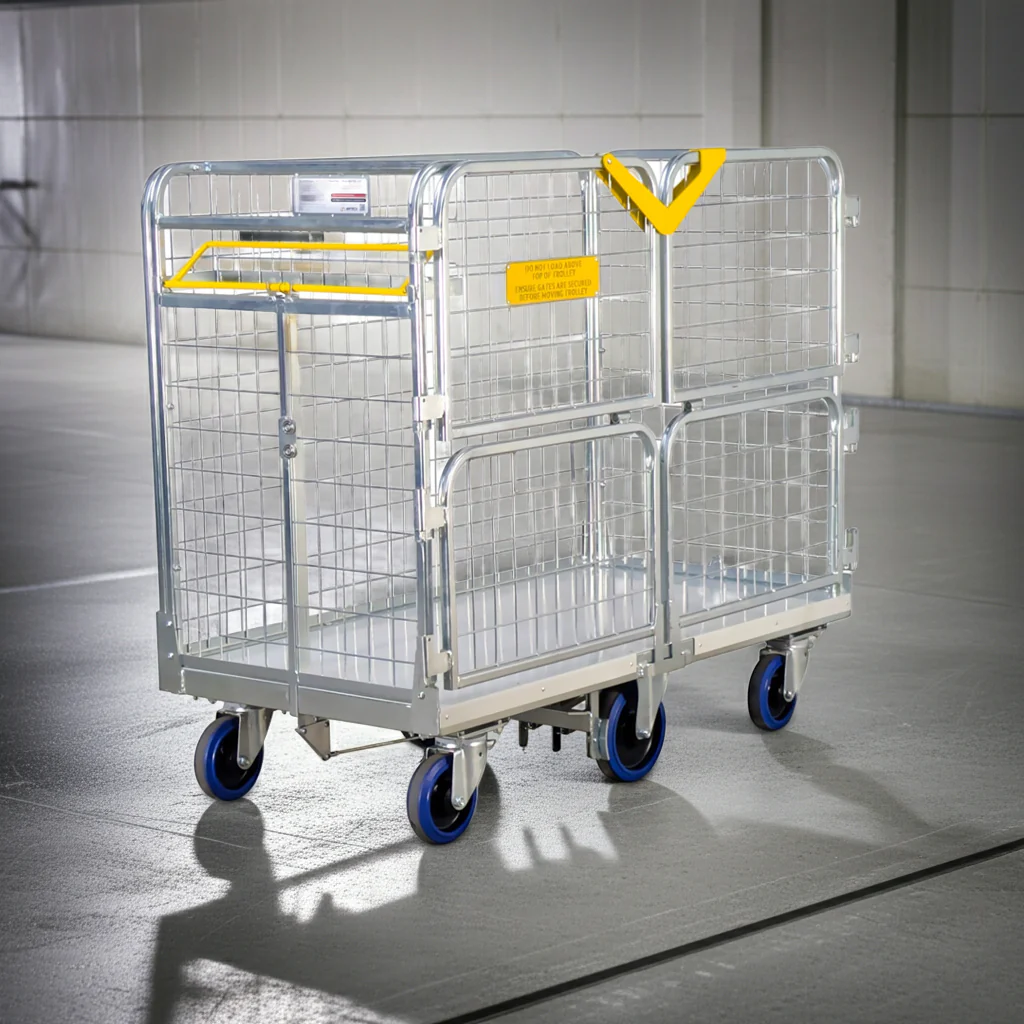
Proper Maintenance to Double the Lifespan of Your Steel Cage Trolley
4. Common Issues and How to Fix Them
| Problem | Possible Cause | Solution |
|---|---|---|
| Wheels are stuck or hard to push | Dirt or string tangled in axles | Clean and lubricate the wheels |
| Trolley tilts or wobbles | Uneven load or bent frame | Rebalance the load or straighten the frame |
| Paint peeling or rust appearing | Exposure to humidity or chemicals | Repaint or apply anti-rust coating |
| Doors are hard to open/close | Hinges are dry or bent | Oil the hinges or realign them |
5. Benefits of Proper Trolley Maintenance
Maintaining your steel cage trolley properly offers more than just longer service life — it brings measurable operational benefits:
-
Reduce repair and replacement costs.
-
Enhance workplace safety for warehouse staff.
-
Improve handling efficiency and prevent downtime due to equipment failure.
-
Promote a professional warehouse image through clean, organized equipment.
6. Tips for Choosing a High-Quality Steel Cage Trolley
When selecting a trolley for your warehouse, consider the following features:
-
Corrosion-resistant surface treatment: Choose galvanized or powder-coated steel.
-
Durable PU swivel casters for smooth and quiet movement.
-
Foldable or detachable design for easy storage.
-
Optional brakes and multi-tier shelving to suit different applications.
These factors ensure that your trolley will remain durable and reliable for years — whether used in warehouses, supermarkets, or production lines.
7. VietPos Rack – Your Trusted Steel Cage Trolley Manufacturer in Vietnam
With over a decade of experience in warehouse and material handling solutions, VietPos Rack is a leading manufacturer and exporter of high-quality steel cage trolleys.
Our trolleys are made from premium-grade steel and finished with hot-dip galvanization or electrostatic powder coating, ensuring durability, safety, and corrosion resistance in even the toughest warehouse environments.
Beyond trolleys, VietPos Rack also provides a wide range of warehouse equipment such as pallet racks, industrial shelving, supermarket display racks, steel pallets, and medium-to-heavy-duty racking systems.
Whether you are building a new warehouse or upgrading your logistics system, VietPos Rack offers world-class storage solutions tailored to your operational needs.
