

 Tiếng Việt
 中文 (Chinese)
 한국어
한국어 日本語
日本語
Automated racking is a storage system that combines industrial racking with robots, conveyors, and management software to automate the receiving and dispatch of goods. Unlike conventional racking operated manually with rider forklifts, automated racking uses shuttles, AGVs, or AS/RS to move pallets, increasing storage density by 60-80% and reducing order processing time by 50-70%. In Vietnam, 3PL companies, automotive manufacturers, and cold storage facilities are rapidly shifting toward this model.
What is automated racking? Definition and working principles
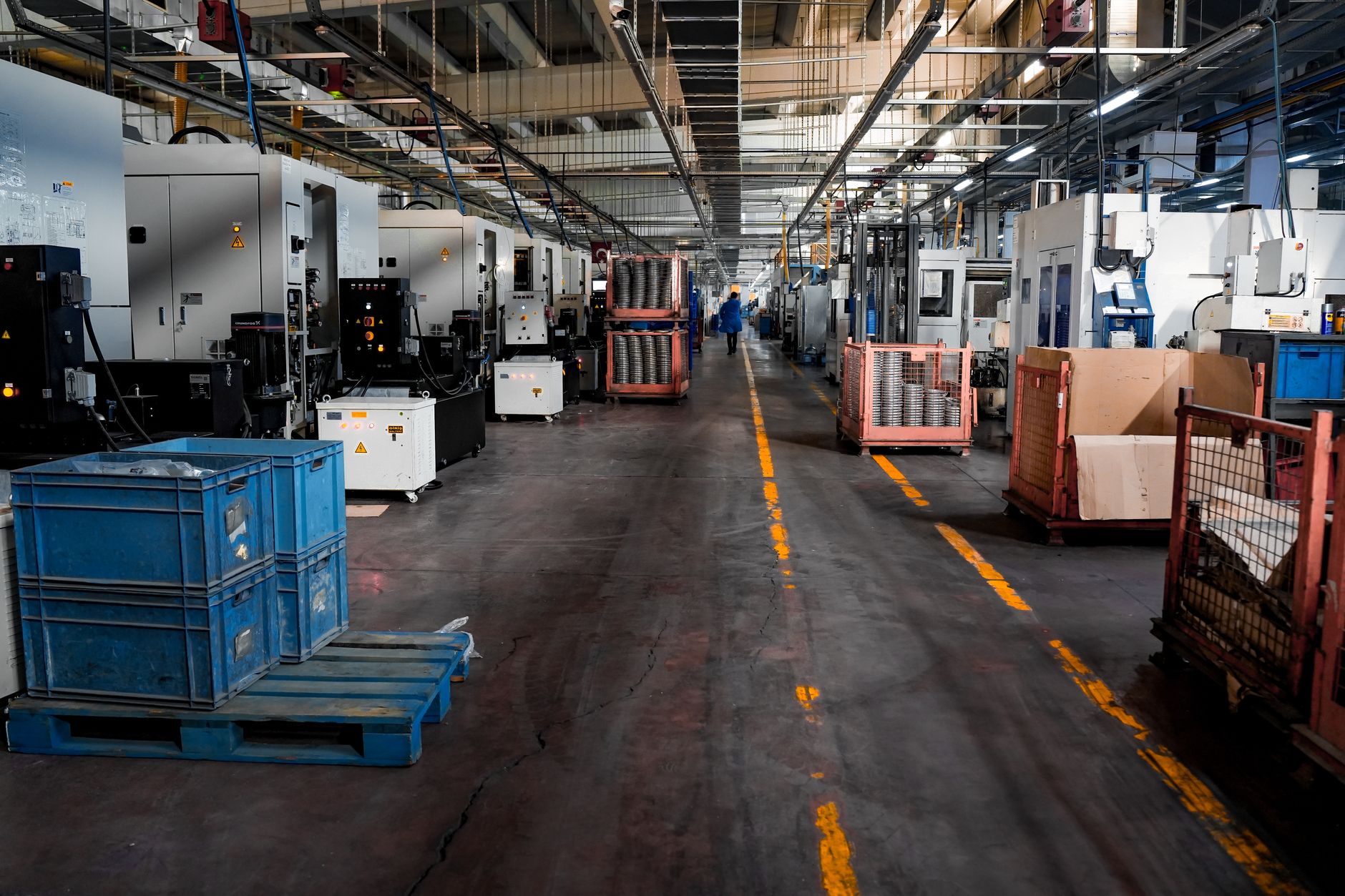
An automated racking system is a racking system integrated with shuttle robots, AGVs, conveyors, and WMS software to automatically perform pallet storage and retrieval operations without manual intervention. Principle: shuttle robots move on rails within the racking, placing/removing pallets from storage positions, while AGVs or conveyors transport goods from the inbound gate to the shuttle.
A typical automated racking system consists of three layers: (1) storage infrastructure — drive-in or selective racking with guide rails, (2) intermediate robots — shuttles, AGVs, AS/RS cranes, (3) control layer — WMS + PLC managing real-time goods flow. During inbound, the WMS assigns an empty location, an AGV delivers the pallet to the racking entrance, and the shuttle moves in to place the pallet in the correct slot. During outbound, the shuttle retrieves the pallet and delivers it to the conveyor or an AGV transports it to the dock.
Core components of an automated racking system
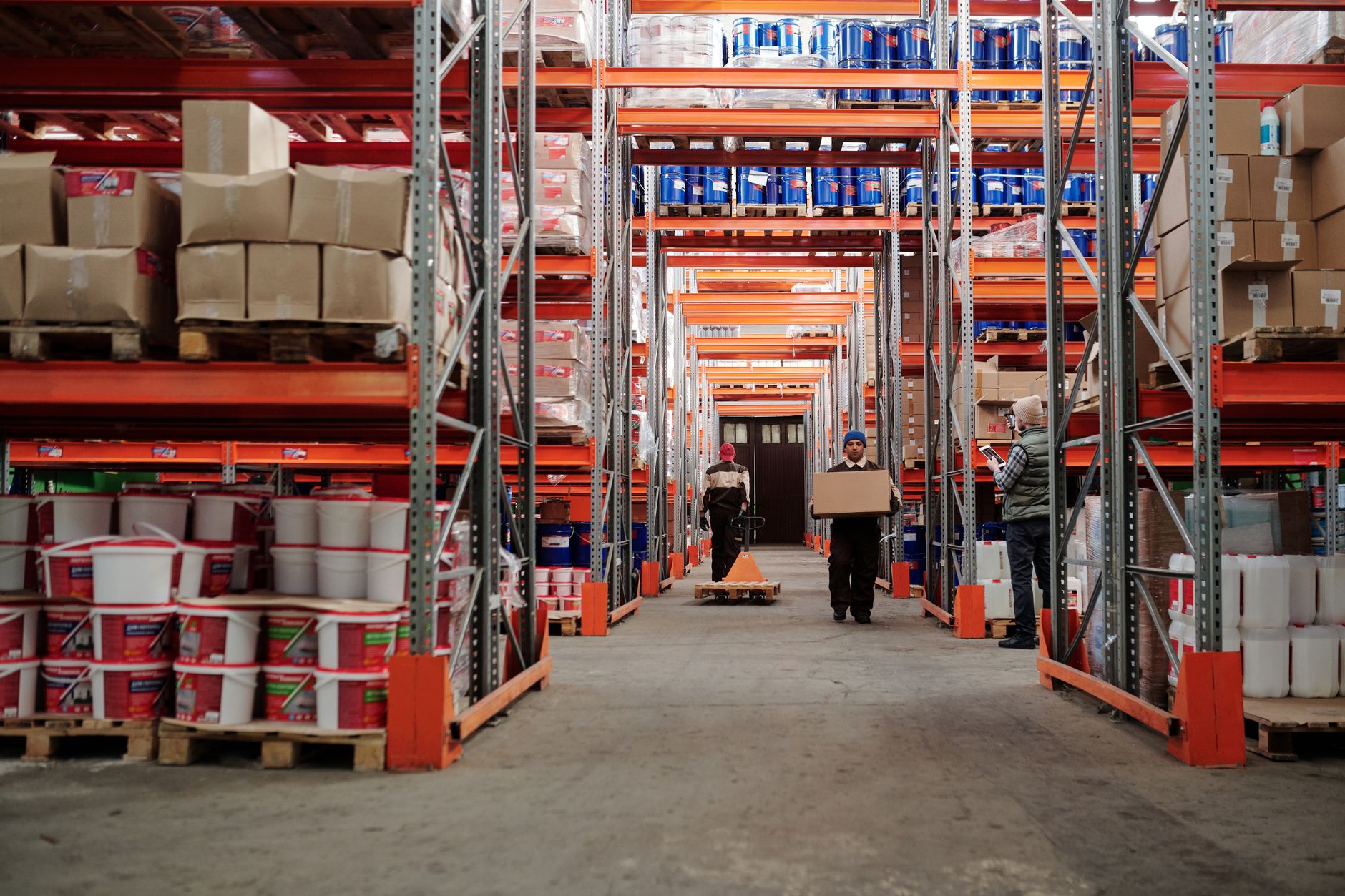
An automated racking system integrates four main components: industrial storage racking (drive-in, selective, push-back), shuttle robots or AS/RS cranes, AGV/AMR autonomous vehicles, and WMS warehouse management software. Each component plays a specific role in the automation chain.
- Industrial storage racking: Drive-in or selective with guide rails, load capacity 500-5,000 kg/pallet, maximum height 12 m. Push-back racking 2-5 deep uses gravity-fed for FIFO.
- Shuttle robots: Move on rails within the racking, speed 1-2 m/s, load 1,000-1,500 kg. Model Autosat SAT.0812 (Việt POS Rack) suitable for cold storage at -25°C.
- AGV/AMR autonomous vehicles: Use SLAM technology for navigation, load 300-1,000 kg. AGV pallet lifter SFL-CBD15 (Việt POS Rack) features automatic lifting and lowering.
- WMS software: Manages real-time inventory, optimizes storage locations, communicates with shuttles and AGVs via TCP/IP protocol.
Classification of automated racking systems by automation level
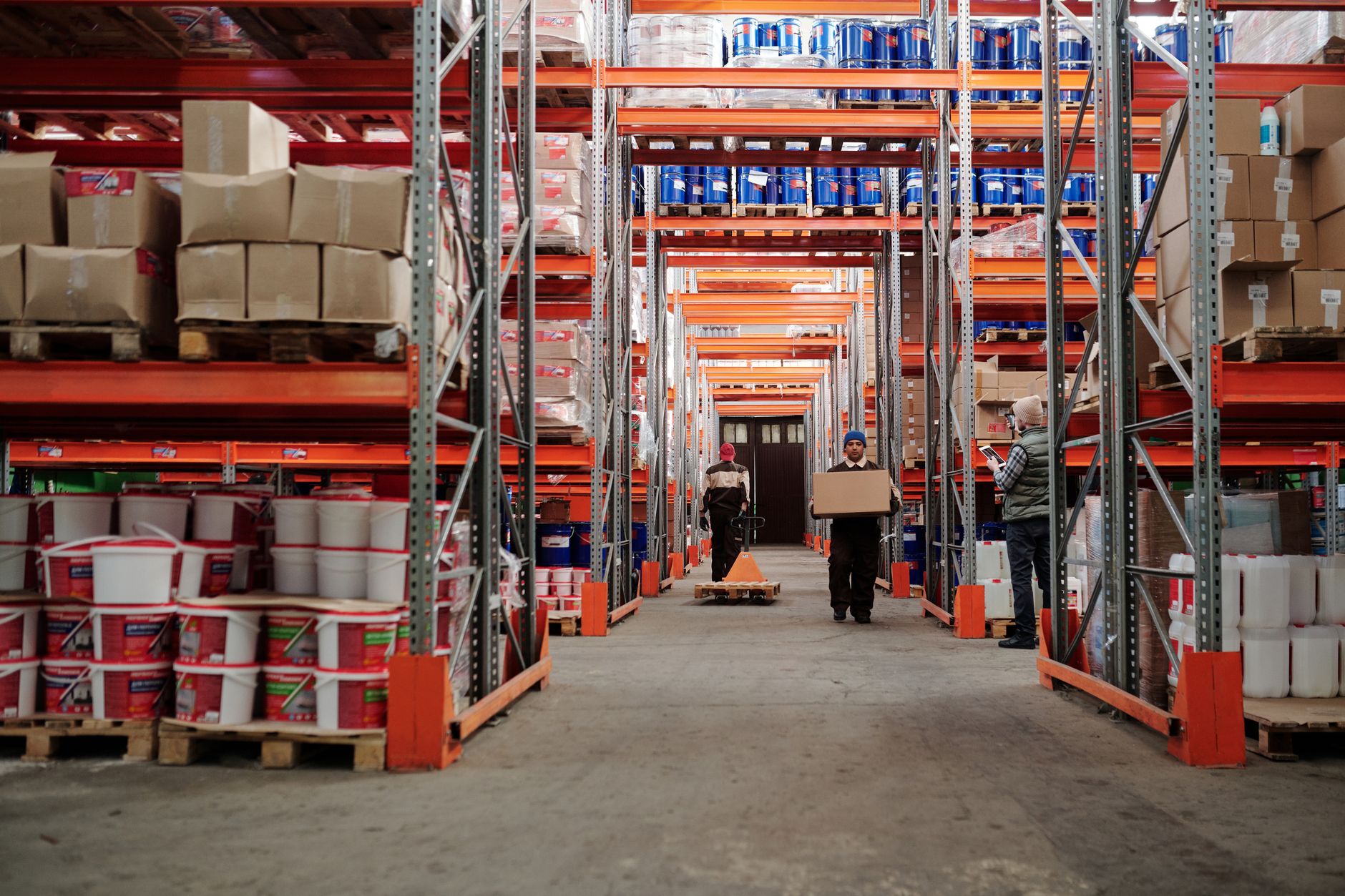
There are three automation levels: semi-automated (shuttle + man-up forklift), partially automated (shuttle + AGV + WMS), and fully automated (AS/RS + AGV + conveyor + WMS). Each level suits different scales and budgets.
| Level | Main equipment | Storage density | Estimated investment cost |
|---|---|---|---|
| Semi-automated | Shuttle + forklift | 60-70% | 1-2 billion VND |
| Semi-automatic | Shuttle + AGV + WMS | 70-80% | 3-6 billion VND |
| Fully automatic | AS/RS + AGV + conveyor + WMS | 80-90% | 10-20 billion VND |
Benefits of applying automated racking systems in warehouses
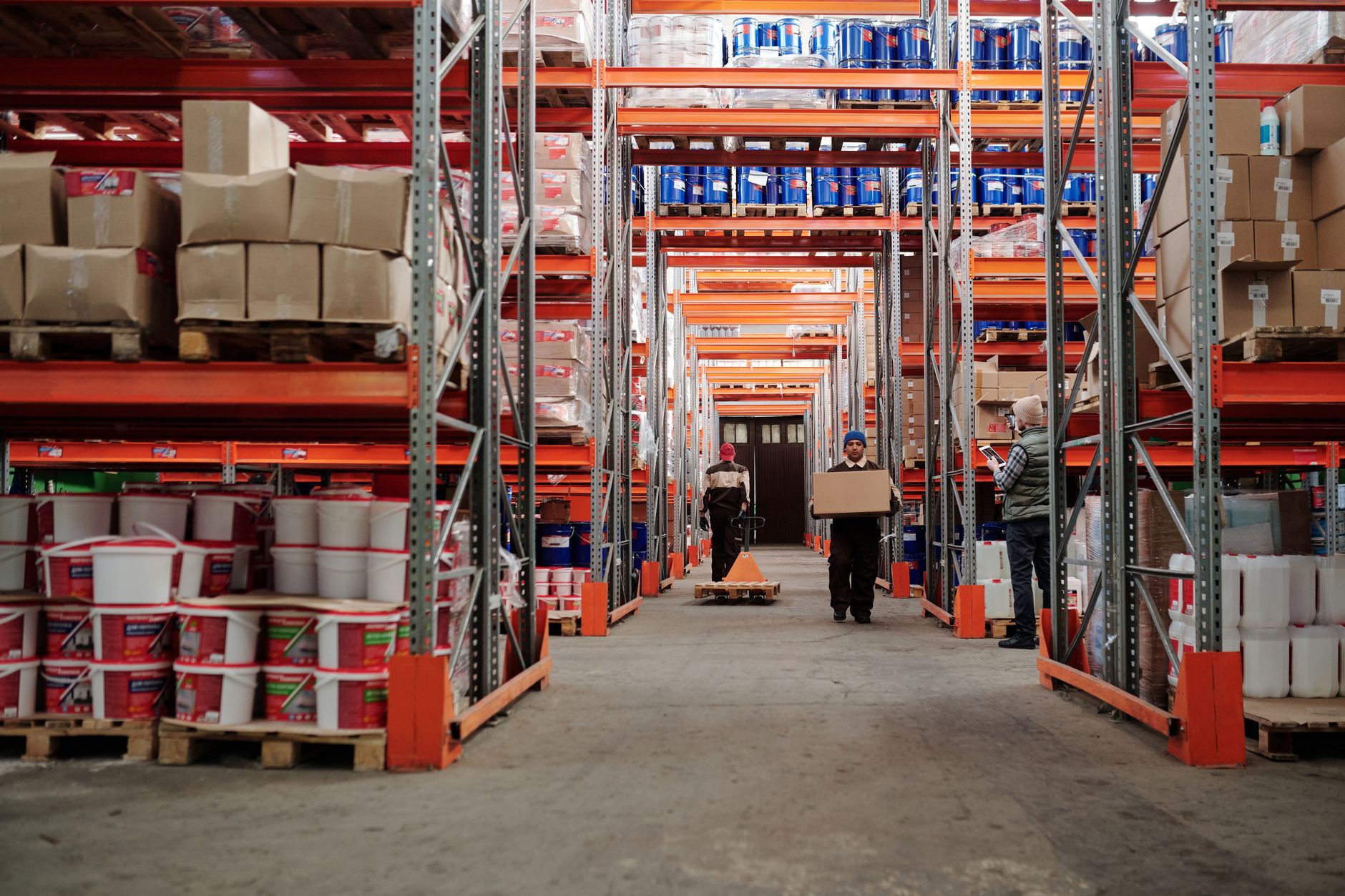
Automated racking systems increase storage density by 80%, reduce order processing time by 50-70%, cut labor costs by 30-50%, and reduce inventory errors to below 1%. They are especially effective for cold storage, 3PL, and automotive manufacturing.
- Space savings: Drive-in racks combined with shuttles allow storage of 2-6 pallets deep, reducing the number of aisles. For a 1,000 m² warehouse, density increases from 40% to 75%.
- Labor reduction: One shuttle robot replaces 2-3 manned forklifts per shift. For a 3-shift warehouse, this saves 6-9 workers, equivalent to 500-800 million VND per year.
- Processing speed: Shuttles move at 1-2 m/s, reducing pallet loading/unloading time from 3-5 minutes (forklift) to 30-60 seconds.
- Accuracy: WMS records the location of each pallet in real time, with errors below 0.5% compared to 3-5% for manual operations.
Case study: Automated racking application at a 3PL warehouse in Binh Duong
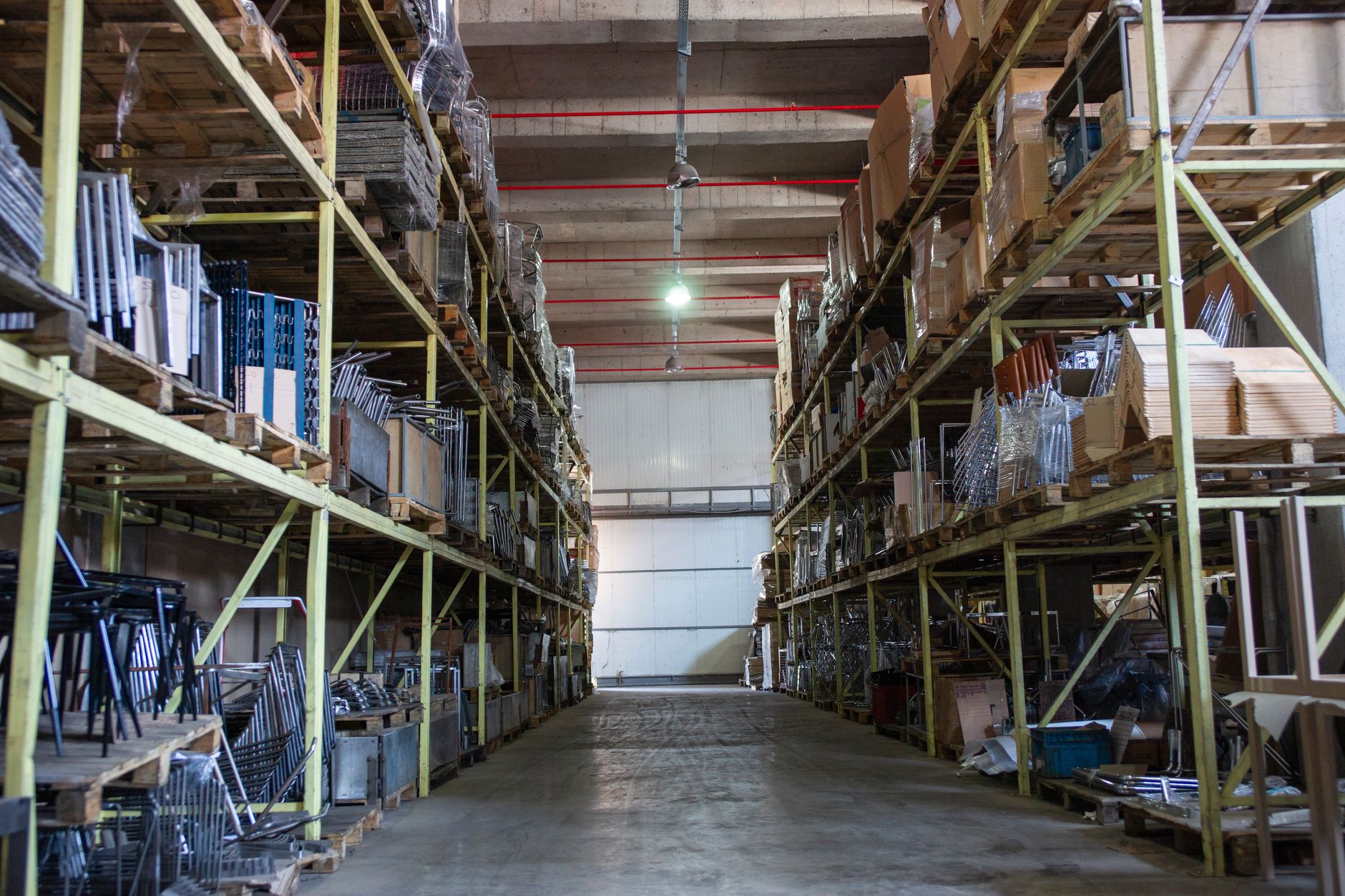
A 3PL warehouse in Binh Duong with an area of 1,200 m² stores 2,000 pallets of fast-moving consumer goods (FMCG). Previously using selective racks and forklifts, productivity was 150 pallets per shift. After switching to a shuttle + AGV system, productivity increased to 400 pallets per shift, and storage density rose from 45% to 72%.
The system includes: 5-level drive-in racks, 8 m high, 2 Autosat SAT.1010 shuttle robots (1,000 kg capacity), 3 SFL-CBD15 AGV pallet-lifting vehicles, and customized WMS software. Implementation time: 30 days (rack production + installation) + 15 days (robot and WMS integration). The investment cost is approximately 4.5 billion VND, with a payback period of 18 months thanks to labor savings and a 2.7-fold increase in productivity. The racks are manufactured by Viet POS Rack at the Long An factory, meeting AS4084 standards, with a 24-month warranty.
Comparison of automated racks vs. conventional racks: Cost, efficiency, ROI
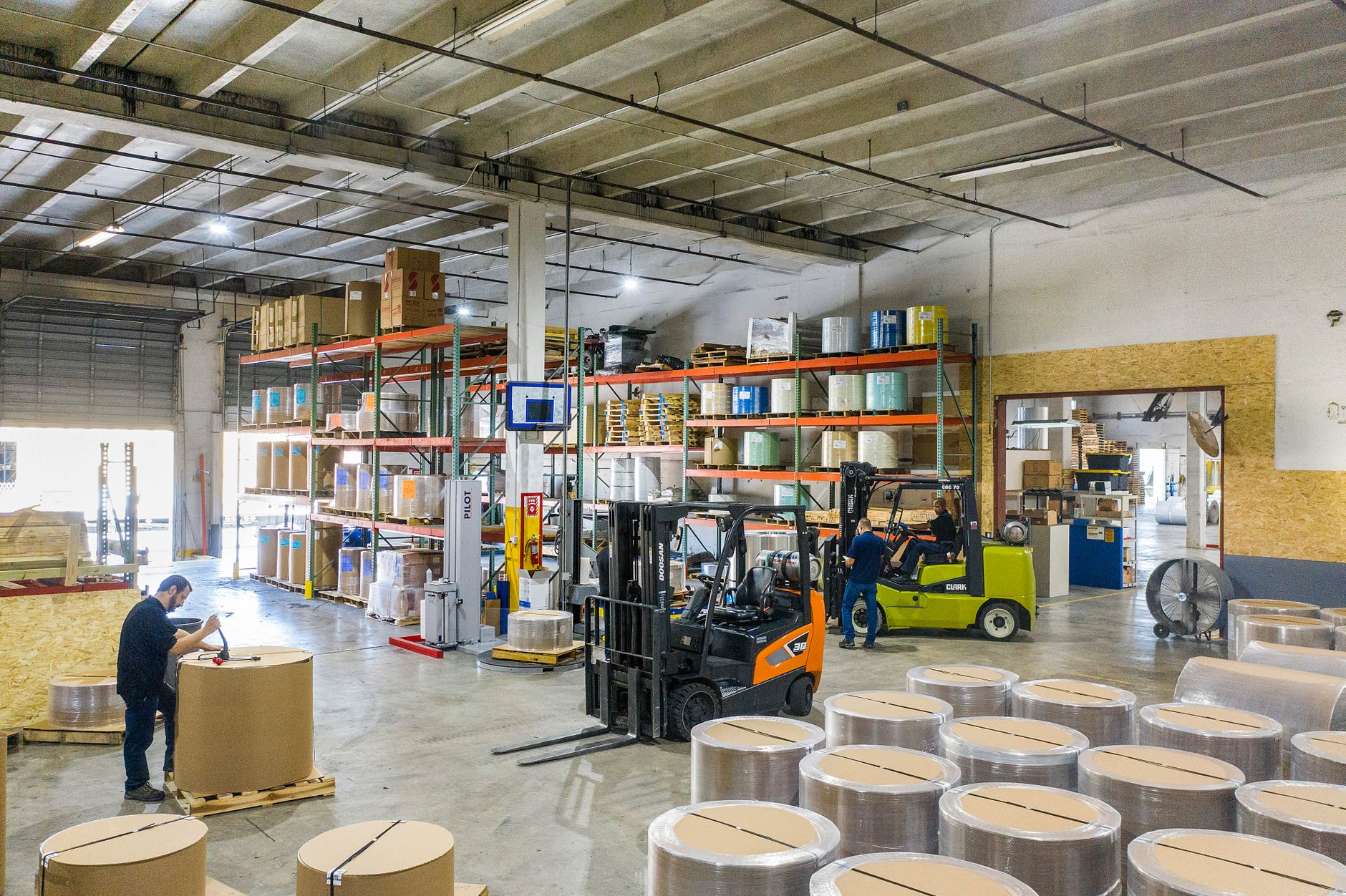
Conventional racking (selective + forklift) has an initial investment cost 3-5 times lower than automated racking, but operating costs (labor, errors, time) are 40-60% higher per year. For warehouses operating more than 2 shifts, automated racking delivers ROI within 18-24 months.
| Criteria | Conventional Racking (Selective) | Automated Racking (Shuttle + AGV) |
|---|---|---|
| Initial investment cost | 500-800 million VND (racking + forklift) | 3-6 billion VND (racking + shuttle + AGV + WMS) |
| Operating labor | 6-8 workers/shift | 1-2 workers/shift |
| Storage density | 40-50% | 70-80% |
| Handling time/pallet | 3-5 minutes | 30-60 seconds |
| ROI | Not calculated (manual operation) | 18-24 months |
Common mistakes when deploying automated racking
- Not thoroughly surveying the product flow: Choosing shuttle for mixed goods with many SKUs leads to congestion. ABC analysis is needed before design.
- Ignoring technical standards: Racking that does not meet AS4084 or EN 15512 is prone to safety issues when the shuttle operates at high speed.
- Weak WMS integration: WMS incompatible with the shuttle leads to connection loss and production stoppage.
- Lack of maintenance planning: Shuttle requires periodic battery and rail maintenance every 3-6 months, otherwise lifespan is reduced.
- Underestimating operating costs: Electricity for shuttle + AGV + WMS is approximately 5-10 million VND/month, excluding battery replacement (every 2-3 years).
Summary table of automated racking terminology
| Term | Definition | Example |
|---|---|---|
| Shuttle | Robot that moves on rails inside the racking, placing/retrieving pallets | Autosat SAT.0812 (1,200 kg load) |
| AGV | Automated guided vehicle navigating via SLAM or magnetic tape | Pallet lifting AGV SFL-CBD15 (1,500 kg load) |
| AS/RS | Automated storage and retrieval crane system for pallets | Mini-load AS/RS for automotive parts warehouse |
| WMS | Warehouse management software that coordinates robots and inventory | SAP EWM, Manhattan Associates |
| SLAM | Simultaneous localization and mapping technology for AGV | AGV AMB-300JZ uses SLAM |
Frequently asked questions about automated racking
- Is automated racking suitable for small warehouses under 500 m²?
Suitable if the warehouse has high goods density and multi-shift operation. For small areas, a single shuttle solution (without AGV) costs 1-2 billion VND, with ROI of 12-18 months. - What is the annual maintenance cost of an automated racking system?
Approximately 5-10% of the initial investment value. For example: a 4 billion VND system has a maintenance cost of 200-400 million VND/year (including shuttle battery replacement, rail maintenance, WMS updates). - Can automated racking systems operate in cold storage at -25°C?
Yes, shuttles and AGVs are designed for cold resistance (lithium batteries, moisture-proof circuits). Việt POS Rack provides hot-dip galvanized drive-in racks with 80 μm coating for cold storage. - How long does it take to deploy an automated racking system?
From contract signing to operation: 45-60 days (rack production 15-20 days, rack installation 10-15 days, robot and WMS integration 10-15 days). - Can automated racking systems be integrated with existing ERP systems?
Yes, the WMS supports API connections with SAP, Oracle, or in-house ERP. Việt POS Rack offers free integration consulting during the design phase.
Contact Việt POS Rack for consultation on automated racking solutions tailored to your warehouse. Hotline: 0796 700 777 — Email: info@vietposrack.vn. Free 3D layout design, quotation within 48 hours.
