

 Tiếng Việt
 中文 (Chinese)
 한국어
한국어 日本語
日本語In the digital transformation era, security and asset management are top priorities across modern facilities. Electronic lockers have emerged as a smart and secure solution for personal storage in schools, hospitals, and residential areas.
With automation, biometric recognition, and centralized management, digital lockers are redefining how people store and access their belongings — offering enhanced security, convenience, and efficiency.
1. Why Smart Lockers Are the Future of Secure Storage
Thanks to the integration of IoT and AI, digital lockers go far beyond traditional key-based systems.
They can be accessed using PIN codes, RFID cards, facial recognition, fingerprints, or mobile applications. This multi-access flexibility improves both user convenience and operational control.
Administrators can monitor locker activity in real-time, set access permissions, and receive alerts for unusual behavior — all through a centralized software platform.
2. Applications in Schools – Safe and Convenient for Students
In schools and universities, electronic lockers provide a safe and organized way for students and teachers to store personal items such as books, laptops, and equipment.
Key benefits include:
-
Quick access using student ID cards or QR codes.
-
Personal or group-based access control.
-
Reduced risk of theft or loss.
-
Integrated management software for easy supervision.
Additionally, optional features like CCTV integration and sensors enhance security across campus facilities.
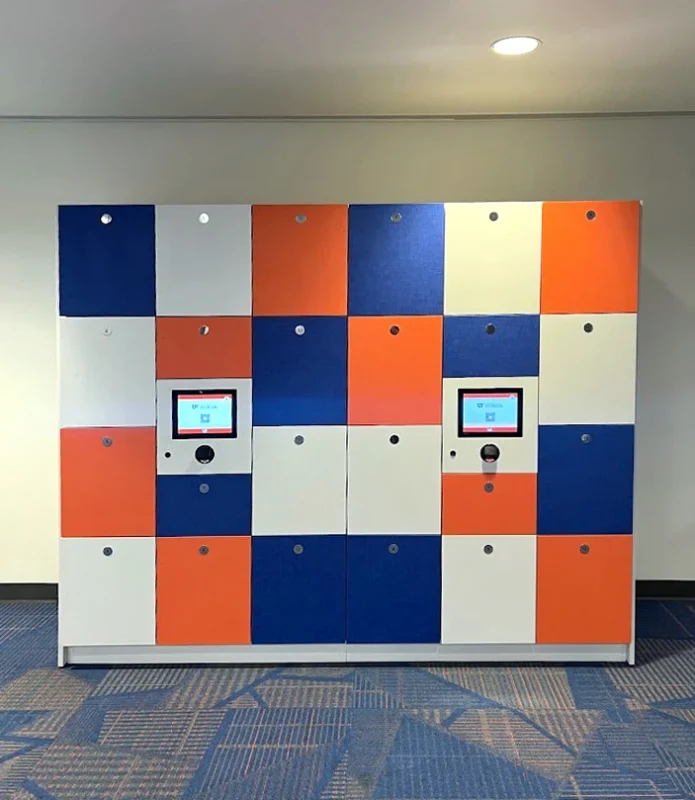
3. Applications in Hospitals – Hygiene and Data Security
Hospitals and medical centers use digital lockers to ensure safe storage for staff uniforms, medical tools, and patients’ belongings.

Features include:
-
Contactless access (RFID or facial recognition) to minimize contamination.
-
Access history logs for traceability and accountability.
-
Durable and easy-to-clean steel body.
-
Remote management via cloud-based control software.
These lockers streamline hospital operations while maintaining high hygiene and data safety standards.
4. Applications in Residential and Office Buildings
For modern residential complexes and workplaces, electronic lockers have become essential for 24/7 delivery and parcel management.
Couriers can securely deposit packages, and residents can collect them anytime using OTP codes or mobile apps.
Benefits include:
-
Eliminates missed deliveries or lost packages.
-
Convenient 24-hour access for residents.
-
Integration with building management systems (BMS) or resident apps for seamless notifications.
This automation enhances security while improving service efficiency in high-density buildings.

Applications in Residential and Office Buildings
5. Structure and Technical Specifications
Typical digital locker systems include:
-
Material: Cold-rolled or powder-coated steel with corrosion resistance.
-
Display: LCD touchscreen control panel.
-
Locking options: RFID, PIN, facial recognition, fingerprint, mobile app.
-
Connectivity: Wi-Fi, Ethernet, 4G, or Bluetooth.
-
Modules: Customizable 6–48 compartments.
-
Additional features: Access logging, security alerts, and cloud management.
6. Conclusion
Electronic lockers are no longer just storage tools — they represent a new level of smart facility management.
From schools to hospitals and residential communities, investing in digital lockers ensures safety, convenience, and a professional image.
Vietpos Rack offers a wide range of customizable, durable, and software-integrated locker solutions to meet diverse storage needs in any environment.
